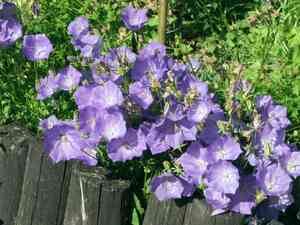
Tussock bellflower (Campanula carpatica)
Also known as: Carpathian harebell
The tussock bellflower (Campanula carpatica) is a great choice for rock gardens due to its dense, mound-forming growth and abundant, upward-facing bell flowers. Regular dead-heading encourages continuous blooming throughout the season. This hardy plant is versatile, suitable not only for rock gardens but also as ground cover and in mixed flower beds. It is simple to cultivate, rabbit-resistant, and flourishes in both full sun and partial shade, making it a low-maintenance and attractive addition to any garden.
In This Article
Attributes of Tussock bellflower
Lifespan
Perennial
Plant Type
Herb
Plant Height
15 cm to 30 cm
Spread
15 cm to 30 cm
Leaf Color
Green
Flower Size
2.5 cm to 8 cm
Flower Color
White Blue Purple
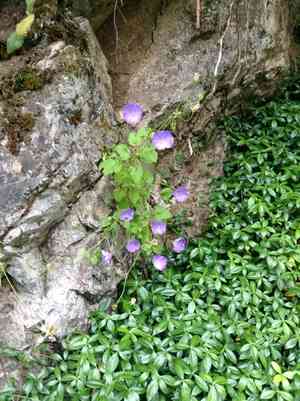
Images of Tussock bellflower

Quickly Identify Tussock bellflower
1
Low, mounding growth reaching 6-12 inches (15-30 cm) in height and width.
2
Prominent bell-shaped flowers facing upwards in blue, purple, or white shades.
3
Solitary upright flowers resembling open cups, 1-2 inches (2.5-5 cm) wide.
4
Small heart-shaped leaves, up to 1.5 inches (3.8 cm) long, with slightly toothed edges.
5
Delicate foliage with light green coloration and fine veining but without pronounced ridges.
Scientific Classification of Tussock bellflower
Phylum
Vascular plants
Class
Dicotyledons
Order
Asterales
Family
Bellflower
Genus
Bellflowers
Species
Tussock bellflower
Planting and Growing of Tussock bellflower
Care Difficulty
Easy
Watering Schedule
Every 4 days
Sunlight Requirements
Full sun
Sunshine Duration
4-8 hours
Ideal Temperature
60-75℉
Soil Type
Potting Mix, Peat Mix
Soil pH
6.5-7.5
Fertilizer Type
Balanced
Pruning Season
Spring, Summer
Pruning Area
Branches, Leaves
Pruning Frequency
2 times a year
Repotting Season
Spring
Pot Type
Plastic, Ceramic
 How to Water Tussock bellflower?
The Campanula carpatica thrives best when the soil is kept consistently moist but not waterlogged. A general guideline is to water approximately 250 ml each time, enough to moisten the top 2 to 3 inches of soil, but make sure there is good drainage.
What are the symptoms of an underwatered Tussock bellflower?
›
What should I do if my Tussock bellflower is not getting enough water?
›
What are the symptoms of an overwatered Tussock bellflower?
›
How to save an overwatered Tussock bellflower?
›
 What Are the Sunlight Requirements for Tussock bellflower?
Campanula carpatica ideally thrives in conditions ranging from full to partial sun. Sufficient light enhances its flowering potential, contributing to robust and healthy growth. This accessibility to light encourages vibrant colors and a higher bloom yield, significantly accentuating its ornamental value.
More About Sunlight Requirements Techniques→
How much sun should Campanula carpatica get?
›
What solutions can help Campanula carpatica get ideal light?
›
What are the benefits of ideal light for Campanula carpatica?
›
 What Is the Ideal Temperature Range for Tussock bellflower?
Campanula carpatica thrives best in an environment where the temperature is consistently between 60°F and 75°F. This range provides the warmth necessary for optimal growth and flowering. The plant prefers cooler climes, representative of its native Carpathian habitats, ensuring robust health and vibrant blooms.
 What Soil is Best for Tussock bellflower?
For Campanula carpatica, soil that drains well is essential. This ensures that water does not pool around the roots, which could cause root rot. Well-draining soil allows roots to access the necessary oxygen, promoting robust growth. The plant thrives in nutrient-rich soil that is able to supply essential minerals. A fertile soil provides the building blocks for healthy flower and foliage development, leading to vibrant blooms and sturdy stems. While drainage is crucial, the soil must retain a moderate level of moisture to sustain the plant between waterings. This balance ensures that Campanula carpatica remains hydrated without being waterlogged, maintaining optimum health.
More About Soil→
 How to Fertilize Tussock bellflower?
Campanula carpatica should be fertilized with a balanced fertilizer diluted to half strength. For liquid fertilizers, use about 1 tablespoon per gallon of water. Overuse of fertilizer can lead to nitrogen burn, so always ensure the right dosage.
More About Fertilizing Techniques→
 How to Prune Tussock bellflower?
Begin by inspecting the plant to identify any dead or damaged stems. These can often be seen as brown or wilted sections. Carefully use clean pruning shears to cut them close to the base, ensuring no remaining unhealthy parts could affect the rest of the plant. Trimming back spent blooms is essential for prolonging the blooming period of Campanula carpatica. Follow the stem down to the first healthy set of leaves or a new bud and cut just above this point. This encourages the plant to channel energy into producing new flowers.
More About Pruning Techniques→
 How to Propagate Tussock bellflower plant?
1
Fill seed trays with a well-draining, sterile potting mix. Ensure the soil is evenly moist but not overly wet. This creates an ideal environment for seed germination and prevents fungal diseases.
2
Select healthy, non-flowering stems for cuttings. Trim just below a node using sharp pruners. Remove lower leaves before planting in a rooting medium, allowing nodes to develop roots efficiently.
3
Gently remove the plant from the pot and separate it into sections with clear root structures. Replant each section into fresh soil, ensuring roots are covered and watered well.
 How to Repot Tussock bellflower plant?
1
Repot Campanula carpatica when you notice roots growing through the drainage holes or outgrowing its container. These signs indicate that the plant requires more space for healthy growth and root expansion.
2
Select a pot that is one size larger than the current one, preferably with drainage holes. This prevents waterlogging, accommodating increased root space and ensuring proper aeration for healthy plant development.
3
Opt for a well-draining potting mix, preferably with perlite or sand. This ensures good drainage, preventing root rot by allowing excess moisture to escape and providing sufficient aeration for healthy root growth.
Learn More About Tussock bellflower Diseases
Anthracnose
Bacterial Leaf Spot
Bacterial Soft Rot
Bacterial Wilt
Black Spot
Chemical Injury
Crown Gall
Cyst Nematode
Damping-off
Downy Mildew
Drought Stress
Fusarium Wilt
Gray Mold
Leaf Spot
Mosaic
Nutrient Deficiency
Nutrient Toxicity
Powdery Mildew
Root Rot
Root-knot Nematode
Rusts
Sooty Mold
Spider Mites
Temperature Stress
Thrips Damage
White Mold



