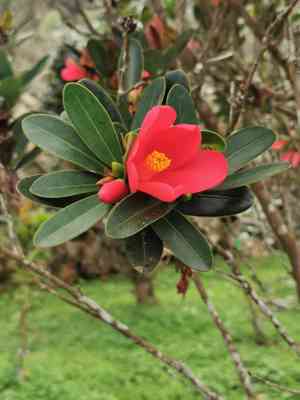
Camellia azalea (Camellia azalea)
Also known as: Red Camellia
The camellia azalea hails from the mountainous regions of Guangdong Province in China. This evergreen plant can be classified as both a shrub and a small tree, reaching heights of up to 4 meters. Its notable large, vibrant red flowers have an extended blooming period, lasting from mid-spring all the way through winter.
In This Article
Attributes of Camellia azalea
Lifespan
Perennial
Plant Type
Shrub
Plant Height
1.5 to 3 meters
Spread
1 to 2 meters
Leaf Color
Dark green
Flower Size
6 to 10 centimeters
Flower Color
Red
Images of Camellia azalea

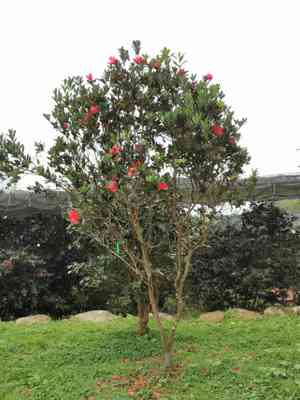
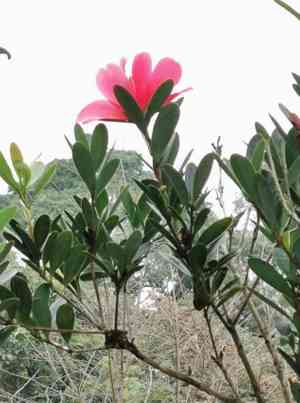
Quickly Identify Camellia azalea
1
Camellia azalea can be identified by its glossy, dark green leaves and vibrant red flowers that bloom in clusters. The flowers are typically large, with multiple petals forming a full, round shape.
Scientific Classification of Camellia azalea
Phylum
Vascular plants
Class
Dicotyledons
Order
Heathers and allies
Family
Tea
Genus
Camellias
Species
Camellia azalea
Planting and Growing of Camellia azalea
Care Difficulty
Hard
Watering Schedule
Every 4 days
Sunlight Requirements
Partial sun
Sunshine Duration
6-10 hours
Ideal Temperature
60-75℉
Soil Type
Potting Mix, Peat Mix
Soil pH
6-6.5
Fertilizer Type
Balanced
Pruning Season
Spring, Summer
Pruning Area
Branches, Leaves
Pruning Frequency
2 times a year
Repotting Season
Spring
Pot Type
Plastic, Ceramic
 How to Water Camellia azalea?
Camellia azalea requires sufficient water to maintain its lush foliage and vibrant blooms. Aim to provide around 500 milliliters of water per session, ensuring that the soil is thoroughly moistened without becoming waterlogged. The key principle is to keep the top layer of soil moist while allowing excess water to drain away.
What are the symptoms of an underwatered Camellia azalea?
›
What should I do if my Camellia azalea is not getting enough water?
›
What are the symptoms of an overwatered Camellia azalea?
›
How to save an overwatered Camellia azalea?
›
 What Are the Sunlight Requirements for Camellia azalea?
Partial to full shade is ideal, ensuring Camellia azalea maintains its vibrant foliage and abundant blooms. This light range prevents stress while enhancing natural growth patterns.
What is the ideal sunlight condition for Camellia azalea?
›
How can I achieve ideal sunlight exposure for this plant?
›
What benefits come from providing ideal sunlight to Camellia azalea?
›
 What Is the Ideal Temperature Range for Camellia azalea?
The ideal temperature range for Camellia azalea is between 60°F and 75°F. This range provides optimal conditions for growth, ensuring that the plant can photosynthesize efficiently and develop healthy flowers. Temperatures within this range mimic the plant's natural habitat, fostering both vegetative and reproductive phases effectively.
 What Soil is Best for Camellia azalea?
Camellia azalea thrives in soils that can retain moisture without becoming waterlogged. This ensures a steady supply of water to the plant roots, encouraging healthy growth and reducing stress during dry periods. The plant prefers soil enriched with organic matter, which supplies essential nutrients for robust growth, vibrant blooms, and overall plant vigor. Soils that drain well are critical to prevent root rot, a common issue in overly wet conditions. Proper drainage ensures that excess water does not harm the plant’s root system.
 How to Fertilize Camellia azalea?
For Camellia azalea, a balanced approach to fertilization is crucial. Liquid fertilizers should be diluted to half strength, while solid fertilizers, like slow-release granules, should be applied sparingly to avoid root burn. Always ensure that the soil is moist before applying any fertilizers to prevent damage to the root system.
 How to Prune Camellia azalea?
Begin by sterilizing your pruning tools to prevent disease spread. Start pruning by removing any dead or diseased branches. Focus on thinning out the center to improve air circulation and light penetration, which aids in keeping the camellia healthy and thriving. Carefully shape your Camellia azalea by trimming back overgrown or uneven stems. Follow the plant’s natural form to maintain its aesthetic appeal. The ideal time to shape is immediately after the blooming season, allowing the plant ample time to generate new growth.
More About Pruning Techniques→
 How to Propagate Camellia azalea plant?
1
Select healthy, disease-free stems around 10-15 cm long. The cutting should be softwood, taken from a mature plant early in the morning when the plant is most hydrated.
2
Remove any leaves or flowers from the lower part of the cutting, leaving only two or three leaves at the top to reduce water loss during propagation.
3
Dip the cut end of the stem into rooting hormone and then plant it in a prepared pot with a moist potting mix. Ensure the cutting is inserted deeply enough for support.
 How to Repot Camellia azalea plant?
1
Camellia azalea needs repotting when you notice it becoming root-bound. This is most clear when roots start emerging from the drainage holes. Additionally, if you observe the plant's growth slowing down or its leaves drooping often, these are signals to consider repotting.
2
Select a pot that is one size larger than the current one, with ample drainage holes. The larger size offers the roots room to grow, preventing them from becoming constricted, and the drainage holes ensure that excess water does not lead to root rot.
3
Opt for an acidic, well-draining soil mix, which is crucial for Camellia azalea to thrive. This type of soil helps retain a bit of moisture while ensuring water does not stagnate, providing the roots with the perfect balance to prevent root rot.
Learn More About Camellia azalea Diseases
Anthracnose
Bacterial Leaf Spot
Black Spot
Chemical Injury
Crown Gall
Damping-off
Downy Mildew
Drought Stress
Fusarium Wilt
Gray Mold
Leaf Curl
Leaf Spot
Mosaic
Nutrient Deficiency
Nutrient Toxicity
Powdery Mildew
Root Rot
Root-knot Nematode
Rusts
Sooty Mold
Spider Mites
Temperature Stress
Thrips Damage
White Mold



