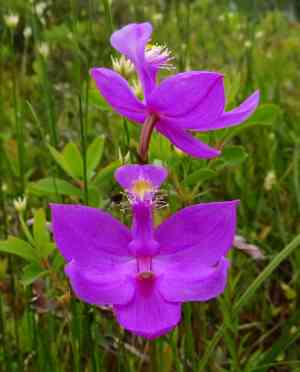
Grass pink (Calopogon) (Calopogon)
Also known as: swamp pink
Grass pink flowers, or Calopogon, thrive in moist soil, making them a favorite for gardens and indoor containers. Their appeal lies in their vibrant, intricate blooms that appear to hang upside down, a unique feature that attracts bees despite the lack of pollen. These flowers are easy to care for and produce numerous blossoms, adding a burst of color and interest to any space. Additionally, they spread through both seeds and corms, making them a versatile and enduring choice for gardeners.
In This Article
Attributes of Grass pink (Calopogon)
Lifespan
Perennial
Plant Height
30 to 90 centimeters
Spread
Not applicable
Leaf Color
Green
Flower Size
2.5 to 3.5 centimeters
Flower Color
Pink, Purple
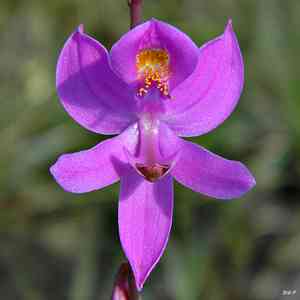
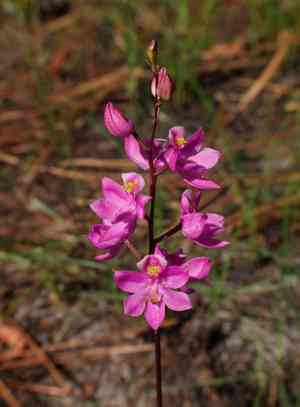
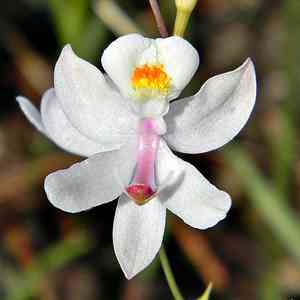
Images of Grass pink (Calopogon)
Quickly Identify Grass pink (Calopogon)
1
Calopogon orchids can be identified by their unique flower structure. They have pink or purple flowers with a distinctive bearded lip, which is an adaptation to attract pollinators.
Scientific Classification of Grass pink (Calopogon)
Phylum
Angiosperms
Class
Liliopsida
Order
Asparagales
Family
Orchidaceae
Genus
Calopogon
Planting and Growing of Grass pink (Calopogon)
Care Difficulty
Hard
Watering Schedule
Every 3 days
Sunlight Requirements
Full sun
Sunshine Duration
6-8 hours
Ideal Temperature
65-75℉
Soil Type
Potting Mix, Peat Mix
Soil pH
4.5-6
Fertilizer Type
Balanced
Pruning Season
Spring, Summer
Pruning Area
Branches, Leaves
Pruning Frequency
2 times a year
Repotting Season
Spring
Pot Type
Plastic, Ceramic
 How to Water Grass pink (Calopogon)?
Calopogon prefers to be watered thoroughly but infrequently. The goal is to mimic its natural habitat, where it receives generous rainfalls followed by dry periods. Ensure that each watering session thoroughly moistens the soil and is followed by a complete drainage.
What are the symptoms of an underwatered Grass pink (Calopogon)?
›
What should I do if my Grass pink (Calopogon) is not getting enough water?
›
What are the symptoms of an overwatered Grass pink (Calopogon)?
›
How to save an overwatered Grass pink (Calopogon)?
›
 What Are the Sunlight Requirements for Grass pink (Calopogon)?
Calopogon ideally thrives in full to partial sun settings. Receiving 4-8 hours of sunlight daily ensures proper photosynthesis, vibrant blooming, and balanced growth, enhancing the plant's natural ornamental beauty.
How much light does Calopogon need?
›
What is the ideal location for positioning Calopogon?
›
Why is proper sunlight important for Calopogon?
›
 What Is the Ideal Temperature Range for Grass pink (Calopogon)?
The ideal temperature range for Calopogon is between 65°F and 75°F. This range provides optimal conditions for growth and flowering. Keeping the plant within this temperature ensures vibrant blooms and healthy foliage.
 What Soil is Best for Grass pink (Calopogon)?
Calopogon thrives in well-drained soil which prevents waterlogging and root rot. Ensuring proper drainage mimics its natural habitat, contributing to healthy root growth and vibrant flowering. The soil should retain adequate moisture without becoming soggy. This requirement ensures that the plant has consistent access to water, mimicking the damp environments it naturally thrives in. A nutrient-rich substrate supports growth by supplying essential minerals, promoting vigor and robust flower production. Utilizing organic matter like compost can enhance soil fertility.
 How to Fertilize Grass pink (Calopogon)?
For Calopogon, apply a balanced, water-soluble fertilizer at a quarter of the recommended concentration. During the growing season, the plant's nutrient intake increases, requiring biweekly feeding when using liquid fertilizers.
 How to Prune Grass pink (Calopogon)?
Begin by inspecting your Calopogon plant for any dead or damaged leaves, stems, or flowers. These parts can be safely removed to make way for new growth. The best time to prune is immediately after the plant has finished flowering. This ensures you are not cutting off emerging buds, encouraging future blooms. Make your cuts at a 45-degree angle just above a node or a leaf, which helps in preventing water accumulation and encourages new growth.
 How to Propagate Grass pink (Calopogon) plant?
1
Collect mature seeds from the plant pods, ensuring they are dry and viable. Before planting, seeds may benefit from a stratification process, which involves exposing them to cold temperatures to mimic natural winter conditions, breaking dormancy and enhancing germination.
2
Fill a seed tray with a seed-starting mix, then sow the seeds lightly on the surface. Cover them with a thin layer of mix or vermiculite and gently mist with water. Cover with a clear lid to maintain humidity and place in a warm, bright location.
3
Carefully remove the plant from its pot or the ground. Use a sharp knife or spade to divide the root clump into smaller sections, ensuring each section has healthy roots and shoots for new growth. Replant immediately at the same depth they were growing previously.
 How to Repot Grass pink (Calopogon) plant?
1
Calopogon gives clear signs when a repotting session is due. Look for crowded roots emerging from the drainage holes or when the growth seems stunted. Repotting is best done in the growing season, either in spring or summer, to ensure the plant has ample time to establish itself.
2
Select a pot that is slightly larger than the current one, with excellent drainage to prevent waterlogging. A good consistency would be a pot that's one inch wider in diameter, allowing just enough room for the roots to grow without unnecessary excess soil that retains moisture.
3
Calopogon thrives in a loose, acidic potting mix simulating its natural habitat. An ideal mix combines peat, pine bark, and perlite, promoting drainage while retaining essential moisture. This blend mimics the plant's native conditions, facilitating optimal growth.
Learn More About Grass pink (Calopogon) Diseases
Anthracnose
Bacterial Leaf Spot
Bacterial Soft Rot
Bacterial Wilt
Black Spot
Chemical Injury
Crown Gall
Cyst Nematode
Damping-off
Downy Mildew
Drought Stress
Fusarium Wilt
Gray Mold
Leaf Curl
Leaf Spot
Mosaic
Nutrient Deficiency
Nutrient Toxicity
Powdery Mildew
Root Rot
Root-knot Nematode
Rusts
Sooty Mold
Spider Mites
Temperature Stress
Thrips Damage
White Mold

