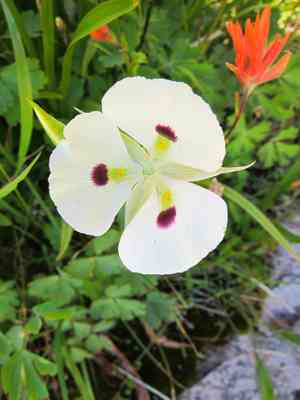
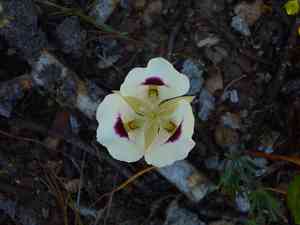
White mariposa lily (Calochortus eurycarpus)
Also known as: White Mariposa Lily
The white mariposa lily is a perennial herb known for its striking, large flowers, which range in color from white to purple, with distinctive yellow and purplish glandular hairs at the base. The plant features broad, grass-like leaves that clasp at the base. It thrives in open, sunny environments and is well-suited to dry regions that experience summer dormancy. These lilies emerge from bulbs and are typically found in grasslands, sagebrush areas, and open woodlands in the western United States.
In This Article
Attributes of White mariposa lily
Lifespan
Perennial
Plant Height
10 cm to 46 cm
Spread
N/A, it is a herbaceous plant
Leaf Color
Green
Flower Size
5-8 centimeters (2-3 inches)
Flower Color
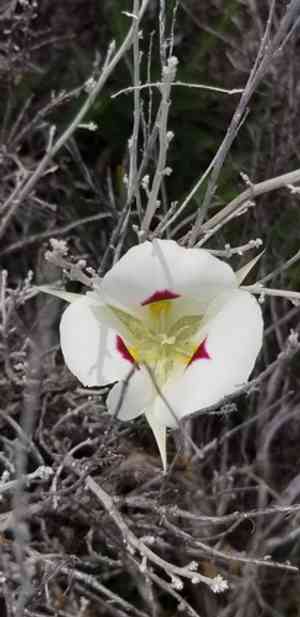
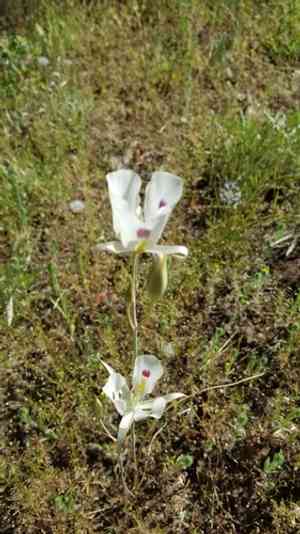
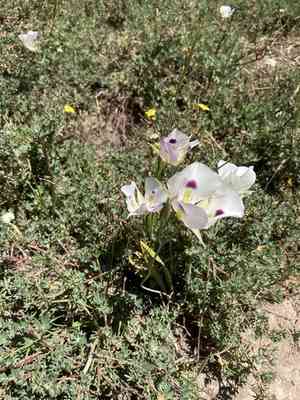
White with maroon spots
Images of White mariposa lily
Quickly Identify White mariposa lily
1
This plant can be identified by its large, showy white flowers with a distinctive maroon spot at the base of each petal. It typically has three petals and three sepals.
Scientific Classification of White mariposa lily
Phylum
Vascular plants
Class
Monocotyledons
Order
Liliales
Family
Lily
Genus
Mariposas
Species
White mariposa lily
Planting and Growing of White mariposa lily
Care Difficulty
Moderate
Watering Schedule
Every 2 days
Sunlight Requirements
Full sun
Sunshine Duration
6-10 hours
Ideal Temperature
60-75℉
Soil Type
Potting Mix, Peat Mix
Soil pH
6.5-7.5
Fertilizer Type
Balanced
Pruning Season
Spring, Summer
Pruning Area
Branches, Leaves
Pruning Frequency
2 times a year
Repotting Season
Spring
Pot Type
Terracotta, Plastic
 How to Water White mariposa lily?
Calochortus eurycarpus thrives best when soil moisture is just enough to keep the soil barely moist, but never soggy. A good rule of thumb would be to ensure roughly 250 ml of water per session, allowing the soil to drain thoroughly afterward. This amount ensures that moisture reaches the plant's shallow root system without causing waterlogging.
What are the symptoms of an underwatered White mariposa lily?
›
What should I do if my White mariposa lily is not getting enough water?
›
What are the symptoms of an overwatered White mariposa lily?
›
How to save an overwatered White mariposa lily?
›
 What Are the Sunlight Requirements for White mariposa lily?
The ideal lighting conditions for Calochortus eurycarpus include full to partial sun exposure, facilitating healthy leaf development and blooming. Providing such light levels supports robust growth and ensures colorful, ample blooms.
What is the best location for Calochortus eurycarpus to get ideal lighting?
›
How can I ensure Calochortus eurycarpus gets adequate light indoors?
›
Why is it important for Calochortus eurycarpus to have adequate light exposure?
›
 What Is the Ideal Temperature Range for White mariposa lily?
Calochortus eurycarpus thrives best in a temperature range of 60°F to 75°F. This range facilitates optimum growth and blooming, providing the plant with conditions similar to its native habitat. Why is 60°F to 75°F ideal for this plant? Within this range, the metabolic processes of the plant operate efficiently, supporting robust growth and vibrant flowering.
 What Soil is Best for White mariposa lily?
Calochortus eurycarpus thrives best in well-drained soil conditions. Ensuring good drainage prevents waterlogging, which is crucial to avoid root rot and enhance plant health. The plant benefits from a nutrient-rich environment that loamy soil can provide. The availability of essential nutrients supports robust growth and vibrant flowering. While good drainage is essential, moderate moisture retention helps the plant withstand short dry spells. Maintaining balanced moisture prevents stress in Calochortus eurycarpus.
 How to Fertilize White mariposa lily?
For Calochortus eurycarpus, the amount of fertilizer should be carefully moderated to avoid both over- and under-nourishing the plant. When using liquid fertilizer, prepare a solution that is half the recommended strength on the package. Apply about 100 ml of this diluted solution per plant. For slow-release granules, use about 5 grams per plant scattered evenly in the soil. These amounts cater to the plant's nutrient needs without overwhelming it.
 How to Prune White mariposa lily?
Examine the plant for any dead, yellowing, or damaged foliage and stalks. These should be the primary targets for removal, as they do not contribute to the plant's health or aesthetic appeal. Make your cuts at a 45-degree angle just above a healthy bud or leaf junction. This angle allows water to run off, reducing the risk of waterborne diseases at the cut site. Once the flowering season is over, cut back the old stalks to encourage new growth. This helps the plant conserve energy for the next blooming cycle, resulting in more robust flowers.
More About Pruning Techniques→
 How to Propagate White mariposa lily plant?
1
Collect seeds from mature Calochortus eurycarpus plants after flowering. Ensure seeds are dry and viable before storing or planting.
2
Sow seeds in a tray filled with a sterile potting mix. Cover seeds lightly with soil and water gently to avoid dislodging them.
3
Keep the soil moist and provide consistent warmth to promote seed germination. Seeds typically germinate within a few weeks under optimal conditions.
 How to Repot White mariposa lily plant?
1
You should consider repotting your Calochortus eurycarpus when it exhibits signs such as roots growing out of the drainage holes, the soil drying out faster than usual, or a general lack of vigor. These signals indicate that the plant is likely becoming root-bound and that the existing soil is depleted of nutrients, making repotting necessary to restore its vitality.
2
Select a pot that is only slightly larger than the current one, as Calochortus eurycarpus thrives in well-constricted spaces. A pot with good drainage holes prevents waterlogging, which can lead to root rot. Ceramic or terracotta pots are ideal as they allow the soil to breathe, providing a balanced moisture environment.
3
Opt for a sandy soil mix with excellent drainage to mimic the plant's natural habitat. Ensure the soil is loose, aiding in aeration and preventing compaction. This allows for the efficient uptake of water and nutrients. Adding perlite or pumice enhances drainage further, creating optimal conditions for healthy root development.
Learn More About White mariposa lily Diseases
Anthracnose
Bacterial Leaf Spot
Bacterial Soft Rot
Damping-off
Downy Mildew
Drought Stress
Fusarium Wilt
Gray Mold
Leaf Spot
Mosaic
Nutrient Deficiency
Nutrient Toxicity
Powdery Mildew
Root Rot
Root-knot Nematode
Rusts
Sooty Mold
Spider Mites
Temperature Stress
Thrips Damage
White Mold
Chemical Injury



