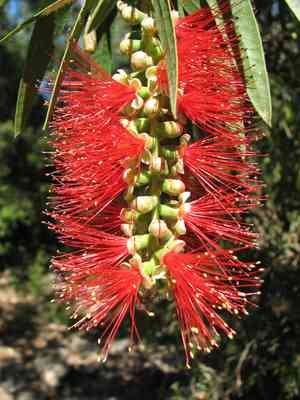
Bottlebrushes (Callistemon) (Callistemon)
Also known as: Bottlebrush, Crimson Bottlebrush
Bottlebrushes (Callistemon) are a group of flowering shrubs belonging to the myrtle family. They get their name from their unique flower spikes, which are long, cylindrical, and densely packed with straight stamens, making them look like bottle-cleaning brushes. These eye-catching flowers, typically blooming from mid-spring to early summer, have made bottlebrushes highly sought after as ornamental plants. Their vibrant colors and distinctive appearance add visual appeal to gardens and landscapes.
In This Article
Attributes of Bottlebrushes (Callistemon)
Lifespan
Perennial
Plant Height
2.5 m
Spread
2.5 m
Leaf Color
Green
Flower Size
2 to 10 cm (0.8 to 3.9 inches)
Flower Color
Red, pink, white, yellow
Images of Bottlebrushes (Callistemon)

Quickly Identify Bottlebrushes (Callistemon)
1
Callistemon can be identified by its characteristic flower spikes in shades of red, pink, or white. The leaves are narrow, stiff, and may have a lemony scent when crushed. The bark is often rough and light brown.
Scientific Classification of Bottlebrushes (Callistemon)
Phylum
Angiosperms
Class
Magnoliopsida
Order
Myrtales
Family
Myrtaceae
Genus
Callistemon
Planting and Growing of Bottlebrushes (Callistemon)
Care Difficulty
Easy
Watering Schedule
Every 3 days
Sunlight Requirements
Full sun
Sunshine Duration
4-6 hours
Ideal Temperature
75-86℉
Soil Type
Potting Mix, Peat Mix
Soil pH
6.5-7.5
Fertilizer Type
Balanced
Pruning Season
Spring, Summer
Pruning Area
Branches, Leaves
Pruning Frequency
Once a year
Repotting Season
Spring
Pot Type
Plastic, Ceramic
 How to Water Bottlebrushes (Callistemon)?
When watering Callistemon, ensure the soil is moistened adequately but not saturated. Aim for about 500ml of water, which should help in reaching a depth of at least 6 inches. The plant thrives when its roots are kept moist but also need a chance to breathe, so always check that excess water can drain away.
What are the symptoms of an underwatered Bottlebrushes (Callistemon)?
›
What should I do if my Bottlebrushes (Callistemon) is not getting enough water?
›
What are the symptoms of an overwatered Bottlebrushes (Callistemon)?
›
How to save an overwatered Bottlebrushes (Callistemon)?
›
 What Are the Sunlight Requirements for Bottlebrushes (Callistemon)?
Full sun exposure is ideal, promoting vibrant growth and luscious blooms. Consistent light enhances photosynthesis, producing energy critical for Callistemon's health and flowering.
What is the best location for Callistemon?
›
How can you ensure optimal lighting conditions?
›
What benefits does ideal lighting provide Callistemon?
›
 What Is the Ideal Temperature Range for Bottlebrushes (Callistemon)?
The ideal temperature range for Callistemon, commonly known as bottlebrush plant, is between 75°F and 86°F. This range is optimal for growth and flowering, providing the warmth necessary for its metabolic processes to function efficiently.
 What Soil is Best for Bottlebrushes (Callistemon)?
Callistemon thrives in well-draining soil as it prevents root rot, ensuring the roots receive adequate oxygen. This type of soil supports the healthy growth and vibrant blooms typical of this plant. While Callistemon does not demand highly fertile soil, moderate fertility helps provide necessary nutrients. This balance encourages robust growth and brilliant foliage without overwhelming the plant with excessive nutrients. Although Callistemon prefers well-draining soil, it also benefits from slight moisture retention. This capacity ensures that the soil does not dry out too fast, keeping the plant hydrated during dry spells.
 How to Fertilize Bottlebrushes (Callistemon)?
Callistemon, also known as Bottlebrush, requires a balanced fertilizer application to thrive. Use a general-purpose fertilizer with an N-P-K ratio of about 10-10-10. For liquid fertilizer, dilute according to package instructions and apply sparingly to avoid over-fertilization.
 How to Prune Bottlebrushes (Callistemon)?
The best time to prune Callistemon, also known as bottlebrush, is immediately after the flowering period. This timing ensures you do not cut off the flower buds for next year. Trim back the branches that have finished flowering to promote new growth that will produce blossoms in the following blooming season. When pruning, aim for a rounded shape to give your Callistemon an appealing, cohesive look. Trim any excessively long or wayward branches to maintain a balanced form. This encourages a more uniform growth pattern and prevents the plant from becoming leggy.
 How to Propagate Bottlebrushes (Callistemon) plant?
1
Gather seeds from mature Callistemon plants. Ensure the seed pods have fully matured and dried on the plant. Collect on a dry day to avoid moisture issues.
2
Select healthy branches from the Callistemon and cut a 6-10 inch section. Remove the lower leaves to expose the nodes, as this is where new roots will form.
3
Sow the seeds or plant the cuttings in well-draining soil. Water lightly and keep them in a humid environment to improve germination and rooting success.
 How to Repot Bottlebrushes (Callistemon) plant?
1
Callistemon should be repotted when its roots begin to outgrow the current pot, visible through drainage holes, or if water takes too long to drain from the soil. The best time to repot is in Spring or Summer when the plant enters its active growing phase, allowing it to recover from any root disturbance more swiftly.
2
Select a slightly larger pot with good drainage holes. This prevents water from pooling, reducing root rot risk. Callistemon prefers containers that allow roots to spread without causing water stagnation, ensuring both stability and healthy growth. Consider a ceramic or terracotta pot, which can help wick away excess moisture.
3
Opt for well-draining sandy soil. This type of soil replicates Callistemon’s natural environment, minimizing water retention and enhancing aeration around the roots. A mix containing sand, peat, and perlite is ideal, promoting drainage and preventing root rot, ensuring the plant remains healthy and vibrant.

