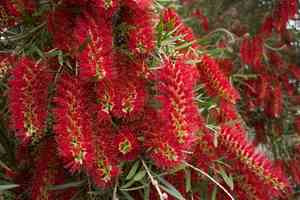
Weeping bottlebrush (Callistemon viminalis)
Also known as: Weeping Bottlebrush, Creek Bottlebrush
The Weeping Bottlebrush (Callistemon viminalis) is an evergreen tree native to Australia. Its name comes from its distinctive bright red flowers that look like bottle brushes. This tree is popular in gardens and is known for attracting birds with its sweet nectar.
In This Article
Attributes of Weeping bottlebrush
Lifespan
Perennial
Plant Type
Tree, Shrub
Plant Height
8 m to 10 m
Spread
2 m to 4 m
Leaf Color
Green Silver
Flower Size
8 cm to 10 cm
Flower Color
Red
Images of Weeping bottlebrush
Quickly Identify Weeping bottlebrush
1
Identifiable by its pendulous branches, narrow leaves, and bright red cylindrical flowers that resemble bottle brushes.
Scientific Classification of Weeping bottlebrush
Phylum
Vascular plants
Class
Dicotyledons
Order
Myrtle order
Family
Myrtle
Genus
Bottlebrushes
Species
Weeping bottlebrush
Planting and Growing of Weeping bottlebrush
Care Difficulty
Easy
Watering Schedule
Every 4 days
Sunlight Requirements
Full sun
Sunshine Duration
4-8 hours
Ideal Temperature
60-77℉
Soil Type
Potting Mix, Peat Mix
Soil pH
6.5-7.5
Fertilizer Type
Balanced
Pruning Season
Spring, Summer
Pruning Area
Branches, Leaves
Pruning Frequency
2 times a year
Repotting Season
Spring
Pot Type
Ceramic, Plastic
 How to Water Weeping bottlebrush?
For Callistemon viminalis, it's essential to ensure the soil is thoroughly soaked with each watering, allowing it to reach all parts of the root system. A typical amount could be about 500 milliliters per session, ensuring the water reaches at least halfway down the pot. This ensures the roots have a steady supply of moisture, encouraging even growth and vibrant leaves.
What are the symptoms of an underwatered Weeping bottlebrush?
›
What should I do if my Weeping bottlebrush is not getting enough water?
›
What are the symptoms of an overwatered Weeping bottlebrush?
›
How to save an overwatered Weeping bottlebrush?
›
 What Are the Sunlight Requirements for Weeping bottlebrush?
Callistemon viminalis prefers full sun exposure, thriving with 6 to 8 hours of direct sunlight daily. Ideal lighting ensures lush growth, optimal flowering, and enhances overall plant health and vitality.
More About Sunlight Requirements Techniques→
What light conditions does it thrive in?
›
How to achieve ideal lighting conditions?
›
What are the benefits of ideal lighting for this plant?
›
 What Is the Ideal Temperature Range for Weeping bottlebrush?
For optimal growth, Callistemon viminalis thrives in temperatures between 60°F and 77°F. These temperatures support the plant's physiological processes and encourage vigorous growth, ensuring healthy and abundant flowering.
 What Soil is Best for Weeping bottlebrush?
Callistemon viminalis thrives best in soil that offers excellent drainage. Too much water retention can lead to root rot, damaging the plant's health. Sandy and loamy soils often provide the perfect mix of drainage and moisture retention. This plant prefers soil that is rich in nutrients. By using compost or organic matter, you can enhance the soil's fertility, ensuring the plant gets all essential nutrients, leading to robust growth and vibrant blooms. While Callistemon viminalis can tolerate dry spells, it thrives in moist soils. Ensure the soil retains some moisture without becoming waterlogged to maintain the health and vitality of the plant.
 How to Fertilize Weeping bottlebrush?
For Callistemon viminalis, it's essential to apply fertilizer at the right quantity to ensure healthy growth. Use a balanced fertilizer with an N-P-K ratio of 10-10-10 or 12-12-12 for optimal results. For liquid fertilizers, dilute them according to the manufacturer's instructions and apply uniformly around the base of the plant.
 How to Prune Weeping bottlebrush?
The best time to prune your Callistemon viminalis is right after it finishes blooming. This helps to promote the growth of new flower buds for the next season, ensuring a spectacular display in the coming year. To maintain its shape, cut back longer branches that extend beyond the desired canopy size. This encourages denser, bushier growth, which improves the plant’s overall aesthetic and health. Regularly inspect the plant for dead, diseased, or crossing branches. Removing these not only keeps the plant healthy but also redirects nutrients to healthier parts of the plant, boosting its vigor and longevity.
More About Pruning Techniques→
 How to Propagate Weeping bottlebrush plant?
1
Collect the seed pods from a mature Callistemon viminalis plant after flowering. Allow them to dry completely before extracting the seeds.
2
Choose healthy, semi-hardwood stems and cut them to about 10-15 cm long. Remove the lower leaves to reduce transpiration and dip the cut end in rooting hormone.
3
Plant seeds or cuttings into moist, well-draining soil mix in pots or trays. Water lightly to avoid washing away seeds or dislodging cuttings.
 How to Repot Weeping bottlebrush plant?
1
For Callistemon viminalis, repotting is best observed when roots start to emerge from drainage holes or when growth seems stunted. These indicators suggest the plant has outgrown its current container, requiring more space to thrive.
2
Select a pot that is 2-3 inches larger in diameter than the current one to allow space for root expansion. Ensure it has sufficient drainage holes, which is crucial to prevent water accumulation, reducing the risk of root rot and maintaining healthier conditions.
3
Use a well-draining potting mix, preferably one containing a mix of sand and organic matter. This combination prevents waterlogging, allowing roots to get the necessary oxygen, ensuring robust and healthy growth.



