Bottlebrush(Callistemon rigidus)

Bottlebrush (Callistemon rigidus)

Also known as: Stiff Bottlebrush, Rigid Bottlebrush

Bottlebrush (*Callistemon rigidus*), originally from Queensland and New South Wales, Australia, flourishes in various soil types, provided they are well-drained. It requires ample sunlight, thriving best in locations that receive full sun exposure. The vibrant flowers are a magnet for pollinators like hummingbirds and butterflies.

Key conditions for optimal growth include:

- **Light**: Full sun (6+ hours of direct light daily).
- **Soil**: Prefers well-drained soil, tolerating a range from slightly acidic to neutral.
- **Water Needs**: Moderate; established plants are drought-resistant.
- **Temperature**: Enjoys warm climates but endures light frost.
- **Placement**: Ensure good spacing (4-6 feet apart) for air circulation.

Adding mulch can help maintain soil moisture and temperature, while avoiding waterlogged soil prevents root issues.

Attributes of Bottlebrush

Lifespan
Perennial
Plant Type
Shrub
Plant Height
91 cm to 2.5 m
Spread
2.5 m
Leaf Color
Green
Flower Size
2.5 cm
Flower Color
Red

ForwardPlant - Identify plants with a snap

Identify and diagnose plants, get toxicity alerts, and explore safety guides for all types of fungi.

Try for Free

Images of Bottlebrush

Bottlebrush(Callistemon rigidus)

Quickly Identify Bottlebrush

1
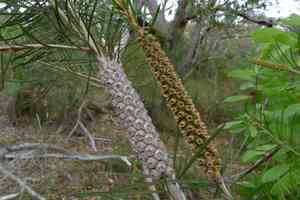
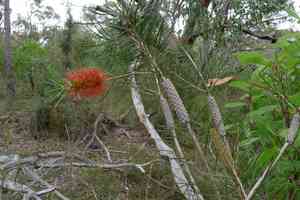
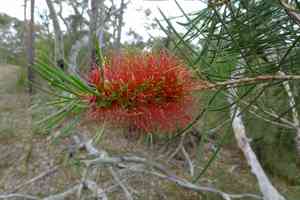
Identify Callistemon rigidus by its stiff, narrow leaves and its distinctive cylindrical flower spikes with bright red stamens. The stems and leaves may have a hard, almost rigid texture.

Scientific Classification of Bottlebrush

Phylum
Vascular plants
Class
Dicotyledons
Order
Myrtle order
Family
Myrtle
Genus
Bottlebrushes
Species
Bottlebrush

Planting and Growing of Bottlebrush

Care Difficulty
Easy
Watering Schedule
Every 2 days
Sunlight Requirements
Full sun
Sunshine Duration
4-8 hours
Ideal Temperature
60-77℉
Soil Type
Potting Mix, Peat Mix
Soil pH
6-7.5
Fertilizer Type
Balanced
Pruning Season
Spring, Summer
Pruning Area
Branches, Leaves
Pruning Frequency
2 times a year
Repotting Season
Spring
Pot Type
Plastic, Terracotta

water icon How to Water Bottlebrush?

For Callistemon rigidus, it's crucial to provide approximately 350 milliliters of water per session. This amount ensures the soil is adequately moist but not waterlogged, as their roots prefer well-drained soil. Water until you see a slight runoff from the pot's drainage holes, indicating the root zone is sufficiently hydrated.
What are the symptoms of an underwatered Bottlebrush?
What should I do if my Bottlebrush is not getting enough water?
What are the symptoms of an overwatered Bottlebrush?
How to save an overwatered Bottlebrush?

sunlight icon What Are the Sunlight Requirements for Bottlebrush?

Sunlight Requirements: Full sun
Duration of light: 6 to 8 hours
This plant thrives in full sun, benefitting from 6 to 8 hours of direct sunlight daily. Such conditions promote healthy growth, facilitating ample flowering and robust, green foliage.
What is the optimal light condition for Callistemon rigidus?
How can I ensure that my Callistemon rigidus is getting the ideal light?
What benefits does Callistemon rigidus experience under ideal lighting?
More About Sunlight Requirements Techniques

temperature icon What Is the Ideal Temperature Range for Bottlebrush?

Ideal Temperature: 60 ~ 77℉
The ideal temperature range for Callistemon rigdus, also known as the stiff bottlebrush, is between 60°F to 77°F. This range ensures optimal growth and blooming conditions. Within this temperature bracket, the plant can efficiently carry out photosynthesis, leading to vibrant flowers and healthy foliage. Maintaining these temperatures also helps in preventing stress conditions which could make the plant susceptible to pests and diseases.

soil icon What Soil is Best for Bottlebrush?

Soil type: Sandy soil, Loam
Soil PH: 6 ~ 7.5
Callistemon rigidus thrives in well-drained soil, which ensures proper root aeration and prevents waterlogging. This capacity to drain excess moisture is crucial as it reduces the risk of root rot, ultimately promoting healthy growth and vibrant blooming. While Callistemon rigidus prefers well-drained soil, it also requires moderate moisture levels. Providing a balance ensures that the plant is neither too dry nor too wet, encouraging optimal nutrient absorption and enhancing its resilience to environmental stresses. These plants benefit from soils enriched with organic matter, which improves soil fertility. A rich nutrient base supports robust foliage development and increases flowering potential, making your Callistemon flourish with brilliant, bottlebrush-like blossoms. More About Soil

fertilize icon How to Fertilize Bottlebrush?

Fertilizer type: Balanced
For Callistemon rigidus, it's essential to consider the balance in nitrogen, phosphorus, and potassium mix. Typically, use a fertilizer with equal parts or a ratio like 10-10-10. Apply liquid fertilizer following the label instructions, usually around 1 tablespoon per gallon of water, and ensure the soil is well-drained. More About Fertilizing Techniques

prune icon How to Prune Bottlebrush?

Pruning Time: Spring, Summer
Start by identifying and removing any dead or diseased branches. This will prevent the spread of disease and allow for better air circulation. Focus on maintaining the plant's natural shape by pruning to just above a leaf bud. This encourages the plant to produce blooms more abundantly. If the plant has grown too large, you can reduce its size by up to one-third. Ensure you are trimming back to lateral branches to maintain the plant's structure. After pruning, water the plant well and consider applying a balanced fertilizer to support regrowth and flowering. More About Pruning Techniques

propagate icon How to Propagate Bottlebrush plant?

Propagate Time: Spring,Early summer
1
Select healthy stems about 10 cm long. Make the cutting below a node and remove the lower leaves. Dip the cut end in rooting hormone before planting.
2
For seed propagation, spread the seeds evenly in a seed tray filled with a light, well-draining mix. Keep the surface even and water lightly to avoid displacing seeds.
3
Once the seedlings develop a few sets of true leaves, they can be carefully transplanted into larger pots or directly into the garden, ensuring they're planted at the same depth as in the seed tray.
More About Propagating Techniques

repot icon How to Repot Bottlebrush plant?

Repotting frequency: Every 2-3 years
1
Callistemon rigidus signals its need for repotting with signs like stunted growth or roots growing out of the drainage holes. The ideal time for repotting this plant is during its dormant phase in spring or autumn, allowing it ample time to establish itself in the new pot before the active growing season.
2
Select a pot that is one size larger than the current one to provide adequate space for root development. Ensure it has good drainage to prevent waterlogging, which can lead to root rot. A pot with a wide mouth is beneficial for the expansion of the plant's bushy form, promoting a healthy, vibrant appearance.
3
Opt for a well-draining potting mix, ideally a blend designed for Mediterranean plants. This type of soil provides excellent aeration while retaining enough moisture to keep the plant hydrated. It's especially beneficial for Callistemon rigidus as it mimics its natural sandy soil habitat, encouraging robust growth.

ForwardPlant - Identify plants with a snap

Find the best spots for them to optimize their health, simply using your phone.

Try for Free