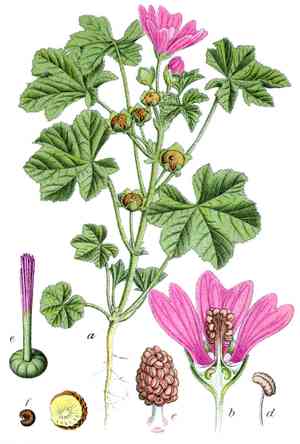
Bush's Poppymallow (Callirhoe bushii)
Also known as: High Mallow, Mallow, Tree Mallow
Callirhoe bushii, also known as Bush's poppy-mallow, is a perennial plant recognized for its striking magenta, cup-shaped flowers that bloom from late spring to early summer. Often referred to as wine cups due to their shape and color, this plant thrives in full sun to partial shade and prefers medium to dry soil. It is also known to attract butterflies.
In This Article
Attributes of Bush's Poppymallow
Lifespan
Perennial
Plant Type
Herb
Plant Height
30 cm to 61 cm
Spread
30 cm to 60 cm
Leaf Color
Green
Flower Size
2.5 cm to 8 cm
Flower Color
Purple Pink Red Lavender
Images of Bush's Poppymallow
Quickly Identify Bush's Poppymallow
1
Distinct palmately divided leaves with 5-7 lobes resembling a hand.
2
Vibrant magenta cup-shaped flowers with white bases and hairy green sepals.
3
Seed head formed into a unique flat ring structure housing dark brown to black seeds.
4
Weakly erect stems covered in greenish white hairs, sprawling and not rooting at nodes.
5
Modest stature, reaching 1-2 feet (30-60 cm) with a sprawling growth habit.
Scientific Classification of Bush's Poppymallow
Phylum
Vascular plants
Class
Dicotyledons
Order
Malvales
Family
Mallow
Genus
Poppy mallows
Species
Bush's Poppymallow
Planting and Growing of Bush's Poppymallow
Care Difficulty
Easy
Watering Schedule
Every 4 days
Sunlight Requirements
Full sun
Sunshine Duration
4-6 hours
Ideal Temperature
65-75℉
Soil Type
Potting Mix, Peat Mix
Soil pH
6.5-7.5
Fertilizer Type
Balanced
Pruning Season
Spring, Summer
Pruning Area
Branches, Leaves
Pruning Frequency
2 times a year
Repotting Season
Spring
Pot Type
Plastic, Ceramic
 How to Water Bush's Poppymallow?
The Callirhoe bushii, commonly known as Bush's Poppy Mallow, requires watering until the soil is consistently moist but not drenched. A typical guideline is about 500 milliliters per session. It's crucial to ensure that the water penetrates deeply to reach the plant's roots, providing ample moisture without causing waterlogging, which can harm the plant.
What are the symptoms of an underwatered Bush's Poppymallow?
›
What should I do if my Bush's Poppymallow is not getting enough water?
›
What are the symptoms of an overwatered Bush's Poppymallow?
›
How to save an overwatered Bush's Poppymallow?
›
 What Are the Sunlight Requirements for Bush's Poppymallow?
Prefers full sun to partial sun daily. This exposure supports vibrant blooming, resilience against pests, and overall health of Callirhoe bushii.
More About Sunlight Requirements Techniques→
Optimal Light Levels
›
Solutions for Ideal Lighting
›
Benefits of Ideal Lighting
›
 What Is the Ideal Temperature Range for Bush's Poppymallow?
The ideal temperature range for growing Callirhoe bushii is between 65°F and 75°F. Maintaining temperatures within this range ensures optimal plant health and growth. These conditions help the plant's metabolic processes to function efficiently, supporting photosynthesis and overall vigor.
 What Soil is Best for Bush's Poppymallow?
Callirhoe bushii thrives in well-drained soils as it helps prevent root rot and allows the roots to receive adequate air. Soggy soil is the enemy for this plant, so good drainage ensures healthy growth and vibrant blossoms. While not overly fussy, Callirhoe bushii benefits from soils with moderate fertility. A balanced nutrient profile supports its growth and blooming, making sure it draws sufficient nutrients for vitality and color. A sandy texture is ideal for this plant because it facilitates easy water movement and root expansion. Sandy soils prevent compaction, allowing roots to explore and access nutrients freely.
 How to Fertilize Bush's Poppymallow?
For Callirhoe bushii, use a balanced liquid fertilizer with an N-P-K ratio of approximately 10-10-10. When using slow-release fertilizers, apply at a rate of about 2 pounds per 100 square feet. This ensures that the plant receives an adequate supply of nutrients without risk of over-fertilization.
 How to Prune Bush's Poppymallow?
Start by removing any dead or damaged stems by cutting them back to ground level. Then, thin out crowded areas by selectively cutting the oldest branches to the base. This allows light and air to circulate, promoting healthy growth. To maintain an attractive shape, prune back the outermost stems to encourage a bushier appearance. Aim to cut just above a leaf node to encourage new growth.
More About Pruning Techniques→
 How to Propagate Bush's Poppymallow plant?
1
Harvest seeds from mature flowers at the end of the blooming season. Ensure seeds are dry before storing them in a cool, dark place until ready to plant in early spring. Proper storage helps maintain seed viability.
2
Use a well-draining potting mix or prepare garden beds by incorporating organic matter. The soil should be loose and rich in nutrients to promote root growth. Proper soil preparation is key to successful germination and strong seedling development.
3
During late spring, take cuttings from healthy, non-flowering shoots. Each cutting should be about 4-6 inches long with 2-3 leaves. Use sharp pruners and make cuts at a slight angle to encourage rooting.
 How to Repot Bush's Poppymallow plant?
1
Repot Callirhoe bushii when its roots start circling the pot or when you notice reduced growth. The best time is in spring, as it coincides with the plant’s active growing season, allowing it to recover quickly.
2
Select a pot slightly larger than the current one, with ample drainage holes. This prevents waterlogging, which is crucial as Callirhoe bushii prefers well-drained conditions. A clay pot can help excess moisture evaporate.
3
Opt for a well-draining potting mix that mimics the plant's natural environment. Incorporating sand and perlite can improve drainage, aiding in preventing root rot and ensuring healthy root development.
Learn More About Bush's Poppymallow Diseases
Anthracnose
Bacterial Leaf Spot
Bacterial Soft Rot
Bacterial Wilt
Black Spot
Chemical Injury
Crown Gall
Damping-off
Downy Mildew
Drought Stress
Fusarium Wilt
Gray Mold
Leaf Curl
Leaf Spot
Mosaic
Nutrient Deficiency
Nutrient Toxicity
Powdery Mildew
Root Rot
Root-knot Nematode
Rusts
Sooty Mold
Spider Mites
Temperature Stress
Thrips Damage
White Mold



