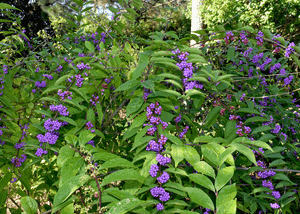
American beautyberry (Callicarpa americana)
Also known as: French mulberry
Often found in woodlands and open meadows, the elderberry is a valuable food source for small mammals and songbirds. While the raw berries can be bitter, they can be cooked and sweetened to make delicious jellies. Additionally, elderberries are a great choice for home and garden landscapes.
In This Article
Attributes of American beautyberry
Lifespan
Perennial
Plant Type
Shrub
Plant Height
90 cm to 1.8 m
Spread
90 cm to 1.8 m
Leaf Color
Green Bronze
Flower Size
2.5 cm
Flower Color
Pink White Purple
Images of American beautyberry
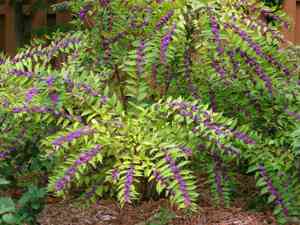
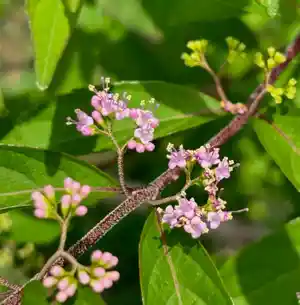
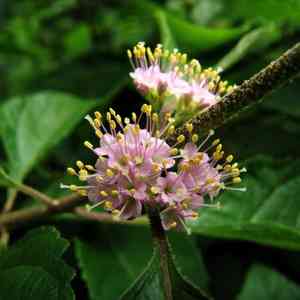
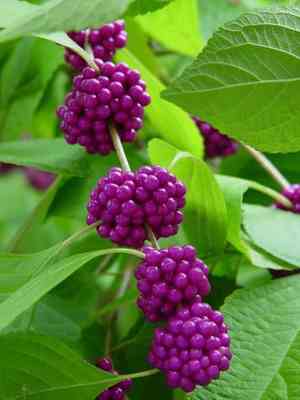
Quickly Identify American beautyberry
1
Multi-stemmed habit reaching 3-8 feet (1-2.5 meters) in height.
2
Oppositely arranged, serrated leaves with medium green color and wooly undersides.
3
Clusters of small lavender to pink flowers in cymes at leaf axils.
4
Distinctive tight clusters of glossy, bright purple berries encircling stems.
5
Trunk with smooth, light brown bark transitioning to reddish-brown with corky ridges.
Scientific Classification of American beautyberry
Phylum
Vascular plants
Class
Dicotyledons
Order
Lamiales
Family
Mint
Genus
Beautyberries
Species
American beautyberry
Planting and Growing of American beautyberry
Care Difficulty
Easy
Watering Schedule
Every 3 days
Sunlight Requirements
Full sun
Sunshine Duration
6-10 hours
Ideal Temperature
70-85℉
Soil Type
Potting Mix, Peat Mix
Soil pH
6.5-7.5
Fertilizer Type
Balanced
Pruning Season
Spring, Summer
Pruning Area
Branches, Leaves
Pruning Frequency
2 times a year
Repotting Season
Spring
Pot Type
Plastic, Ceramic
 How to Water American beautyberry?
For Callicarpa americana, aim to provide around 500 milliliters of water per session. Ensure the soil is evenly soaked but avoid waterlogging. The soil should be allowed to dry slightly between waterings to mimic its natural environment.
More About Watering Techniques→
What are the symptoms of an underwatered American beautyberry?
›
What should I do if my American beautyberry is not getting enough water?
›
What are the symptoms of an overwatered American beautyberry?
›
How to save an overwatered American beautyberry?
›
 What Are the Sunlight Requirements for American beautyberry?
The plant thrives in full sun to partial sun environments, offering robust health and plenty of vibrant berries when optimal light is provided.
More About Sunlight Requirements Techniques→
What is the best lighting condition for Callicarpa americana?
›
How can I ensure Callicarpa americana gets ideal light?
›
What benefits will Callicarpa americana gain from ideal light conditions?
›
 What Is the Ideal Temperature Range for American beautyberry?
Callicarpa americana thrives best in temperatures ranging from 70°F to 85°F. This range provides an environment that closely resembles its natural habitat, ensuring healthy growth and vibrant foliage. Consistent temperatures within this range are ideal for photosynthesis and nutrient uptake, promoting the plant's overall vitality.
 What Soil is Best for American beautyberry?
American Beautyberry thrives best in soil that drains well. Ensuring proper drainage prevents root rot and other moisture-related issues, promoting healthy growth and vibrant foliage. Adding organic matter enriches the soil, providing essential nutrients which improve plant health and increase its resistance to pests and diseases. While not overly demanding, Callicarpa americana benefits from moderately fertile soil. This balance maintains the plant's growth without excessive vegetative growth that might hinder berry production.
More About Soil→
 How to Fertilize American beautyberry?
When applying fertilizer to Callicarpa americana, use a balanced 10-10-10 or 14-14-14 formula. For liquid fertilizers, mix at a concentration of 1 tablespoon per gallon of water. For slow-release granules, apply approximately 1 ounce per square foot of soil, ensuring even distribution around the root zone without direct contact with the plant base.
More About Fertilizing Techniques→
 How to Prune American beautyberry?
Before pruning, carefully inspect the Callicarpa americana to identify which branches are dead, diseased, or growing incorrectly. Start by cutting away any dead or infected branches. Make cuts at a 45-degree angle just above a healthy bud or branching node. Trim branches that cross and disrupt the plant's natural form, aiming for an open, vase-like shape. This encourages air circulation and prevents disease. Prune back the previous year's growth by about one-third to stimulate the development of strong, new branches and to increase berry production.
More About Pruning Techniques→
 How to Propagate American beautyberry plant?
1
Collect ripe berries from the Callicarpa americana in late summer or early autumn. Extract seeds by mashing the berries, then rinse to remove pulp. Dry seeds thoroughly before storage.
2
In early summer, take 4- to 6-inch long semi-hardwood cuttings. Remove leaves from the bottom half. Dip cut end in rooting hormone to enhance root development.
3
In early spring, dig up a mature plant and gently separate clusters of roots. Ensure each division has a good root base. Replant immediately in nutrient-rich soil.
 How to Repot American beautyberry plant?
1
Callicarpa americana shows signs of needing repotting when roots start escaping through drainage holes, or the plant looks top-heavy and dries out quickly. Spring and early summer are ideal times, as the plant is in active growth, allowing it to adjust better to the new pot.
2
Select a pot that is one size larger than the current one, with adequate drainage holes to prevent waterlogging. Using a pot size that accommodates growth without overwhelming the roots ensures stability and helps avoid root rot.
3
Opt for a well-draining loam mix to support healthy root growth while providing necessary nutrients. The chosen soil should maintain moisture but not stay soggy, preventing over-watering risks and ensuring your Callicarpa americana thrives.



