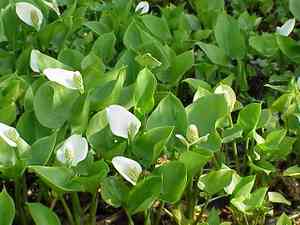
Bog arum (Calla) (Calla)
Also known as: Marsh calla, Wild calla
Bog arum, scientifically known as Calla palustris, can be found in temperate and subarctic regions of the Northern Hemisphere, particularly in wetland areas like bogs, marshes, and forest swamps. These semi-aquatic, perennial plants grow in standing or slow-moving water and prefer acidic soils. They are known to be toxic, so caution is advised when handling them.
In This Article
Attributes of Bog arum (Calla)
Lifespan
Calla lilies generally grow in a yearly cycle, where they go through periods of dormancy and active growth stages.
Plant Height
1 to 3 feet
Spread
1 to 2 feet
Leaf Color
Dark green
Flower Size
3 to 5 inches
Flower Color
White, yellow, pink, purple
Images of Bog arum (Calla)
Quickly Identify Bog arum (Calla)
1
Calla lilies can be identified by their trumpet-shaped flowers, large and arrow-shaped leaves, and their unique spadix and spathe structures. They often have smooth, glossy green leaves and are typically found near water sources.
Scientific Classification of Bog arum (Calla)
Phylum
Magnoliophyta
Class
Liliopsida
Order
Alismatales
Family
Araceae
Genus
Zantedeschia
Planting and Growing of Bog arum (Calla)
Care Difficulty
Easy
Watering Schedule
Every 2 days
Sunlight Requirements
Partial sun
Sunshine Duration
4-6 hours
Ideal Temperature
65-75℉
Soil Type
Potting Mix, Peat Mix
Soil pH
6.5-7.5
Fertilizer Type
Balanced
Pruning Season
Spring, Summer
Pruning Area
Branches, Leaves
Pruning Frequency
2 times a year
Repotting Season
Spring
Pot Type
Plastic, Ceramic
 How to Water Bog arum (Calla)?
Calla, or Zantedeschia, requires a watering approach that ensures the soil is consistently moist but never waterlogged. A typical watering session should provide about 500 ml of water. This suffices to moisten the soil thoroughly, allowing the roots to absorb the necessary moisture without drenching them excessively.
What are the symptoms of an underwatered Bog arum (Calla)?
›
What should I do if my Bog arum (Calla) is not getting enough water?
›
What are the symptoms of an overwatered Bog arum (Calla)?
›
How to save an overwatered Bog arum (Calla)?
›
 What Are the Sunlight Requirements for Bog arum (Calla)?
Calla lilies flourish best under partial sun to full shade conditions. Providing such lighting encourages lush foliage and vibrant blooms without risking sunburn.
What is the ideal light for Calla?
›
How to achieve ideal lighting for Calla?
›
What benefits does ideal lighting provide for Calla?
›
 What Is the Ideal Temperature Range for Bog arum (Calla)?
Calla plants thrive in a temperature range between 65°F and 75°F. This range provides the perfect balance for their growth and flowering, ensuring that they have the energy to produce lush foliage and vibrant blossoms. Maintaining consistent warmth within this range can significantly impact the overall health and longevity of the plant.
 What Soil is Best for Bog arum (Calla)?
Calla thrives in soil that retains sufficient moisture without becoming waterlogged. Good moisture retention supports the plant's water needs and prevents stress. Soil must offer excellent drainage to prevent root rot. Well-draining soil balances water retention, ensuring roots receive ample air. Rich in organic matter, nutrient-dense soil ensures robust growth and vibrant blooms by providing essential nutrients for plant health.
 How to Fertilize Bog arum (Calla)?
For Calla lilies, a balanced amount of fertilizer is essential. Use a water-soluble fertilizer diluted to half-strength. This equates to approximately 1 tablespoon per gallon of water, applied during the growing season.
 How to Prune Bog arum (Calla)?
Begin by sterilizing your pruning shears to prevent infection. Focus on removing any dead or yellowing foliage at the base. Trim back faded blooms to encourage new flower growth. Ensure to make cuts at a 45-degree angle to promote optimal healing.
 How to Propagate Bog arum (Calla) plant?
1
Fill the seed tray with a well-draining potting mix suited for Calla lilies. Moisten the mix slightly but ensure it is not waterlogged. Spread the seeds evenly across the surface, pressing them gently into the soil without covering them entirely.
2
To divide Calla lily rhizomes, carefully remove the plant from its pot and gently brush off the soil. Use a sharp knife to cut the rhizome into sections, ensuring each section includes a healthy growing point or 'eye'.
3
Once divided, plant the rhizome sections in individual pots or directly in the ground. Position them horizontally and cover lightly with soil. Water them thoroughly to aid settling and encourage root growth.
 How to Repot Bog arum (Calla) plant?
1
Repot your Calla lily when you notice slow growth or roots protruding from the pot drainage holes. The best times are during its active growth periods in spring or summer, ensuring the plant has maximum time to reestablish itself.
2
Select a pot that is 2 inches larger in diameter than the current one, with adequate drainage holes. This will allow for proper root expansion and prevent waterlogging, facilitating healthier growth conditions for your Calla lily.
3
Opt for a soil mix that is rich in organic matter, well-draining, ideally including peat and sand. This composition retains enough moisture while allowing excess water to drain, essential for the health of your Calla.
Toxicity
Ingestion
WARNING
The judgment on toxicity and danger is for reference only. We DO NOT GUARANTEE any accuracy of such judgment. Therefore, you SHALL NOT rely on such judgment. It is IMPORTANT TO SEEK PROFESSIONAL ADVICE in advance when necessary.

