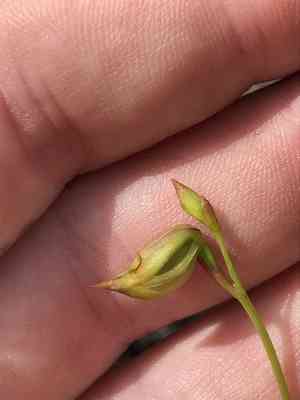
Large flying duck orchid (Caleana major)
Also known as: Flying Duck Orchid
Caleana major, commonly known as the flying duck orchid, is a tuberous perennial herb that typically reaches a height of 20 to 51 cm. It features a single, narrow, lance-shaped leaf that is reddish in color, measuring 5 to 13 cm in length and 5 to 8 mm in width, often with spots. The plant produces up to five glossy reddish-brown flowers, each 2 to 2.5 cm long and 5 to 8 mm wide, on a slender, wiry stem. The column has broad wings, with the dorsal sepal and petals nearly touching, and the lateral sepals extend backward, resembling wings.
In This Article
Attributes of Large flying duck orchid
Lifespan
Perennial
Plant Type
Herb
Plant Height
20 cm to 51 cm
Spread
Not Applicable
Leaf Color
Reddish-purple
Flower Size
2.5 cm
Flower Color
Yellow Green Purple
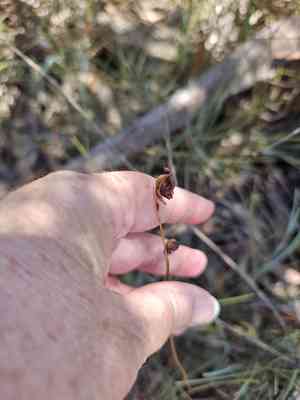
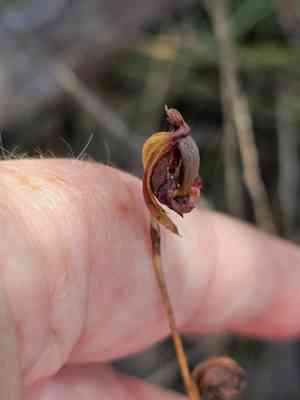
Images of Large flying duck orchid
Quickly Identify Large flying duck orchid
1
Caleana major can be identified by its distinctive flower shape, which mimics a duck in flight, and its single reddish-purple leaf.
Scientific Classification of Large flying duck orchid
Phylum
Vascular plants
Class
Monocotyledons
Order
Asparagus and allies
Family
Orchid
Genus
Duck orchids
Species
Large flying duck orchid
Planting and Growing of Large flying duck orchid
Care Difficulty
Hard
Watering Schedule
Every day
Sunlight Requirements
Partial sun
Sunshine Duration
4-8 hours
Ideal Temperature
60-75℉
Soil Type
Potting Mix, Peat Mix
Soil pH
6.5-7.5
Fertilizer Type
Balanced
Pruning Season
Spring, Summer
Pruning Area
Branches, Leaves
Pruning Frequency
2 times a year
Repotting Season
Spring
Pot Type
Plastic, Ceramic
 How to Water Large flying duck orchid?
Caleana major requires a careful watering strategy. The plant should be watered with approximately 50 milliliters each time, ensuring the soil is evenly moist but not waterlogged. It's vital to adhere to the principle of letting the topsoil dry out slightly between waterings to mimic its natural conditions.
What are the symptoms of an underwatered Large flying duck orchid?
›
What should I do if my Large flying duck orchid is not getting enough water?
›
What are the symptoms of an overwatered Large flying duck orchid?
›
How to save an overwatered Large flying duck orchid?
›
 What Are the Sunlight Requirements for Large flying duck orchid?
Partial sun mimics its natural habitat, allowing Caleana major to benefit from filtered sunlight that supports its delicate structure and flowering cycle. This balance enhances its growth and flowering while protecting against environmental stress.
More About Sunlight Requirements Techniques→
How to Achieve Ideal Lighting for Caleana major?
›
What Solutions Can Provide Optimal Lighting?
›
Benefits of Ideal Lighting Conditions
›
 What Is the Ideal Temperature Range for Large flying duck orchid?
The ideal temperature range for growing Caleana major, commonly known as the Flying Duck Orchid, is between 60°F and 75°F. This range helps ensure optimal growth and bloom, providing conditions similar to its native habitat in Australia. In these temperatures, the plant can maintain healthy photosynthesis and produce vibrant flowers.
 What Soil is Best for Large flying duck orchid?
Caleana major thrives in soil that offers excellent drainage. This helps prevent root rot and ensures that the plant receives just the right amount of moisture without standing water. The plant benefits from soil that is rich in organic matter. This kind of soil provides essential nutrients needed for healthy growth, leading to vibrant flowers and robust plant health. While drainage is crucial, the soil should also retain some moisture. This balance ensures that the plant has consistent access to water, especially during dry spells, without oversaturating the roots.
 How to Fertilize Large flying duck orchid?
For Caleana major, apply liquid fertilizer at half the recommended strength to prevent overfeeding. Use about 1-2 tablespoons per gallon of water when applying liquid fertilizer to avoid nutrient burn.
 How to Prune Large flying duck orchid?
Begin by examining the plant to identify any dead or yellowing foliage. This foliage no longer supports the plant's growth and should be removed to direct energy to healthy parts. Using clean, sharp scissors or pruning shears, gently cut away dead foliage or spent flower stems. Make cuts just above healthy nodes to encourage new growth from those points. Collect all the pruned material and dispose of it properly. This reduces the chance of fungal infections or pest infestations that can arise from decomposing plant material.
More About Pruning Techniques→
 How to Propagate Large flying duck orchid plant?
1
Allow the seed pods to mature and dry on the plant before collecting them. Harvest seed pods carefully to avoid damage and ensure that they have fully developed. Once collected, clean and dry them thoroughly to prepare for sowing.
2
Sow seeds onto the surface of a sterile and moist growing medium. Lightly press them into the medium without covering them, as these seeds require light to germinate. Keep the medium consistently moist by misting it with water, avoiding excessive watering.
3
Maintain the temperature around 18-24°C (64-75°F) for ideal germination conditions. Using a heated propagator may help regulate the temperature and improve germination rates.
 How to Repot Large flying duck orchid plant?
1
Caleana major, commonly known as the Flying Duck Orchid, needs repotting when you notice its roots are tightly packed or emerging from the drainage holes of the pot. Another indication is if the growing medium has broken down and is no longer providing adequate drainage. The best time to repot is during its dormant period, ensuring the least disturbance when the plant is not actively growing.
2
Select a pot that is only slightly larger than the current one to prevent overwatering issues, as the plant enjoys a snug fit. It's beneficial to choose pots with ample drainage to prevent water-logging, which can be detrimental to the roots. Terracotta pots are ideal as they allow the roots to breathe and provide stability while keeping humidity around the plant.
3
Opt for a well-draining orchid mix that mimics its natural environment. This typically includes a mix of bark, perlite, and sphagnum moss. Such a composition allows for good air circulation around the roots, which is vital for the plant's health. It also helps maintain balanced moisture levels, preventing root rot or other moisture-related issues.



