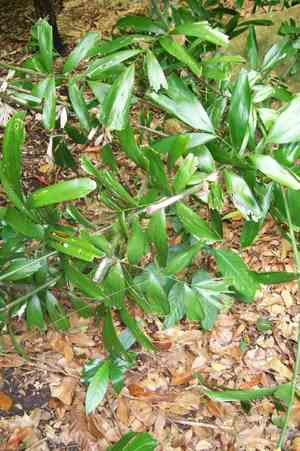
Fishtail lawyer cane (Calamus caryotoides)
Also known as: Fishtail Rattan, Fishtail Palm
The fishtail lawyer cane is a tropical, clumping palm characterized by its tall, slender stems that extend upwards. Its feathery, arching fronds create an elegant canopy, similar to a gracefully poised fishing rod. The plant's glossy green foliage stands out against its flexible, woody stems. It flourishes in humid conditions, with its roots penetrating deeply into moist, well-drained soil to maintain its vertical growth.
In This Article
Attributes of Fishtail lawyer cane
Lifespan
Perennial
Plant Type
Palm
Plant Height
Up to 20 meters
Spread
N/A (climbing habit)
Leaf Color
Green
Flower Size
Small, less than 1 cm
Flower Color
Yellow to white
Images of Fishtail lawyer cane
Quickly Identify Fishtail lawyer cane
1
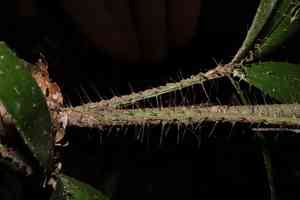
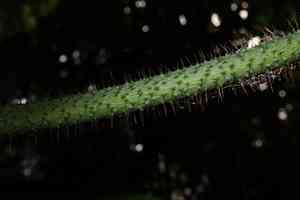
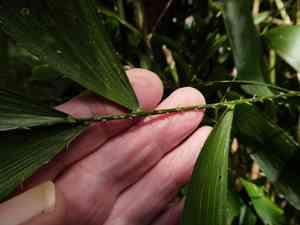
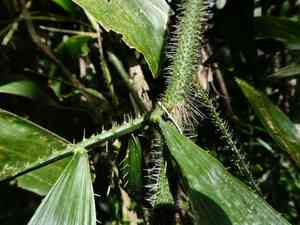
Identify Calamus caryotoides by its unique fishtail-shaped leaflets and its climbing habit. The stems are covered with tough, sharp spines which help the plant anchor itself as it climbs.
Scientific Classification of Fishtail lawyer cane
Phylum
Vascular plants
Class
Monocotyledons
Order
Palms, bullanocks, and allies
Family
Palm
Genus
Calamus
Species
Fishtail lawyer cane
Planting and Growing of Fishtail lawyer cane
Care Difficulty
Hard
Watering Schedule
Every 3 days
Sunlight Requirements
Partial sun
Sunshine Duration
6-8 hours
Ideal Temperature
68-86℉
Soil Type
Potting Mix, Peat Mix
Soil pH
6.5-7.5
Fertilizer Type
Balanced
Pruning Season
Spring, Summer
Pruning Area
Branches, Leaves
Pruning Frequency
2 times a year
Repotting Season
Spring
Pot Type
Plastic, Ceramic
 How to Water Fishtail lawyer cane?
Calamus caryotoides prefers to have its soil moist but not waterlogged. Each time you water, aim for about 200 milliliters, ensuring the top 2 inches of soil feel damp but not soggy. Let the soil dry out slightly between waterings to prevent root rot.
What are the symptoms of an underwatered Fishtail lawyer cane?
›
What should I do if my Fishtail lawyer cane is not getting enough water?
›
What are the symptoms of an overwatered Fishtail lawyer cane?
›
How to save an overwatered Fishtail lawyer cane?
›
 What Are the Sunlight Requirements for Fishtail lawyer cane?
Partial sun to full shade is ideal for Calamus caryotoides, providing adequate energy while minimizing stress. This range supports optimal leaf health, lush growth, and disease resistance.
Optimal Sunlight Exposure
›
Solutions to Achieve Ideal Lighting
›
Benefits of Proper Lighting
›
 What Is the Ideal Temperature Range for Fishtail lawyer cane?
The ideal temperature range for growing Calamus caryotoides spans from 68°F to 86°F. This range supports optimal physiological functions, including photosynthesis and metabolic processes, enabling the plant to achieve healthy growth and development. These temperatures mimic the plant's native tropical habitat, ensuring it maintains vibrant foliage and robust structure.
 What Soil is Best for Fishtail lawyer cane?
Calamus caryotoides thrives best in well-draining soil to prevent root rot. Ensuring good drainage can help the plant absorb nutrients effectively, leading to healthier growth. The plant benefits greatly from soil rich in organic matter, providing the necessary nutrients for vigorous growth. Compost or well-rotted manure can be excellent soil amendments. While it enjoys moisture, it doesn't do well in waterlogged conditions. Consistently moist soil supports the plant’s lush foliage without compromising root health.
 How to Fertilize Fishtail lawyer cane?
Calamus caryotoides prefers a balanced fertilizer approach with moderate application. Use liquid fertilizer diluted to half strength twice a month during the growing season, while slow-release granules should be applied three times a year, following the manufacturer's recommended dosage.
 How to Prune Fishtail lawyer cane?
Always prune during dry weather to minimize the risk of fungal infections invading the fresh cuts. Wet conditions can promote unwanted bacteria growth. Wear gloves to protect your hands from potential sharp spines that are characteristic of palms in the Calamus genus. Be careful not to over-prune. Maintaining a balanced canopy is crucial to ensuring the plant has enough foliage to support photosynthesis.
More About Pruning Techniques→
 How to Propagate Fishtail lawyer cane plant?
1
Once the plant's fruits have matured and turned a deep color, harvest the seeds. Clean the seeds gently and let them air dry before planting to prevent mold growth during germination.
2
Carefully remove the plant from its pot and gently separate the root ball into sections, ensuring each section has both roots and healthy shoots. This division enables new growth and prevents overcrowding.
3
Plant seeds about an inch deep in moistened potting mix. For divisions, replant them in a slightly larger pot with fresh soil. Water thoroughly and maintain consistent moisture to promote root establishment.
 How to Repot Fishtail lawyer cane plant?
1
Repotting Calamus caryotoides should be done when you notice the roots coming out of the drainage holes or when the plant appears root-bound. These are clear signs that the plant has outgrown its current container and needs more space to grow. Additionally, if you observe a slowdown in growth, it might be time to check if the roots are constricted.
2
Select a pot that's about 2 inches larger in diameter than the current one. This size helps prevent waterlogging while providing enough room for the roots to grow. Make sure it has good drainage holes to allow excess water to escape, which is crucial to prevent root rot and ensure your plant remains healthy.
3
Use a well-draining potting mix designed for palms or general houseplants. A blend that includes ingredients like perlite or sand can help improve aeration and drainage. This is important for Calamus caryotoides as it prevents the roots from sitting in water, reducing the risk of root rot and promoting healthier growth.



