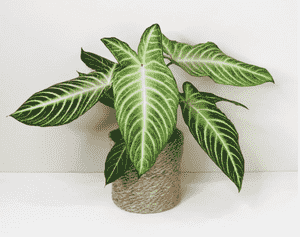
Angel wings(Caladium lindenii)

Angel wings (Caladium lindenii)

Also known as: Spoon flower

Angel wings (Caladium lindenii) is a a flowering plant species named after Belgian botanist Jean Jules Linden. When gardening, this species should not be exposed to cold temperatures. It grows best in well-drained soils and in soils mixed with peat moss.

Attributes of Angel wings

Lifespan
Perennial
Plant Type
Herb
Plant Height
30 cm to 60 cm
Spread
40 cm
Leaf Color
Green White
Flower Size
N/A
Flower Color
White

ForwardPlant - Identify plants with a snap

Identify and diagnose plants, get toxicity alerts, and explore safety guides for all types of fungi.

Try for Free

Images of Angel wings

Angel wings(Caladium lindenii)

Quickly Identify Angel wings

1
This plant can be identified by its large, lance-shaped leaves with pronounced white or pale green veins on a dark green background. The leaves have a smooth, glossy texture and a prominent midrib. The petioles are long, thin, and may be green or reddish.

Scientific Classification of Angel wings

Phylum
Vascular plants
Class
Monocotyledons
Order
Alismatales
Family
Arum
Genus
Angel wings
Species
Angel wings

Planting and Growing of Angel wings

Care Difficulty
Easy
Watering Schedule
Every 6 days
Sunlight Requirements
Partial sun
Sunshine Duration
4-8 hours
Ideal Temperature
65-75℉
Soil Type
Potting Mix, Peat Mix
Soil pH
6.5-7.5
Fertilizer Type
Balanced
Pruning Season
Spring, Summer
Pruning Area
Branches, Leaves
Pruning Frequency
2 times a year
Repotting Season
Spring
Pot Type
Plastic, Terracotta

water icon How to Water Angel wings?

Caladium lindenii prefers evenly moist soil. Water until the sum of 250ml thoroughly soaks through to ensure the moisture reaches the root zone. Avoid water logging but maintain slight dampness.
What are the symptoms of an underwatered Angel wings?
What should I do if my Angel wings is not getting enough water?
What are the symptoms of an overwatered Angel wings?
How to save an overwatered Angel wings?

sunlight icon What Are the Sunlight Requirements for Angel wings?

Sunlight Requirements: Partial sun, Full shade
Duration of light: 3 to 4 hours
Partial sunlight with occasional full shade is ideal, as it fosters colorful leaf display and strong growth without risking leaf burn from harsh sun exposure. This balance is crucial for optimal health.
How much light does Caladium lindenii need?
What if I can't provide natural light?
Benefits of providing ideal lighting?
More About Sunlight Requirements Techniques

temperature icon What Is the Ideal Temperature Range for Angel wings?

Ideal Temperature: 65 ~ 75℉
For optimal growth, Caladium lindenii thrives in a temperature range between 65°F and 75°F. This range ensures that the plant's metabolic processes operate efficiently without stress, leading to healthy foliage and steady growth. At these temperatures, the plant can also maximize its water and nutrient uptake, promoting vibrant leaf coloration and size.

soil icon What Soil is Best for Angel wings?

Soil type: Loam, Sandy loam, Sandy soil
Soil PH: 6.5 ~ 7.5
Caladium lindenii thrives best in soil that allows excess water to drain quickly. This helps prevent root rot and ensures that roots receive the oxygen they need to maintain optimal health. A soil enriched with organic matter provides essential nutrients that enhance the plant's growth and vibrant foliage. It improves soil structure and water retention, supporting healthy Caladium development. The soil needs to retain moisture without becoming waterlogged. This trait helps maintain consistent hydration for the plants without drowning the roots, promoting consistent growth.

fertilize icon How to Fertilize Angel wings?

Fertilizer type: Balanced
For Caladium lindenii, the fertilizer amount should be moderate. Use a balanced liquid fertilizer diluted to half strength to prevent over-fertilizing. Typically, this is around a quarter teaspoon per gallon of water. For slow-release fertilizers, follow the manufacturer's instructions, generally scattering a small handful in the area surrounding the plant.

prune icon How to Prune Angel wings?

Pruning Time: Spring, Summer
Start by removing any dead or yellowing leaves to improve the plant's overall appearance and health. Cut the leaves at the base where they connect to the main stem. If the plant is becoming leggy, trim back longer stalks to promote bushier growth. To maintain an aesthetically pleasing shape, selectively prune any offshoots that disrupt the desired look of your Caladium lindenii. Focus on keeping the plant balanced so that it grows evenly and the light can reach all parts. More About Pruning Techniques

propagate icon How to Propagate Angel wings plant?

Propagate Time: Spring, Early summer
1
Begin by selecting a healthy, mature Caladium lindenii plant. Water it a day before dividing to ensure the plant is hydrated, which makes the division process less stressful for the plant and helps in easier separation of the roots.
2
Carefully dig out the parent plant and shake off the excess soil. Using a sterilized knife, cut the rhizomes or corms into sections, ensuring each section has at least one or two growing points or 'eyes'.
3
Plant each division in a prepared container with a suitable potting mix. Make sure the growing points are just below the soil surface. Water adequately and place the pots in a warm, indirect light spot to encourage growth.
More About Propagating Techniques

repot icon How to Repot Angel wings plant?

Repotting frequency: Every 1-2 years
1
Caladium lindenii should be repotted when its roots begin to outgrow the current pot, or when the soil loses its nutrition and structure. You might notice the roots coming out from drainage holes or the plant looking less vibrant. Repotting during the growing seasons of spring and summer ensures the plant has the best chance to adjust and thrive in its new environment.
2
Selecting the right pot is crucial for Caladium lindenii. Opt for a pot that's an inch larger in diameter than the current one, featuring good drainage holes at the bottom. A slightly larger pot provides room for growth without overwhelming the plant, while adequate drainage prevents waterlogging, ensuring healthy root development.
3
The ideal soil for Caladium lindenii is a well-draining peat-based potting mix. This type of soil retains just enough moisture to keep the plant hydrated while preventing root rot. A good soil structure allows for sufficient air circulation around the roots, promoting robust growth and vibrant leaf coloration.

ForwardPlant - Identify plants with a snap

Find the best spots for them to optimize their health, simply using your phone.

Try for Free

Toxicity of Angel wings

Is Angel wings toxic to humans?

Angel wings pose a mild toxicity hazard to humans if ingested. The entire plant contains calcium oxalate, which is the main constituent responsible for its poisonous characteristics. When any portion of the angel wings plant is consumed, the calcium oxalate may provoke various symptoms. Affected individuals might suffer from severe irritation in the mouth and throat, often accompanied by a burning sensation. It is not uncommon for the lips, tongue, and throat to swell, which can lead to challenges in speaking or swallowing. Furthermore, gastrointestinal issues may arise, including nausea, vomiting, and diarrhea. It is vital to exercise caution around angel wings, especially in settings where children or pets might inadvertently consume parts of the plant.

Is Angel wings toxic to cat?

Angel wings possesses a mild toxicity to cats, and felines may be harmed if they consume any portion of this plant due to the presence of calcium oxalate. Incidents of exposure frequently happen when cats inadvertently nibble on the plant. Symptoms may manifest as physical distress, including oral irritation, pawing at their mouth, drooling, vomiting, and challenges with swallowing. Prompt veterinary care is essential for any cat that has ingested angel wings to avert additional health issues.

Is Angel wings toxic to dog?

Angel wings is known to possess mild toxicity to dogs. If canines mistakenly consume any part of the angel wings plant, it can result in poisoning. The entire plant, encompassing leaves and stems, contains toxic components that may be dangerous upon ingestion by dogs. Symptoms indicative of poisoning in dogs can entail oral irritation, excessive drooling, vomiting, and trouble swallowing. The presence of calcium oxalate crystals in the plant plays a significant role in these negative effects. Should a dog consume any portion of angel wings, it is crucial to obtain immediate veterinary attention to ensure appropriate treatment and management of symptoms.

Identify toxic plants for your safety

Learn which plants are harmful to you and your pets, and make informed choices for a safer home!

Try for Free
WARNING
The judgment on toxicity and danger is for reference only. We DO NOT GUARANTEE any accuracy of such judgment. Therefore, you SHALL NOT rely on such judgment. It is IMPORTANT TO SEEK PROFESSIONAL ADVICE in advance when necessary.
More About Toxic Techniques

