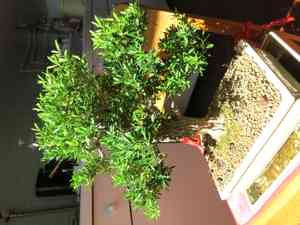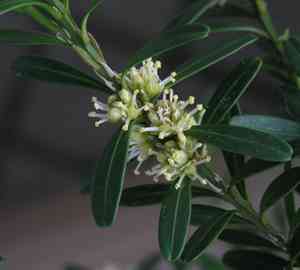
Harland boxwood(Buxus harlandii)

Harland boxwood (Buxus harlandii)

Also known as: Harland's Boxwood, Harland Box

The Harland Boxwood (Buxus harlandii) is a versatile evergreen shrub with several notable features and uses:

1. **Pollinator Attraction**: Its greenish-yellow flowers are known to attract pollinators, adding ecological value to gardens.

2. **Versatile Landscaping**: Ideal for creating hedges, borders, and foundation plantings due to its dense foliage and manageable size.

3. **Bonsai Potential**: Its compact growth and small leaves make it an excellent candidate for bonsai cultivation.

4. **Historical Significance**: The name "boxwood" originates from the historical use of its wood in making ornamental boxes.

These characteristics make the Harland Boxwood a popular choice for both aesthetic and functional purposes in various garden settings.

Attributes of Harland boxwood

Lifespan
Perennial
Plant Type
Shrub
Plant Height
1.2 m to 1.8 m
Spread
1.2 m to 1.8 m
Leaf Color
Dark green
Flower Size
Small, approximately 0.5 cm
Flower Color
Greenish-yellow

ForwardPlant - Identify plants with a snap

Identify and diagnose plants, get toxicity alerts, and explore safety guides for all types of fungi.

Try for Free

Images of Harland boxwood

Harland boxwood(Buxus harlandii)

Quickly Identify Harland boxwood

1
Leaves are lustrous, oval, and dark green with a subtle shine.
2
Round, bushy growth reaching up to 5 feet (1.5 meters) tall.
3
Creamy yellow, petite, and fragrant flowers bloom subtly in spring.
4
Small fruit is a dry capsule with a greenish to brownish hue.
5
Stems have a square shape when young, maturing to a brown color.

Scientific Classification of Harland boxwood

Phylum
Vascular plants
Class
Dicotyledons
Order
Buxales
Family
Boxwood
Genus
Boxes
Species
Harland boxwood

Planting and Growing of Harland boxwood

Care Difficulty
Moderate
Watering Schedule
Every 2 days
Sunlight Requirements
Partial sun
Sunshine Duration
6-10 hours
Ideal Temperature
60-75℉
Soil Type
Potting Mix, Peat Mix
Soil pH
6.5-7.5
Fertilizer Type
Balanced
Pruning Season
Spring, Summer
Pruning Area
Branches, Leaves
Pruning Frequency
2 times a year
Repotting Season
Spring
Pot Type
Plastic, Ceramic

water icon How to Water Harland boxwood?

Buxus harlandii prefers a consistent moisture level. Watering should be enough to saturate the root zone without leaving the soil soggy. Typically, 300 milliliters per watering session is adequate for a mature plant, ensuring the soil is moist down to a depth of 2 to 3 inches. It's essential to adjust based on seasonal changes.
What are the symptoms of an underwatered Harland boxwood?
What should I do if my Harland boxwood is not getting enough water?
What are the symptoms of an overwatered Harland boxwood?
How to save an overwatered Harland boxwood?

sunlight icon What Are the Sunlight Requirements for Harland boxwood?

Sunlight Requirements: Partial sun
Duration of light: 4 to 6 hours
Partial sun is ideal for Buxus harlandii, allowing 4 to 6 hours of filtered sunlight. This helps in maintaining foliage color and density while ensuring balanced growth and vigor.
What is the preferred light intensity for Buxus harlandii?
How can I achieve this ideal lighting for my Buxus harlandii?
What are the benefits of supplying optimal light conditions for Buxus harlandii?

temperature icon What Is the Ideal Temperature Range for Harland boxwood?

Ideal Temperature: 60 ~ 75℉
Buxus harlandii thrives best in environments where the temperature is consistently between 60°F and 75°F. This range ensures optimal growth by providing warmth sufficient for metabolic processes while avoiding heat stress that could hinder growth.

soil icon What Soil is Best for Harland boxwood?

Soil type: Loam, Sandy loam
Soil PH: 6.5 ~ 7.5
Buxus harlandii thrives in nutrient-rich soil that supports robust foliage growth and vibrant health. Amending the soil with organic matter enhances nutrient availability, crucial for this plant's lush greenery. Ensuring well-drained soil prevents waterlogging, which can cause root rot in Buxus harlandii. This feature is vital in maintaining the plant's root health and overall vigor. The tolerance for slightly alkaline soil makes Buxus harlandii adaptable. This adaptability allows it to thrive in mildly challenging pH conditions without compromising health.

fertilize icon How to Fertilize Harland boxwood?

Fertilizer type: Balanced
For Buxus harlandii, the fertilizer should be applied carefully, using approximately half the recommended dosage for general shrubs. Liquid fertilizers should be diluted to avoid root burn—use about 1/4th strength for young plants, and 1/2 strength for mature plants.

prune icon How to Prune Harland boxwood?

Pruning Time: Spring, Summer, Autumn
While pruning is essential for Buxus harlandii, be cautious not to over-prune, which can lead to stress and weaken the plant. Always ensure you leave enough foliage to support photosynthesis and maintain vitality. It's best to remove no more than one-third of the plant's greenery during any one pruning session. When engaging in the pruning process, use gloves and protective gear to avoid cuts or injuries from sharp tools. Also, make sure your pruning shears are sanitized before use to prevent the spread of any plant diseases or pests. This small step can make a big difference in the long-term health of your plant.

propagate icon How to Propagate Harland boxwood plant?

Propagate Time: Spring, Early summer
1
Choose healthy and disease-free stems for cuttings. The ideal length is about 4-6 inches, with multiple nodes to allow root development.
2
Remove the leaves from the bottom half of the cutting and dip the cut end into rooting hormone to stimulate root growth.
3
Plant the cuttings in a pot filled with a well-draining soil mix. Water them thoroughly and cover with plastic to maintain humidity.

repot icon How to Repot Harland boxwood plant?

Repotting frequency: Every 2-3 years
1
Buxus harlandii shows signs of needing to be repotted when you notice roots growing out of the drainage holes, the soil dries out faster than usual, or growth seems stunted. These signals indicate that the plant has outgrown its current pot and can benefit from fresh soil and more space.
2
Select a pot that is one size larger than the current one. Ensure it has sufficient drainage holes to prevent waterlogging, which can lead to root rot. A slightly larger pot will allow room for root growth without overwhelming the plant with too much soil, which can retain excess moisture.
3
Opt for a well-draining sandy-loam mix. This type of soil provides good aeration to the roots, helping prevent fungal infections and root rot. It also retains enough moisture to nourish the plant between waterings, ensuring it thrives.

ForwardPlant - Identify plants with a snap

Find the best spots for them to optimize their health, simply using your phone.

Try for Free

Toxicity

Ingestion

Identify toxic plants for your safety

Learn which plants are harmful to you and your pets, and make informed choices for a safer home!

Try for Free
WARNING
The judgment on toxicity and danger is for reference only. We DO NOT GUARANTEE any accuracy of such judgment. Therefore, you SHALL NOT rely on such judgment. It is IMPORTANT TO SEEK PROFESSIONAL ADVICE in advance when necessary.