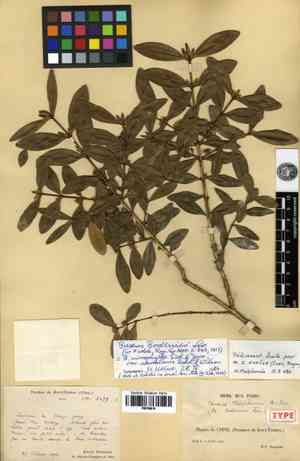
Bodinier's boxwood (Buxus bodinieri)
Also known as: Bodinier's Boxwood
Bodinier's boxwood, a slender yet resilient broadleaf evergreen shrub, can grow to heights of 3.5 to 4.5 meters. Its adaptable stems enable it to endure harsh winds. Naturally, it thrives on mountain slopes and hilly terrains.
In This Article
Attributes of Bodinier's boxwood
Lifespan
Perennial
Plant Height
2-4 meters (6.5-13 feet)
Spread
1-2 meters (3-6.5 feet)
Leaf Color
Dark green
Flower Size
Less than 1 cm
Flower Color
Greenish-yellow
Images of Bodinier's boxwood
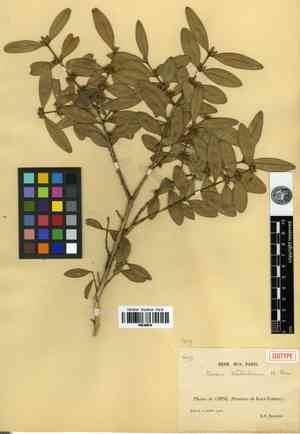
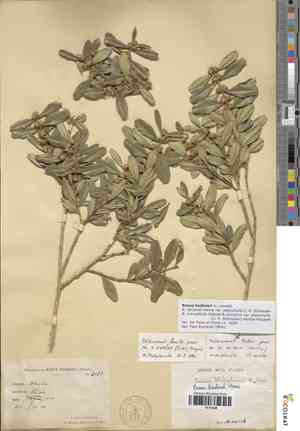
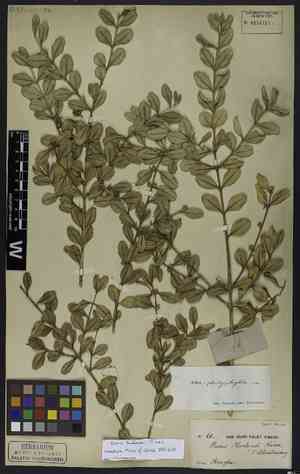
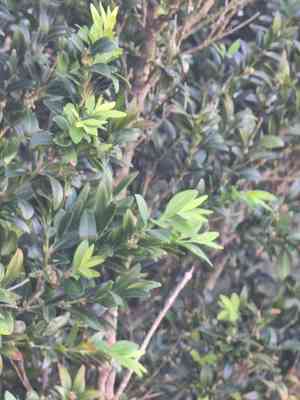
Quickly Identify Bodinier's boxwood
1
The leaves are opposite, oval, dark green above, and lighter green beneath. The flowers are small, greenish-yellow, and not particularly showy. The plant has a dense, compact growth habit.
Scientific Classification of Bodinier's boxwood
Phylum
Vascular plants
Class
Dicotyledons
Order
Buxales
Family
Boxwood
Genus
Boxes
Species
Bodinier's boxwood
Planting and Growing of Bodinier's boxwood
Care Difficulty
Moderate
Watering Schedule
Every 2 days
Sunlight Requirements
Partial sun
Sunshine Duration
4-8 hours
Ideal Temperature
60-75℉
Soil Type
Potting Mix, Peat Mix
Soil pH
6.5-7.5
Fertilizer Type
Balanced
Pruning Season
Spring, Summer
Pruning Area
Branches, Leaves
Pruning Frequency
2 times a year
Repotting Season
Spring
Pot Type
Ceramic, Plastic
 How to Water Bodinier's boxwood?
The Buxus bodinieri typically requires about 250 ml of water per session. The goal is to moisten the soil thoroughly but to avoid oversaturation, which could lead to root rot. Ensure that the water seeps through the topsoil layer, allowing the roots to access hydration without drowning them.
What are the symptoms of an underwatered Bodinier's boxwood?
›
What should I do if my Bodinier's boxwood is not getting enough water?
›
What are the symptoms of an overwatered Bodinier's boxwood?
›
How to save an overwatered Bodinier's boxwood?
›
 What Are the Sunlight Requirements for Bodinier's boxwood?
Buxus bodinieri benefits greatly from partial sun environments. Ideal lighting promotes robust growth, ensures vibrant foliage, and enhances the plant’s general vitality.
What is the ideal light for Buxus bodinieri?
›
How can you achieve ideal lighting for Buxus bodinieri?
›
What are the benefits of ideal lighting for Buxus bodinieri?
›
 What Is the Ideal Temperature Range for Bodinier's boxwood?
Buxus bodinieri thrives best within a specific temperature range that ensures healthy growth. Maintaining this range from 60°F to 75°F provides optimal conditions for photosynthesis and overall plant health.
 What Soil is Best for Bodinier's boxwood?
Buxus bodinieri thrives in well-drained soil conditions. Proper drainage prevents waterlogging, which can lead to root decay and other plant health issues. Ensuring well-drained soil helps maintain optimal aeration, promoting healthy root development and overall plant vigor. The plant does best in soils with moderate nutrient levels. Opt for balanced soil containing essential nutrients to support growth and foliage density. Adequately nutrient-rich soil ensures Buxus bodinieri exhibits robust growth and vibrant foliage coloration. While Buxus bodinieri can tolerate a range of soil pH, it shows a preference for slightly alkaline conditions. Maintaining a pH of around 7 promotes better nutrient uptake and enhances the plant's ability to resist diseases and pests.
 How to Fertilize Bodinier's boxwood?
Buxus bodinieri requires a balanced fertilization approach. When applying liquid fertilizers, use a concentration appropriate for small shrubs, typically around 10-10-10 NPK at a half-strength dilution. For solid, slow-release fertilizers, a rate of 1 pound per 100 square feet annually suffices.
 How to Prune Bodinier's boxwood?
Start by trimming back any overgrown branches to maintain a compact shape. Use sharp, clean shears to make precise cuts just above a leaf node or bud. This encourages bushier growth. Always aim for a rounded or desired form, depending on your landscape design, while ensuring an even thickness across the hedge. To improve air circulation within the plant, selectively thin out some of the inner branches. Remove any inward-growing, crossing, or crowded branches. This reduces foliage density, which can help prevent fungal diseases and allows light to reach the interior parts of the plant. Frequently trim the tips of the branches to encourage the development of lateral shoots. This not only fills out the bush but also keeps it in a neat, controlled form. Tip pruning can be done throughout the active growing season to maintain the desired shape and size.
More About Pruning Techniques→
 How to Propagate Bodinier's boxwood plant?
1
Gather seeds from healthy Buxus bodinieri plants, usually after they have been shed naturally, to ensure they are mature and viable for germination.
2
Select healthy, semi-hardwood cuttings of about 6 inches. Make sure to remove any leaves from the bottom half to prevent rotting once they're planted.
3
Plant the seeds in well-drained soil and cover them lightly with compost. Keep them in a warm, bright area but out of direct sunlight to promote germination.
 How to Repot Bodinier's boxwood plant?
1
Repotting Buxus bodinieri should be considered when you notice roots circling the pot's edges or growing out of the drainage holes. Another sign is when soil drains slowly, indicating root-bound issues. The best time to repot is during active growth periods in spring and early summer, ensuring minimal stress on the plant.
2
Choosing the right pot for Buxus bodinieri involves ensuring it is one to two inches larger in diameter than the current one. A slightly larger pot allows for root expansion without overwhelming the plant with excess soil. Opt for pots with good drainage holes to prevent waterlogging and facilitate healthy root growth.
3
For Buxus bodinieri, a well-draining loamy soil mix is essential. This type of soil ensures adequate moisture retention while preventing excess water that could lead to root rot. Incorporate organic matter like compost to provide nutrients and maintain soil structure.
Toxicity
ingestion, skin contact with sap
WARNING
The judgment on toxicity and danger is for reference only. We DO NOT GUARANTEE any accuracy of such judgment. Therefore, you SHALL NOT rely on such judgment. It is IMPORTANT TO SEEK PROFESSIONAL ADVICE in advance when necessary.



