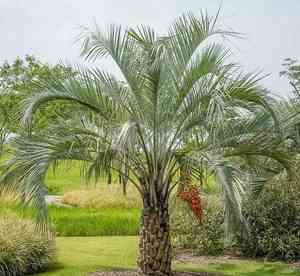
Jelly palm (Butia capitata)
Also known as: Cocos capitata, Pindo palm, Wine palm, Pindo
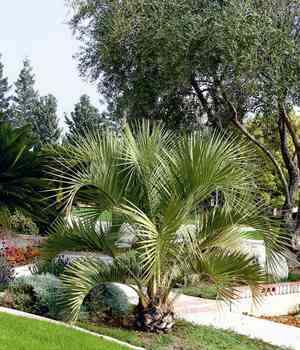
The Jelly Palm (Butia capitata) typically reaches heights of 3 to 6 meters with a spread of 3 to 4.5 meters. It features a single trunk and arching blue-green fronds that gently bend towards the trunk. During the summer, it produces long, fragrant spikes of small yellow flowers, which are followed by sweet, orange, edible fruits from late summer to early fall. This palm is low-maintenance and thrives in conditions of salt, heat, and drought, making it an excellent choice for creating a tropical ambiance in gardens and landscapes.
In This Article
Attributes of Jelly palm
Lifespan
Perennial
Plant Type
Palm
Plant Height
4.5 m to 6 m
Spread
3 m to 4.5 m
Leaf Color
Green Silver Gray Blue
Flower Size
2.5 cm
Flower Color
Yellow Red Cream
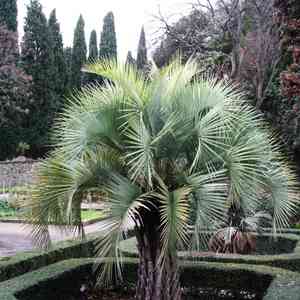
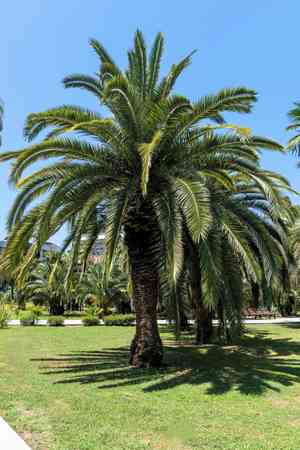
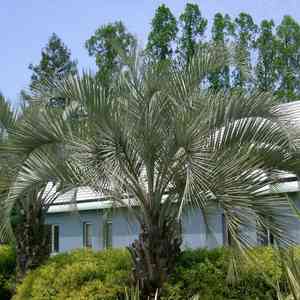
Images of Jelly palm
Quickly Identify Jelly palm
1
Robust trunk, 1 1/2 feet (45 cm) in diameter and up to 20 feet (6 meters) tall.
2
Gray-green leaves, 5-10 feet (1.5-3 meters) long, with arching and curving form.
3
Toothed leaf petioles with 25-60 pairs of narrow, pointed, bilobed leaflets.
4
Pink-tinged cream flowers in late spring, followed by orange-yellow cherry-sized fruits in summer.
5
Distinctive bark with old leaf remnants, rugged or smooth trunk without crownshaft.
6
Pinnate, featherlike leaves up to 10 feet (3 meters) long, bluish-green hue, and strongly recurved.
7
Leaf sheaths 2-4 feet (0.6-1.2 meters) with hooked thorns on both edges.
Scientific Classification of Jelly palm
Phylum
Vascular plants
Class
Monocotyledons
Order
Arecales
Family
Palm
Genus
Butia
Species
Jelly palm
Planting and Growing of Jelly palm
Care Difficulty
Easy
Watering Schedule
Every 2 days
Sunlight Requirements
Full sun
Sunshine Duration
4-8 hours
Ideal Temperature
65-85℉
Soil Type
Potting Mix, Peat Mix
Soil pH
6.5-7.5
Fertilizer Type
Balanced
Pruning Season
Spring, Summer
Pruning Area
Branches, Leaves
Pruning Frequency
2 times a year
Repotting Season
Spring
Pot Type
Plastic, Ceramic
 How to Water Jelly palm?
For Butia capitata, ensure to water thoroughly until the soil is moist to about six inches deep. This palm appreciates a deep watering approach to encourage root development. However, it's crucial to allow the soil to dry out halfway between waterings to prevent overwatering.
What are the symptoms of an underwatered Jelly palm?
›
What should I do if my Jelly palm is not getting enough water?
›
What are the symptoms of an overwatered Jelly palm?
›
How to save an overwatered Jelly palm?
›
 What Are the Sunlight Requirements for Jelly palm?
Butia capitata performs best under full sun to partial sun conditions. The ample sunlight enables vibrant foliage coloration, energizes photosynthesis, and maximizes potential fruit-bearing capabilities.
More About Sunlight Requirements Techniques→
What is the best kind of sunlight for Butia capitata?
›
How can I achieve this ideal sunlight condition?
›
What benefits does ideal sunlight bring to Butia capitata?
›
 What Is the Ideal Temperature Range for Jelly palm?
For Butia capitata, maintaining a consistent temperature range between 65°F and 85°F is ideal for optimal growth. These temperatures mirror the plant's native subtropical environment, supporting strong metabolic activity and healthy foliage.
 What Soil is Best for Jelly palm?
Butia capitata thrives in well-drained soil to prevent root rot. Ensuring proper drainage promotes healthy root development and mitigates risks associated with waterlogged conditions. While good drainage is crucial, Butia capitata also requires soil that retains some moisture without becoming waterlogged. This balance supports the plant's hydration needs during dry spells, enhancing growth. The soil should be slightly enriched with organic matter, supporting Butia capitata's growth by supplying essential nutrients. Amending the soil with compost can improve its fertility and structure.
 How to Fertilize Jelly palm?
Butia capitata, commonly known as the Pindo Palm, generally requires balanced fertilization. Use a complete palm fertilizer with a formula like 8-4-12 or 12-4-12, ensuring the essential micronutrients, particularly magnesium and manganese, are included. Apply evenly across the root zone in amounts of roughly 1.5 pounds per 100 square feet of canopy area, avoiding direct contact with the trunk to prevent burns.
 How to Prune Jelly palm?
Start by removing old and dead fronds, which are often dry and brown. Use a sharp, clean pruning saw or shears to make clean cuts at the base of the frond stem, close to the trunk. Ensure to only cut dead or damaged fronds. Avoid cutting green fronds, as these are crucial for the plant's photosynthesis and growth. If the palm produces flowers or fruits, you may need to trim these off as well to prevent the tree from expending energy on seed production.
More About Pruning Techniques→
 How to Propagate Jelly palm plant?
1
Harvest ripe seeds from Butia capitata fruits and remove the fleshy pulp. Clean the seeds thoroughly to prevent fungal growth. Some growers recommend scarifying the seeds to improve germination rates.
2
Fill seed trays with a potting mix and gently place seeds on the surface. Cover the seeds lightly with soil, about their thickness, to ensure they aren't buried too deeply. Mist the soil lightly with water.
3
Place the seed trays in a warm area with indirect sunlight. Keep the soil consistently moist but not waterlogged. Germination can take several weeks to months, so patience is needed during this stage.
 How to Repot Jelly palm plant?
1
Butia capitata needs repotting when its roots become visible on the soil surface or start protruding from the drainage holes. Another signal might be stunted growth, indicating the plant has outgrown its current environment. Spring or early summer, when the plant is in active growth, is an ideal time for repotting, giving it the full growing season to adjust and thrive.
2
Select a pot that is 2-3 inches wider in diameter than the current one. The pot material should allow for adequate drainage, such as terracotta or plastic with ample drainage holes. Adequate pot size and drainage prevent waterlogging, helping to maintain root health and facilitating lush growth.
3
Use a well-draining sandy soil mix for repotting Butia capitata. The ideal soil retains some moisture yet dries out quickly to avoid root rot. Including a mix of coarse sand and organic matter improves aeration and nutrient availability, promoting robust plant growth and a healthy root system.



