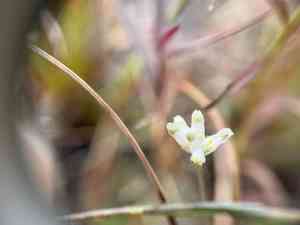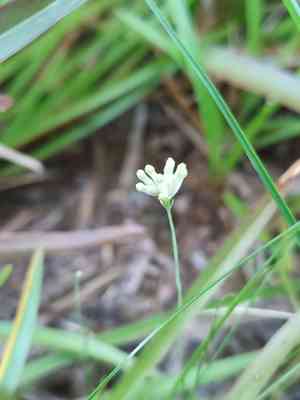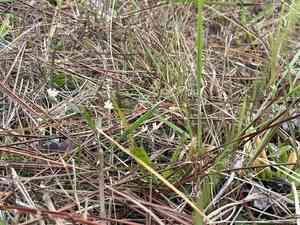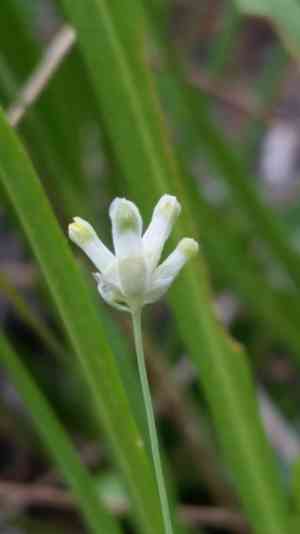
Southern bluethread(Burmannia capitata)

Southern bluethread (Burmannia capitata)

Also known as: None known

The Southern bluethread (Burmannia capitata) is a petite, terrestrial herb famed for its slender, almost leafless stems and vibrant floral clusters. Key features include:

- **Height:** Reaches up to 12 inches.
- **Flowers:** Bright blue to violet with yellow anthers, forming dense, spherical clusters.
- **Foliage:** Minimal, scale-like leaves.

**Habitats:**
- **Region:** Native to the southeastern United States.
- **Preferred Sites:** Found in moist, sandy soils characteristic of pine flatwoods, wet savannas, and bogs.
- **Light Conditions:** Thrives in full sun but can also grow in light shade.

This plant's adaptation to nutrient-poor, acidic environments reduces competition, enabling it to flourish in unique ecological niches.

Attributes of Southern bluethread

Lifespan
Annual
Plant Type
Herb
Plant Height
10-15 cm
Spread
Not applicable
Leaf Color
Green
Flower Size
Approximately 0.5-1 cm
Flower Color
Blue

ForwardPlant - Identify plants with a snap

Identify and diagnose plants, get toxicity alerts, and explore safety guides for all types of fungi.

Try for Free

Images of Southern bluethread

Southern bluethread(Burmannia capitata)

Quickly Identify Southern bluethread

1
This plant can be identified by its small size, usually growing up to 10-15 cm in height. It has thin, grass-like leaves, and the flowers are generally blue and form a capitate (head-like) cluster at the top of a slender stem.

Scientific Classification of Southern bluethread

Phylum
Vascular plants
Class
Monocotyledons
Order
Dioscoreales
Family
Burmannia
Genus
Burmannia
Species
Southern bluethread

Planting and Growing of Southern bluethread

Care Difficulty
Hard
Watering Schedule
Every 2 days
Sunlight Requirements
Partial sun
Sunshine Duration
6-10 hours
Ideal Temperature
70-85℉
Soil Type
Potting Mix, Peat Mix
Soil pH
5.5-6.5
Fertilizer Type
Balanced
Pruning Season
Spring, Summer
Pruning Area
Branches, Leaves
Pruning Frequency
2 times a year
Repotting Season
Spring
Pot Type
Plastic, Ceramic

water icon How to Water Southern bluethread?

For Burmannia capitata, ensure the soil is moist but not waterlogged. It's important to provide about 250 ml of water each time, aiming to distribute it evenly across the soil surface. The key is to water until you see that the top inch of the soil is thoroughly moist without excess water pooling at the bottom.
What are the symptoms of an underwatered Southern bluethread?
What should I do if my Southern bluethread is not getting enough water?
What are the symptoms of an overwatered Southern bluethread?
How to save an overwatered Southern bluethread?

sunlight icon What Are the Sunlight Requirements for Southern bluethread?

Sunlight Requirements: Partial sun
Duration of light: 4-6 hours daily
Burmannia capitata prefers partial sun, which ensures balanced exposure to light, promoting bright foliage and resilient growth. Ideal light conditions encourage strong photosynthetic activity and robust plant development.
What kind of sunlight does it prefer?
How to ensure it receives ideal light?
What are the benefits of ideal lighting?

temperature icon What Is the Ideal Temperature Range for Southern bluethread?

Ideal Temperature: 70 ~ 85℉
For Burmannia capitata, maintaining an ideal temperature range between 70°F and 85°F is vital. This range closely mimics the plant's natural habitat, providing optimal conditions for photosynthesis and nutrient uptake. During these temperatures, the plant's physiological processes operate efficiently, resulting in healthy growth and blooming.

soil icon What Soil is Best for Southern bluethread?

Soil type: Loam, Sandy loam, Acidic soil
Soil PH: 5.5 ~ 6.5
Burmannia capitata thrives in well-drained soils, as this ensures its roots receive ample oxygen and prevents waterlogging. This condition helps the plant avoid root rot and ensures steady growth. The plant prefers slightly acidic soils, with a pH between 5.5 and 6.5. Such an environment helps in nutrient accessibility, ensuring the plant absorbs essential minerals effectively. Soils with high organic content are beneficial for Burmannia capitata as they provide necessary nutrients. The organic matter aids in retaining moisture and enhances soil structure.

fertilize icon How to Fertilize Southern bluethread?

Fertilizer type: Balanced
For Burmannia capitata, a delicate balance is crucial. Use a diluted liquid fertilizer at half the recommended strength. This plant does not require heavy feeding, so being conservative with the dosage helps avoid nutrient burn or other adverse effects.

prune icon How to Prune Southern bluethread?

Pruning Time: Spring, Summer, Autumn, Winter
Before starting, take a moment to observe the overall shape and structure of Burmannia capitata. Identify any dead or overgrown branches that need removal. Understand the natural growth pattern to guide your pruning decisions. Carefully remove any dead, diseased, or damaged leaves and stems. This not only enhances the plant's appearance but also promotes healthy new growth. Be cautious to avoid cutting into healthy tissue inadvertently. Trim excess growth to help maintain the desired shape and size of the plant. Be mindful to cut evenly around the entire plant, enhancing symmetry and ensuring balanced growth. Keep the plant compact to prevent leggy growth. More About Pruning Techniques

propagate icon How to Propagate Southern bluethread plant?

Propagate Time: Spring,Early summer
1
Collect ripe seeds from mature Burmannia capitata plants. Ensure seeds are dry before storing or planting to prevent mold or decay. Proper collection ensures high-quality seeds for propagation.
2
Sow seeds evenly in seed trays filled with sterile potting mix. Lightly press them into the surface without burying them too deep. This ensures seeds remain in contact with moisture while receiving adequate light.
3
Keep the soil consistently moist but not waterlogged. Provide a warm and humid environment to encourage germination, using a humidity dome if necessary to maintain optimal conditions.

repot icon How to Repot Southern bluethread plant?

Repotting frequency: Every two years
1
Burmannia capitata shows signs of needing a repot when its roots start peeking out from the drainage holes, or when the soil retains too much moisture. The best time to do this is during its active growth periods in spring or summer, ensuring that the plant is robust enough to handle the transition.
2
Choose a pot slightly larger than the current one, with ample drainage holes. This allows excess water to escape, preventing root rot, while giving the roots room to expand. Ceramic or clay pots are ideal, balancing a healthy environment with aesthetics.
3
A well-draining, sandy mix is crucial for Burmannia capitata, emulating its natural environment. This ensures that the roots get adequate air and water flow, preventing water logging, and promoting healthier growth.

ForwardPlant - Identify plants with a snap

Find the best spots for them to optimize their health, simply using your phone.

Try for Free