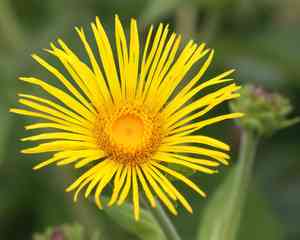
Ox eye (Buphthalmum) (Buphthalmum)
Also known as: Ox-eye, Yellow Ox-eye
Ox-eye Daisies (*Leucanthemum vulgare*) are perennial plants distinguished by their alternately arranged leaves and solitary flower heads on top of their stems. The flower heads feature narrow phyllaries and consist of white ray florets surrounding a cluster of yellow disc florets. The fruit is a cypsela, sometimes topped with a pappus of scales, although the fruits from the ray florets may not have pappi. Native to Europe, these hardy plants thrive in a variety of environments, such as meadows and grasslands. There are typically 2 or 3 species within this genus.
In This Article
Attributes of Ox eye (Buphthalmum)
Lifespan
Perennial
Plant Height
30-60 cm
Spread
Varies
Leaf Color
Green
Flower Size
3-5 cm
Flower Color
Yellow
Images of Ox eye (Buphthalmum)
Quickly Identify Ox eye (Buphthalmum)
1
Buphthalmum can be identified by its bright yellow, daisy-like flowers and lanceolate leaves. It typically has a robust, upright stem and can grow up to 60 cm in height. The flowers have a central disc floret surrounded by ray florets.
Scientific Classification of Ox eye (Buphthalmum)
Phylum
Angiosperms
Class
Magnoliopsida
Order
Asterales
Family
Asteraceae
Genus
Buphthalmum
Planting and Growing of Ox eye (Buphthalmum)
Care Difficulty
Easy
Watering Schedule
Every 4 days
Sunlight Requirements
Full sun
Sunshine Duration
6-8 hours
Ideal Temperature
60-75℉
Soil Type
Potting Mix, Peat Mix
Soil pH
6.5-7.5
Fertilizer Type
Balanced
Pruning Season
Spring, Summer
Pruning Area
Branches, Leaves
Pruning Frequency
2 times a year
Repotting Season
Spring
Pot Type
Plastic, Ceramic
 How to Water Ox eye (Buphthalmum)?
For Buphthalmum, watering should ensure the soil is evenly moist, but not waterlogged. Using approximately 250 ml per session will provide enough moisture without drenching the soil.
What are the symptoms of an underwatered Ox eye (Buphthalmum)?
›
What should I do if my Ox eye (Buphthalmum) is not getting enough water?
›
What are the symptoms of an overwatered Ox eye (Buphthalmum)?
›
How to save an overwatered Ox eye (Buphthalmum)?
›
 What Are the Sunlight Requirements for Ox eye (Buphthalmum)?
The ideal light range for Buphthalmum involves placement in full sun or partial sun environments. Sufficient sunlight contributes to vivid flowering and robust, healthy foliage, enhancing the plant's decorative and ecological value.
Optimal Sunlight Duration
›
Solutions for Ideal Light
›
Benefits of Ideal Light
›
 What Is the Ideal Temperature Range for Ox eye (Buphthalmum)?
The ideal temperature range for Buphthalmum growth is between 60°F and 75°F. This moderate range supports the plant's metabolic processes and photosynthesis efficiently. Maintaining temperatures within this range helps prevent stress that can lead to reduced growth or lower resistance to pests and diseases.
 What Soil is Best for Ox eye (Buphthalmum)?
Buphthalmum thrives in well-drained soil to prevent root rot and ensure adequate air circulation. This condition helps the plant to absorb nutrients efficiently, promoting healthy growth. Buphthalmum benefits greatly from a nutrient-dense substrate. A soil rich in organic matter provides essential nutrients, enhancing the plant's blooming potential and foliage development. Sufficient moisture retention is critical for Buphthalmum, striking a balance between dryness and saturation to support sustained growth and flower production.
 How to Fertilize Ox eye (Buphthalmum)?
Buphthalmum requires a balanced approach to fertilization to ensure vibrant growth. When applying liquid fertilizer, use a diluted concentration of approximately 50% of the recommended strength on the product label. For slow-release granules, apply about half a tablespoon per square foot of soil surface, ensuring thorough mixing with the topsoil.
 How to Prune Ox eye (Buphthalmum)?
Buphthalmum, commonly known as Ox-eye, flourishes best when its sprawling growth is controlled through pruning. These perennials tend to get leggy, so regular trims keep them compact and dense. Use sharp secateurs for clean cuts to prevent infection. Clean tools reduce the risk of spreading disease. Sterilize blades before and after use. Start by removing any dead or damaged stalks at the base. Trim back about a third of the plant to encourage new, robust shoots. Focus on cutting just above a node to promote new growth.
 How to Propagate Ox eye (Buphthalmum) plant?
1
Fill the seed tray with a mix of compost and vermiculite. Sow seeds on the surface and gently press them down. Cover lightly with soil and mist the surface to keep it damp but not waterlogged.
2
Choose a healthy parent plant and gently dig around it to expose the roots. Use your knife or spade to divide the root clump into sections, ensuring each section has a good amount of roots and shoots.
3
Once seeds have developed a few true leaves or divided sections have grown new roots, transplant them into their final positions in the garden. Ensure they are planted at the same depth as they were initially.
 How to Repot Ox eye (Buphthalmum) plant?
1
You should consider repotting Buphthalmum when you notice roots emerging from the drainage holes, indicating the plant is root-bound. Another sign is the soil losing its capability to retain water efficiently, leading to frequent drying out. Ideally, spring or early summer is the best time for these tasks as the plant enters its active growth period.
2
Select a pot that is one size larger than the current one, with good drainage holes. A pot that is too large can hold excess moisture, which might cause root rot. The right size allows incremental growth while maintaining stability and optimal soil moisture levels, thus benefiting the plant's overall health.
3
A well-draining potting mix is crucial for Buphthalmum, as it prevents waterlogging and provides essential aeration to the roots. This kind of soil typically includes ingredients like perlite, peat moss, and pine bark, ensuring the plant enjoys a balanced environment with adequate drainage and nutritional support.
Learn More About Ox eye (Buphthalmum) Diseases
Anthracnose
Bacterial Leaf Spot
Black Spot
Chemical Injury
Crown Gall
Cyst Nematode
Damping-off
Downy Mildew
Drought Stress
Fusarium Wilt
Gray Mold
Leaf Spot
Mosaic
Nutrient Deficiency
Nutrient Toxicity
Powdery Mildew
Root Rot
Root-knot Nematode
Rusts
Sooty Mold
Spider Mites
Temperature Stress
Thrips Damage
White Mold

