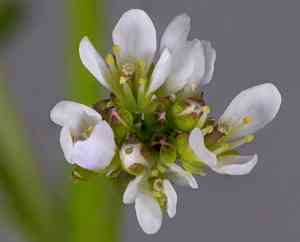
Bunias (Bunias) (Bunias)
Also known as: Hill Mustard, Turkish Rocket
The genus Bunias consists of just two recognized species.
In This Article
Attributes of Bunias (Bunias)
Lifespan
Biennial
Plant Height
30 to 100 cm
Spread
Approximately 30 cm
Leaf Color
Green
Flower Size
0.5 to 1 cm
Flower Color
Yellow
Images of Bunias (Bunias)
Quickly Identify Bunias (Bunias)
1
To identify Bunias, look for its robust herbaceous stems, pinnately lobed leaves, and yellow flower clusters. Its leaves are somewhat hairy with a distinct smell when crushed.
Scientific Classification of Bunias (Bunias)
Phylum
Magnoliophyta
Class
Magnoliopsida
Order
Brassicales
Family
Brassicaceae
Genus
Bunias
Planting and Growing of Bunias (Bunias)
Care Difficulty
Easy
Watering Schedule
Every 2 days
Sunlight Requirements
Full sun
Sunshine Duration
6-10 hours
Ideal Temperature
60-70℉
Soil Type
Potting Mix, Peat Mix
Soil pH
6.5-8
Fertilizer Type
Balanced
Pruning Season
Spring, Summer
Pruning Area
Branches, Leaves
Pruning Frequency
2 times a year
Repotting Season
Spring
Pot Type
Plastic, Ceramic
 How to Water Bunias (Bunias)?
Bunias plants thrive best with moderate watering. The key is to ensure the soil is well-moistened but not saturated. Water until the top 2-3 inches of soil feel moist, approximately 250 ml per watering session.
What are the symptoms of an underwatered Bunias (Bunias)?
›
What should I do if my Bunias (Bunias) is not getting enough water?
›
What are the symptoms of an overwatered Bunias (Bunias)?
›
How to save an overwatered Bunias (Bunias)?
›
 What Are the Sunlight Requirements for Bunias (Bunias)?
Bunias thrives best in full or partial sun conditions, receiving 6-8 hours of direct or diffused sunlight. This light range supports optimal photosynthesis, contributing to its vigorous growth and flowering.
How can Bunias achieve ideal sunlight exposure?
›
What are practical steps to ensure Bunias gets optimal sunlight?
›
What benefits does ideal sunlight bring to Bunias?
›
 What Is the Ideal Temperature Range for Bunias (Bunias)?
Bunias thrives best when maintained in a stable environment with temperatures between 60°F and 70°F. This range supports active growth and blooming, ensuring the plant's metabolism functions efficiently. Maintaining within this temperature bracket helps in maximizing the photosynthesis process and generally supports the plant's overall health.
 What Soil is Best for Bunias (Bunias)?
Bunias thrives in well-draining soil that prevents root rot by allowing excess water to escape. This trait is ideal for maintaining root health and avoiding waterlogging. A soil rich in nutrients helps Bunias develop robust foliage and bloom prolifically. Amending with organic matter boosts its growth efficiently. While Bunias prefers good drainage, maintaining moderate moisture levels is essential for sustaining plant hydration without drowning the roots.
 How to Fertilize Bunias (Bunias)?
For Bunias, it's crucial to ensure balanced fertilization. While not heavy feeders, they need sustenance to thrive. Use a balanced fertilizer, like a 10-10-10 NPK ratio. Apply liquid fertilizer at half of the recommended strength (usually 15-20 ml per liter) to avoid nutrient overloading.
 How to Prune Bunias (Bunias)?
Begin pruning your Bunias in early spring. Use sharp, clean shears to remove any dead or damaged stems. Cut just above a leaf node or bud to encourage new growth. Focus on shaping the plant to maintain an appealing form, while also allowing enough air circulation through the branches.
 How to Propagate Bunias (Bunias) plant?
1
Collect mature seeds from the Bunias plant. Clean them gently to remove any plant debris, and dry them slightly. Prepare seed trays with a mixture of soil and compost for optimal growth.
2
Sow the seeds shallowly in the prepared seed trays and lightly cover them with soil. Water the seeds gently to settle the soil around them, ensuring the soil remains moist but not waterlogged.
3
Select healthy roots from the parent plant. Cut sections of the root approximately 5–10 cm in length. Make sure the cutting tools are sterilized to prevent infection.
 How to Repot Bunias (Bunias) plant?
1
Look for signs like roots emerging from the drainage holes or when the plant noticeably stops growing. These indicate the plant is outgrowing its current pot and needs more space to thrive.
2
Select a pot that is one size larger than the current one; this allows for adequate root expansion. A pot with good drainage is crucial to prevent waterlogging, which can lead to root rot.
3
Opt for a well-draining, sandy loam soil mix. This supports healthy root development and prevents water retention issues, ensuring a conducive environment for the plant's growth.
Learn More About Bunias (Bunias) Diseases
Bacterial Leaf Spot
Bacterial Soft Rot
Clubroot
Cyst Nematode
Damping-off
Downy Mildew
Drought Stress
Fusarium Wilt
Gray Mold
Leaf Spot
Mosaic
Nutrient Deficiency
Nutrient Toxicity
Powdery Mildew
Root Rot
Root-knot Nematode
Rusts
Sooty Mold
Spider Mites
Temperature Stress
Thrips Damage
White Mold
Chemical Injury

