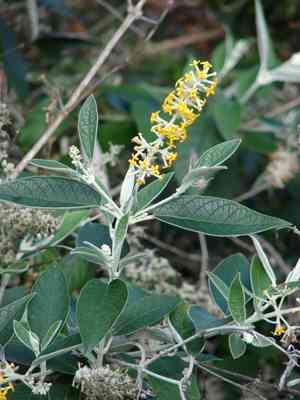
Smokebush (Buddleja madagascariensis)
Also known as: Butterfly Bush, Madagascar Butterfy Bush
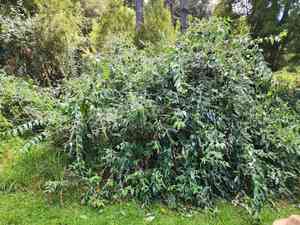
Smokebush, characterized by its narrow, lance-shaped leaves and vibrant orange-yellow tubular flowers, flourishes in well-drained soil and enjoys full sunlight. This hardy shrub, which can grow up to 4 meters tall, attracts numerous pollinators with its unique honey scent, contributing to its evergreen beauty.
In This Article
Attributes of Smokebush
Lifespan
Perennial
Plant Type
Shrub
Plant Height
2-4 meters
Spread
1.5-3 meters
Leaf Color
White Green
Flower Size
0.5-1 centimeter
Flower Color
Yellow
Images of Smokebush
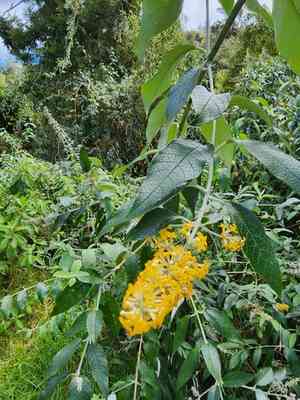
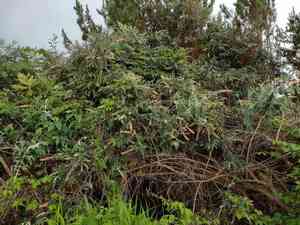
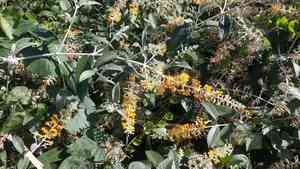
Quickly Identify Smokebush
1
Look for arching stems with opposite leaves that are dark green above and lighter below. The small, tubular flowers are arranged in dense panicles and are yellow to orange. The flowers have a sweet fragrance and bloom primarily in the winter.
Scientific Classification of Smokebush
Phylum
Vascular plants
Class
Dicotyledons
Order
Lamiales
Family
Figwort
Genus
Butterfly bushes
Species
Smokebush
Planting and Growing of Smokebush
Care Difficulty
Moderate
Watering Schedule
Every 3 days
Sunlight Requirements
Full sun
Sunshine Duration
6-8 hours
Ideal Temperature
65-77℉
Soil Type
Potting Mix, Peat Mix
Soil pH
6.5-7.5
Fertilizer Type
Balanced
Pruning Season
Spring, Summer
Pruning Area
Branches, Leaves
Pruning Frequency
2 times a year
Repotting Season
Spring
Pot Type
Plastic, Ceramic
 How to Water Smokebush?
Buddleja madagascariensis likes to have its soil evenly moist, but not soggy. This requires watering thoroughly so that water drains through the pot, using approximately 500ml. Ensure you don't water from the top if there's excess water below.
What are the symptoms of an underwatered Smokebush?
›
What should I do if my Smokebush is not getting enough water?
›
What are the symptoms of an overwatered Smokebush?
›
How to save an overwatered Smokebush?
›
 What Are the Sunlight Requirements for Smokebush?
Buddleja madagascariensis thrives best in full to partial sun, which promotes healthy growth and abundant flowering, making it vital for the plant's overall vigor and bloom production.
What is the best location for planting?
›
How can you ensure adequate sunlight when indoors?
›
What benefits does optimal sunlight provide?
›
 What Is the Ideal Temperature Range for Smokebush?
The ideal temperature range for Buddleja madagascariensis is between 65°F and 77°F. In this range, the plant can perform optimal physiological functions, allowing for better growth and flowering. Controlling the plant's environment to maintain these temperatures can yield the best results in plant maintenance.
 What Soil is Best for Smokebush?
Buddleja madagascariensis thrives in well-drained soils which prevent root rot by allowing excess water to escape easily, ensuring healthy root development. This plant benefits from soil with moderate fertility as it provides essential nutrients without overwhelming the plant, resulting in vibrant, healthy growth. Soils that retain adequate moisture without waterlogging are ideal, providing the necessary hydration, especially during dry spells, while reducing the need for frequent watering.
 How to Fertilize Smokebush?
For Buddleja madagascariensis, it's ideal to use a balanced 10-10-10 liquid fertilizer at half strength. This equates to mixing about 1 tablespoon of the fertilizer with 1 gallon of water. Ensure the soil is moist before application to prevent root burn.
 How to Prune Smokebush?
Begin by identifying dead, diseased, or damaged branches. Cut these back to healthy wood, just above a node or bud, which stimulates new growth. Shape the plant by cutting back overgrown branches. Aim for an open structure that allows sunlight and air movement within the plant, which helps limit disease. Trim back the plant by up to one-third of its height after flowering. This encourages bushier growth and an abundance of flowers in the next blooming season.
More About Pruning Techniques→
 How to Propagate Smokebush plant?
1
Choose healthy, non-flowering stems from the parent plant. The stems should be about four to six inches long. Avoid stems that show signs of disease or weakness as these may not root effectively.
2
Remove the lower leaves of the cuttings to expose a few leaf nodes. Dip the cut end of each cutting in rooting hormone to promote root formation. This step is crucial for increasing propagation success.
3
Insert the cut end into a pot filled with a mixture of sand and potting soil. Ensure that a few leaf nodes are submerged to allow roots to grow. Water the cuttings lightly to maintain moisture without waterlogging.
 How to Repot Smokebush plant?
1
Signs that your Buddleja madagascariensis needs repotting include roots growing out of the drainage holes, the plant beginning to slow its growth despite optimal conditions, or if you notice it is becoming root-bound. Spring and summer are optimal as the plant is actively growing during these periods, enabling it to recover swiftly.
2
Select a pot that is one size larger and offers good drainage. Ceramic or terracotta pots are usually preferable as they allow air to penetrate the soil, supporting healthy root development and preventing the roots from sitting in water, which could lead to root rot.
3
Opt for a well-draining potting mix. Soil that retains moisture yet allows excess water to seep away is ideal, preventing the roots from becoming waterlogged. Add perlite or sand to improve soil structure and drainage if necessary, facilitating a thriving environment for the roots.
Learn More About Smokebush Diseases
Anthracnose
Bacterial Leaf Spot
Bacterial Soft Rot
Bacterial Wilt
Black Spot
Chemical Injury
Crown Gall
Damping-off
Downy Mildew
Drought Stress
Fusarium Wilt
Gray Mold
Leaf Curl
Leaf Spot
Mosaic
Nutrient Deficiency
Nutrient Toxicity
Powdery Mildew
Root Rot
Root-knot Nematode
Rusts
Sooty Mold
Spider Mites
Temperature Stress
Thrips Damage
White Mold



