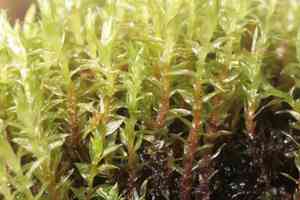
Common green bryum moss (Bryum pseudotriquetrum)
Also known as: Marsh Bryum Moss
A resilient moss known for its plush, green carpet appearance is the common green bryum moss. This moss thrives in damp areas like stream banks and moist woodlands, thanks to its water-retentive properties. It features tiny, lance-shaped leaves densely packed around wiry stems, giving it a cushiony texture. Sporophytes on stalks add a delicate, bristled texture, enhancing its unique form.
In This Article
Attributes of Common green bryum moss
Lifespan
Perennial
Plant Height
1 - 6 cm
Spread
Not Applicable
Leaf Color
Bright green to dark green
Flower Size
Not Applicable
Flower Color
Not Applicable
Images of Common green bryum moss
Quickly Identify Common green bryum moss
1
Bryum pseudotriquetrum can be identified by its small, upright stature and the formation of dense tufts. The leaves are broad and oval, with a distinctive midrib. When moist, its leaves are typically bright green, but they may turn a darker green or brownish when dry. The moss produces small, reddish-brown sporophytes with capsules.
Scientific Classification of Common green bryum moss
Phylum
Bryophyta
Class
Bryopsida
Order
Bryales
Family
Bryaceae
Genus
Bryum
Planting and Growing of Common green bryum moss
Care Difficulty
Easy
Watering Schedule
Every 3 days
Sunlight Requirements
Partial sun
Sunshine Duration
6-10 hours
Ideal Temperature
50-68℉
Soil Type
Potting Mix, Peat Mix
Soil pH
5.5-7
Fertilizer Type
Balanced
Pruning Season
Spring, Summer
Pruning Area
Branches, Leaves
Pruning Frequency
2 times a year
Repotting Season
Spring
Pot Type
Plastic, Ceramic
 How to Water Common green bryum moss?
For Bryum pseudotriquetrum, the watering should be enough to moisten the substrate but not cause standing water. Apply around 100ml of water each time, ensuring the water seeps into the soil but excess runs out to prevent waterlogging.
What are the symptoms of an underwatered Common green bryum moss?
›
What should I do if my Common green bryum moss is not getting enough water?
›
What are the symptoms of an overwatered Common green bryum moss?
›
How to save an overwatered Common green bryum moss?
›
 What Are the Sunlight Requirements for Common green bryum moss?
Partial sun and full shade cater to Bryum pseudotriquetrum's need for a balanced environment. This range ensures optimal photosynthesis and supports hearty, vibrant growth without stress.
What type of lighting is ideal for Bryum pseudotriquetrum?
›
How can you achieve the ideal lighting conditions for this moss?
›
What benefits does Bryum pseudotriquetrum get from ideal lighting?
›
 What Is the Ideal Temperature Range for Common green bryum moss?
The ideal temperature range for Bryum pseudotriquetrum is between 50°F and 68°F. This temperature range allows for optimal growth, photosynthesis, and physiological functions. At these temperatures, the moss maintains healthy water uptake and nutrient absorption, supporting its overall vitality and resilience.
 What Soil is Best for Common green bryum moss?
Bryum pseudotriquetrum thrives in soils that offer excellent moisture retention. This quality ensures that the moss remains hydrated, which is vital for its growth and reproduction. Soils with good moisture retention can sustain the plant during dry periods, contributing to its lush appearance. The plant prefers soil rich in organic matter, which provides necessary nutrients for growth. Organic materials in the soil break down over time, releasing nutrients that aid in the moss's development. This richness supports a healthy and vigorous plant structure. Good aeration is essential because it allows oxygen to reach the plant's roots, promoting healthy respiration. Adequate aeration also ensures that excess water can drain, preventing root rot and fostering a stable environment for growth.
 How to Fertilize Common green bryum moss?
Bryum pseudotriquetrum, commonly found in moist habitats, has specific nutrient requirements. When fertilizing, use a balanced water-soluble fertilizer diluted to half-strength. Over-fertilization can lead to detrimental effects, so it's crucial to stay within recommended amounts. For liquid fertilizers, a well-balanced formula like 10-10-10 is ideal, applied at half-strength to prevent nutrient overdose.
 How to Prune Common green bryum moss?
Begin by carefully trimming the uppermost fronds to encourage new growth from the base. Aim to remove just the tips for a neat appearance while allowing optimal sunlight penetration. Examine the moss for any brown, dead, or damaged sections. Carefully snip these off to allow new growth and prevent disease from spreading. This also helps in preserving moisture levels. Pruning isn't just about removal but also about maintaining the shape and structure of the moss. Aim to sculpt a uniform surface which enhances aesthetic appeal and promotes even growth.
More About Pruning Techniques→
 How to Propagate Common green bryum moss plant?
1
Start by ensuring all tools are clean and sterilized. Prepare your work area to provide ample space for the division process. Water the plant a day before to ensure roots are hydrated.
2
Carefully remove the plant from its pot, then gently separate sections of the plant. Each division should have roots and shoots to grow independently. Use a knife if necessary to cut through tough roots.
3
Place each division into a pot filled with fresh, well-draining potting mix. Position the plant at the same depth it was growing previously and water lightly to remove air pockets around the roots.
 How to Repot Common green bryum moss plant?
1
Look for signs such as roots coming out of the drainage holes, or the plant's growth appears stunted, indicating it is time for a new pot. The best time to repot Bryum pseudotriquetrum is during its active growth period in spring or summer, when it can recover quickly.
2
Select a pot that is one size larger than the current one and ensures adequate drainage to prevent waterlogged soil. Clay pots can be beneficial due to their porous nature, which promotes healthy airflow to the roots and helps excess moisture evaporate.
3
Use a well-draining soil mix to prevent root rot and suffocation from heavy soil compaction. Including materials like perlite or sand can enhance drainage and aeration, ensuring the plant's roots receive adequate oxygen and avoid water retention.


