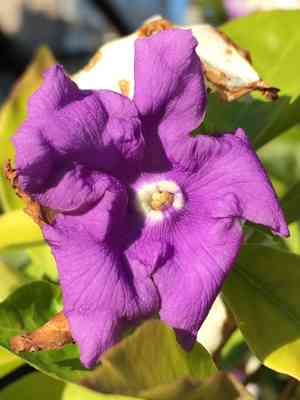
Yesterday-today-and-tomorrow (Brunfelsia pauciflora)
Also known as: Kiss me quick, Fewflower raintree, Morning-noon-and-night, Lady-of-the-night
"Yesterday-today-and-tomorrow" is a flowering plant originally from Brazil, often cultivated for its ornamental value in gardens. The name aptly describes the flower's daily color transformation: starting purple, shifting to lavender, and finally turning white. This striking color change over three days makes it a unique addition to gardens. Additionally, it has received the prestigious Award of Garden Merit from the Royal Horticultural Society.
In This Article
Attributes of Yesterday-today-and-tomorrow
Lifespan
Perennial
Plant Type
Shrub
Plant Height
2.5 m
Spread
1.5 m
Leaf Color
Green
Flower Size
2.5 cm to 8 cm
Flower Color
White Purple Blue Lavender
Images of Yesterday-today-and-tomorrow

Quickly Identify Yesterday-today-and-tomorrow
1
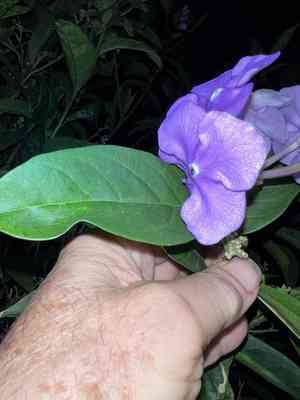
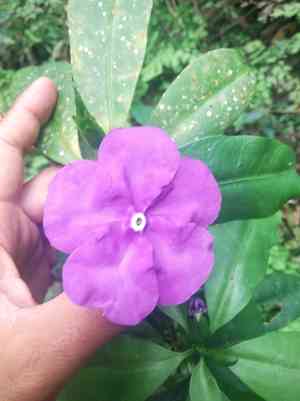
Flower clusters transition from deep purple to lavender to white, creating a captivating color display.
2
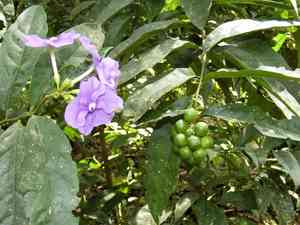
Smooth light green fruit turns brown, resembling berries, with firm texture and multiple seeds.
3
Leaves are lanceolate, leathery, with pointed tip and wedge-shaped base, 3-6 inches (7.5-15 cm) long.
4
Smooth dark green stems, cylindrical branches, 0.2-0.4 inches (5-10 mm) diameter, moderately dense.
5
Trunk features smooth greyish brown bark, slender profile up to 4 inches (10 cm) diameter.
Scientific Classification of Yesterday-today-and-tomorrow
Phylum
Vascular plants
Class
Dicotyledons
Order
Solanales
Family
Nightshade
Genus
Lady of the night
Species
Yesterday-today-and-tomorrow
Planting and Growing of Yesterday-today-and-tomorrow
Care Difficulty
Easy
Watering Schedule
Every 2 days
Sunlight Requirements
Partial sun
Sunshine Duration
6-10 hours
Ideal Temperature
65-75℉
Soil Type
Potting Mix, Peat Mix
Soil pH
6.5-7.5
Fertilizer Type
Balanced
Pruning Season
Spring, Summer
Pruning Area
Branches, Leaves
Pruning Frequency
2 times a year
Repotting Season
Spring
Pot Type
Plastic, Ceramic
 How to Water Yesterday-today-and-tomorrow?
Brunfelsia pauciflora requires a moderate amount of water. The soil should remain consistently moist, but not waterlogged. A watering amount of approximately 250 ml per session is generally sufficient to achieve this moisture level. Ensure that excess water drains away to prevent root rot.
More About Watering Techniques→
What are the symptoms of an underwatered Yesterday-today-and-tomorrow?
›
What should I do if my Yesterday-today-and-tomorrow is not getting enough water?
›
What are the symptoms of an overwatered Yesterday-today-and-tomorrow?
›
How to save an overwatered Yesterday-today-and-tomorrow?
›
 What Are the Sunlight Requirements for Yesterday-today-and-tomorrow?
Brunfelsia pauciflora ideally thrives in partial sun. This balance provides sufficient light for blossoming while preventing potential solar damage, contributing to lush foliage and prolific flowering.
More About Sunlight Requirements Techniques→
Optimal Placement
›
Lighting Equipment
›
Environmental Benefits
›
 What Is the Ideal Temperature Range for Yesterday-today-and-tomorrow?
The ideal temperature range for growing Brunfelsia pauciflora is between 65°F and 75°F. Within this range, the plant thrives, showing optimal growth and flowering. Maintaining these temperatures helps the plant develop vibrant blooms and ensures overall health. Temperatures in this range mimic its natural tropical habitat, offering the warmth it requires for photosynthesis and metabolic processes.
 What Soil is Best for Yesterday-today-and-tomorrow?
Brunfelsia pauciflora thrives in well-drained soil to prevent root rot. A suitable substrate allows excess water to seep away, maintaining healthy root systems and vigorous growth, which contributes to the plant’s abundant flowering. Adding organic matter to the soil, such as compost, can enhance nutrient availability, which is essential for the plant's growth and vibrant blooms. Organic matter not only supplies nutrients but also improves soil structure and water retention. The soil should retain enough moisture to keep the plant hydrated without being waterlogged. This balance is crucial for sustaining the Brunfelsia's lush foliage and extended blooming season, especially in warmer climates.
More About Soil→
 How to Fertilize Yesterday-today-and-tomorrow?
Brunfelsia pauciflora thrives with balanced fertilization. For liquid fertilizers, use a solution diluted to half strength, applying about 200 ml per application to mature plants. For slow-release fertilizers, follow the package instructions, generally around 50 grams per plant.
More About Fertilizing Techniques→
 How to Prune Yesterday-today-and-tomorrow?
Begin by cutting away any dead, diseased, or damaged branches. This is crucial to help the plant direct energy towards healthier growth and flowering. Make your cuts just above the node to encourage regeneration. To maintain the desired shape of your Brunfelsia pauciflora, trim back the overgrown branches. Always cut at a slight angle and avoid cutting too close to the main stem, where new growth will emerge. After pruning, water the plant well and apply a balanced fertilizer to boost its recovery and promote lush new growth. Keep an eye on pests and diseases in the days following pruning.
More About Pruning Techniques→
 How to Propagate Yesterday-today-and-tomorrow plant?
1
Before you start, prepare a suitable environment for growing cuttings. Ensure you have well-draining soil in containers or beds and keep a warm area with indirect sunlight for the cuttings.
2
Choose healthy and disease-free stems from the parent plant. Cut sections approximately 4-6 inches long, ideally just below a node, which is optimal for rooting.
3
Dip the cut ends of the stems in rooting hormone, then plant them into the prepared soil. Ensure that there are at least two to three nodes buried in the soil for root and leaf development.
 How to Repot Yesterday-today-and-tomorrow plant?
1
Brunfelsia pauciflora should be repotted when you notice roots protruding from the drainage holes, indicating the current pot is too small. Other signs include slowed growth and poor flowering. Spring and summer are optimal seasons to repot, aligning with its active growth period. This ensures the plant has ample time to adjust before its dormant phase.
2
Select a pot that is one size larger than the current one, with drainage holes to prevent waterlogging. A terracotta pot is ideal as it allows airflow to the roots, helping in moisture regulation. The right pot will encourage healthy root development and prevent root rot, leading to a thriving plant.
3
Choose well-draining soil rich in organic matter, with a slightly acidic pH. Incorporating materials like peat and sand will ensure proper aeration and drainage. This type of soil will support optimal nutrient absorption and reduce the risk of root diseases, fostering healthy growth.
Toxicity
Ingestion
WARNING
The judgment on toxicity and danger is for reference only. We DO NOT GUARANTEE any accuracy of such judgment. Therefore, you SHALL NOT rely on such judgment. It is IMPORTANT TO SEEK PROFESSIONAL ADVICE in advance when necessary.
Learn More About Yesterday-today-and-tomorrow Diseases
Anthracnose
Bacterial Leaf Spot
Bacterial Soft Rot
Bacterial Wilt
Black Spot
Chemical Injury
Crown Gall
Damping-off
Downy Mildew
Drought Stress
Fusarium Wilt
Gray Mold
Leaf Curl
Leaf Spot
Mosaic
Nutrient Deficiency
Nutrient Toxicity
Powdery Mildew
Root Rot
Root-knot Nematode
Rusts
Sooty Mold
Spider Mites
Temperature Stress
Thrips Damage
White Mold



