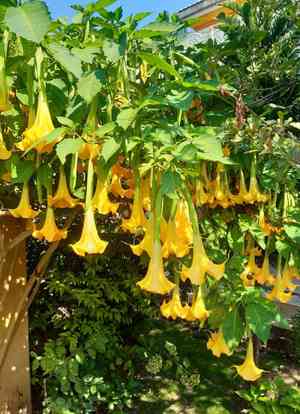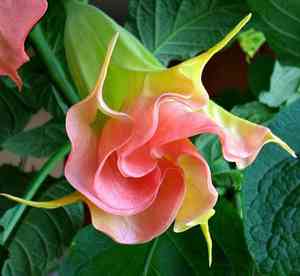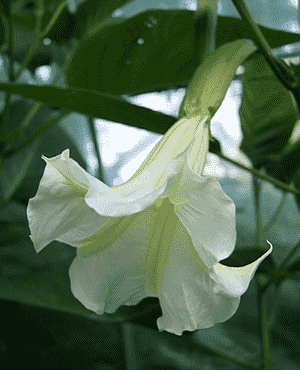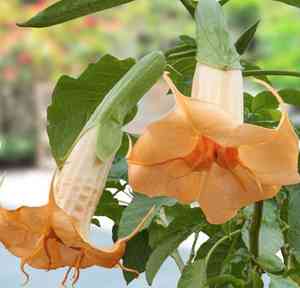
Angel's trumpet(Brugmansia suaveolens)

Angel's trumpet (Brugmansia suaveolens)

Also known as: Brazil's white angel trumpet, Snowy angel's trumpet

Angel's trumpet (Brugmansia) makes a striking addition to gardens due to its large, trumpet-shaped blooms that come in an array of colors like white, pink, yellow, and peach. These flowers not only add visual appeal but also emit a pleasant fragrance, enhancing the garden's atmosphere.

However, it's important to exercise caution since every part of the plant is highly toxic if ingested. Always wear gloves when handling it and wash your hands thoroughly afterward. Additionally, ensure the plant is placed in areas inaccessible to children and pets to prevent accidental poisoning.

Attributes of Angel's trumpet

Lifespan
Perennial
Plant Type
Shrub
Plant Height
3 m to 5 m
Spread
1.8 m to 3 m
Leaf Color
Green
Flower Size
15 cm
Flower Color
White Yellow Pink Orange

ForwardPlant - Identify plants with a snap

Identify and diagnose plants, get toxicity alerts, and explore safety guides for all types of fungi.

Try for Free

Images of Angel's trumpet

Angel's trumpet(Brugmansia suaveolens)

Quickly Identify Angel's trumpet

1
Identifiable by its large, pendulous flowers that can be white, yellow, or pink. The leaves are large, oval, and slightly serrated. The plant often forms a small tree or large shrub, and the flowers emit a strong, sweet fragrance at night.

Scientific Classification of Angel's trumpet

Phylum
Vascular plants
Class
Dicotyledons
Order
Solanales
Family
Nightshade
Genus
Angel's trumpets
Species
Angel's trumpet

Planting and Growing of Angel's trumpet

Care Difficulty
Hard
Watering Schedule
Every 8 days
Sunlight Requirements
Full sun
Sunshine Duration
4-8 hours
Ideal Temperature
65-75℉
Soil Type
Potting Mix, Peat Mix
Soil pH
6.5-7.5
Fertilizer Type
Balanced
Pruning Season
Spring, Summer
Pruning Area
Branches, Leaves
Pruning Frequency
2 times a year
Repotting Season
Spring
Pot Type
Ceramic, Plastic

water icon How to Water Angel's trumpet?

When watering Brugmansia suaveolens, it is essential to ensure the soil is moist but not waterlogged. Approximately 500 ml of water per session should suffice, allowing water to penetrate to the root zone. This plant thrives when the soil is consistently moist, mimicking its native tropical environments.
What are the symptoms of an underwatered Angel's trumpet?
What should I do if my Angel's trumpet is not getting enough water?
What are the symptoms of an overwatered Angel's trumpet?
How to save an overwatered Angel's trumpet?
More About Watering Techniques

sunlight icon What Are the Sunlight Requirements for Angel's trumpet?

Sunlight Requirements: Full sun, Partial sun
Duration of light: 4 to 6 hours
With four to six hours of sunlight, Brugmansia suaveolens can maximize its flowering potential and foliage health, promoting robust growth and a striking appearance in your garden or home setting.
What type of sunlight does Brugmansia suaveolens prefer?
How can I ensure ideal lighting conditions for my Brugmansia suaveolens?
What are the benefits of providing the ideal lighting to Brugmansia suaveolens?
More About Sunlight Requirements Techniques

temperature icon What Is the Ideal Temperature Range for Angel's trumpet?

Ideal Temperature: 65 ~ 75℉
Brugmansia suaveolens thrives best in temperatures ranging from 65°F to 75°F. This range provides the appropriate warmth needed for optimal photosynthesis, growth, and flowering. Maintaining a stable temperature within this range ensures the plant's metabolic processes function efficiently, leading to healthier and more robust growth.

soil icon What Soil is Best for Angel's trumpet?

Soil type: Loam, Sandy loam, Acidic soil
Soil PH: 6.5 ~ 7.5
The soil should be well-draining to prevent waterlogging, which can lead to root rot. This quality is crucial for Brugmansia suaveolens as it promotes healthy root development and prevents fungal diseases. Brugmansia suaveolens thrives in nutrient-rich soil with ample organic matter. A soil high in nutrients supports this plant's rapid growth and aids in flowering by providing essential macro and micronutrients. While the soil should drain well, it is also imperative that it retains adequate moisture to support continuous hydration. This balance is key in fostering sustained growth and blooming, especially in warm climates. More About Soil

fertilize icon How to Fertilize Angel's trumpet?

Fertilizer type: Balanced
Brugmansia suaveolens thrives with a balanced nutrient regimen. For liquid fertilizers, dilute with water to half the recommended strength. Apply about 250 ml around the base of the plant each time. Solid fertilizers should be used sparingly, with about 100 grams scattered around the base, ensuring you don’t burn the roots. More About Fertilizing Techniques

prune icon How to Prune Angel's trumpet?

Pruning Time: Spring, Summer, Autumn
Prune Brugmansia suaveolens in early spring to encourage robust growth. Summer pruning can help shape the shrub for additional blooms. Make angled cuts just above a leaf node to promote new branching. Prune longer branches to maintain your desired shape and height. More About Pruning Techniques

propagate icon How to Propagate Angel's trumpet plant?

Propagate Time: Spring,Late Spring,Summer
1
Choose healthy, non-flowering stems from the parent plant. The ideal cutting should be around 6-8 inches long with several leaf nodes. Avoid stems that show any signs of disease or pest infestation.
2
Remove leaves from the bottom half of the cutting to prevent rot and moisture loss. Dip the end of each cutting into rooting hormone powder to stimulate root growth, enhancing the chance of successful propagation.
3
Plant the cutting in a pot filled with well-drained potting mix. Water the soil lightly and cover with a plastic bag to maintain humidity around the cutting, which aids in faster rooting.
More About Propagating Techniques

repot icon How to Repot Angel's trumpet plant?

Repotting frequency: Every 1-2 years
1
Repot Brugmansia suaveolens when it shows signs of becoming root-bound or when its growth noticeably slows. Watch for roots peeking through the drainage holes or a significant reduction in blooming as these are sure signs that it's time for a bigger pot.
2
Select a pot that is one size larger than the current one to give the roots room to expand without drowning the plant in excessive soil, which can cause water retention issues. Ensure it has good drainage to prevent waterlogged roots, promoting healthy growth and vibrant blooms.
3
Opt for a rich, well-draining mix that holds enough moisture to keep roots happy while facilitating air movement through the soil. A mix containing peat, perlite, and organic matter creates an ideal environment, ensuring nutrient access and root aeration, which are vital for robust growth.
More About Repotting Techniques

ForwardPlant - Identify plants with a snap

Find the best spots for them to optimize their health, simply using your phone.

Try for Free

Toxicity of Angel's trumpet

Is Angel's trumpet toxic to humans?

Angel's trumpets are highly poisonous to humans. Every part of these plants harbors a variety of toxic alkaloids, with the highest concentration found in their leaves and seeds. Consuming these parts—even in minimal amounts—can result in severe health complications. Symptoms of poisoning from angel's trumpets include increased heart rate, pupil dilation, paralysis of smooth muscles, blurred vision, and, in severe cases, death. These plants are popular ornamental specimens commonly seen in gardens and greenhouses (in fact, they are thought to be extinct in their natural habitat). Fortunately, there are no closely resembling edible plants, making instances of human consumption remarkably uncommon.

Is Angel's trumpet toxic to cat?

Angel's trumpet contains a significant degree of toxicity that presents a serious danger to cats. These felines can suffer poisoning if they inadvertently consume any portion of the plant, which includes leaves, flowers, and stems. Following ingestion, cats may exhibit various unfavorable physical symptoms indicative of poisoning. It is essential to observe for any signs of illness and obtain prompt veterinary assistance. A swift trip to the veterinarian is crucial to manage any potential health issues resulting from contact with angel's trumpet.

Is Angel's trumpet toxic to dog?

Angel's trumpet is a highly toxic plant for dogs, presenting considerable health hazards if ingested. Dogs may inadvertently consume various parts of this plant, which can lead to poisoning. Every part of the plant is dangerous, indicating that ingestion of any section may result in toxic effects. Symptoms of poisoning can involve gastrointestinal distress, confusion, muscle weakness, and possibly more severe neurological signs including seizures or tremors. Given the seriousness of these symptoms and the inherent toxicity of angel's trumpet, it is essential for dog owners to obtain immediate veterinary assistance if their pet has had any exposure to or has ingested any portion of this plant.

Identify toxic plants for your safety

Learn which plants are harmful to you and your pets, and make informed choices for a safer home!

Try for Free
WARNING
The judgment on toxicity and danger is for reference only. We DO NOT GUARANTEE any accuracy of such judgment. Therefore, you SHALL NOT rely on such judgment. It is IMPORTANT TO SEEK PROFESSIONAL ADVICE in advance when necessary.
More About Toxic Techniques