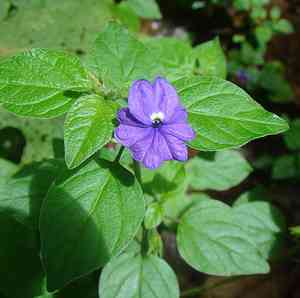
Bush-violet (Browallia) (Browallia)
Also known as: Bush Violet, Amethyst Flower
The Solanaceae family, also known as the nightshade family, comprises more than 90 genera. This family includes many vital crops like tomatoes, potatoes, and eggplants. It's worth noting that several plants in this family have toxic alkaloids, which can be harmful to both humans and animals.
In This Article
Attributes of Bush-violet (Browallia)
Lifespan
Annual
Plant Height
12-18 inches (30-45 cm)
Spread
Varies, but generally compact
Leaf Color
Green
Flower Size
1-2 inches (2.5-5 cm)
Flower Color
Blue, violet, white
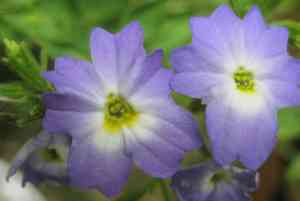
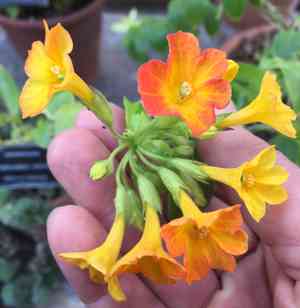
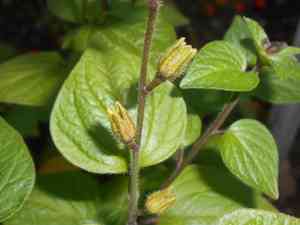
Images of Bush-violet (Browallia)
Quickly Identify Bush-violet (Browallia)
1
To identify Browallia, look for its tubular flowers with five petals, typically in shades of blue, violet, or white. The leaves are simple, oval, and alternately arranged. The plant often has a bushy appearance, especially in container settings.
Scientific Classification of Bush-violet (Browallia)
Phylum
Magnoliophyta
Class
Magnoliopsida
Order
Solanales
Family
Solanaceae
Genus
Browallia
Planting and Growing of Bush-violet (Browallia)
Care Difficulty
Easy
Watering Schedule
Every 8 days
Sunlight Requirements
Partial sun
Sunshine Duration
6-10 hours
Ideal Temperature
65-75℉
Soil Type
Potting Mix, Peat Mix
Soil pH
6-7.5
Fertilizer Type
Balanced
Pruning Season
Spring, Summer
Pruning Area
Branches, Leaves
Pruning Frequency
2 times a year
Repotting Season
Spring
Pot Type
Plastic, Ceramic
 How to Water Bush-violet (Browallia)?
When watering Browallia, ensure the soil is moist but not soggy. A good approach is to water until you see a small trickle coming out of the pot's drainage holes, indicating that the soil has absorbed enough moisture. Generally, 250 ml per watering session should suffice.
What are the symptoms of an underwatered Bush-violet (Browallia)?
›
What should I do if my Bush-violet (Browallia) is not getting enough water?
›
What are the symptoms of an overwatered Bush-violet (Browallia)?
›
How to save an overwatered Bush-violet (Browallia)?
›
 What Are the Sunlight Requirements for Bush-violet (Browallia)?
Browallia thrives best in partial sun, receiving 4-6 hours of indirect light. Proper lighting enhances its blooming and supports vigorous growth, resulting in healthier and more abundant flowers.
How much sun does Browallia need?
›
How to achieve optimal lighting for Browallia?
›
What are the benefits of providing ideal lighting?
›
 What Is the Ideal Temperature Range for Bush-violet (Browallia)?
The ideal temperature range for growing Browallia is between 65°F and 75°F. This range provides warmth while still being cool enough to prevent heat stress, allowing the plant to thrive. Maintaining these temperatures promotes optimal growth and flowering.
 What Soil is Best for Bush-violet (Browallia)?
Browallia thrives in nutrient-rich soil, which provides the essential minerals and organic matter necessary for robust growth and vibrant blooms. Consistent nutrient availability supports healthy foliage and longer blooming periods. Well-draining soil is crucial for Browallia to prevent root rot and other moisture-related issues. This type of soil helps maintain the right balance of moisture and air, enabling the roots to breathe efficiently. While it needs good drainage, Browallia also requires some moisture retention to keep the roots hydrated. This balance ensures the plant stays healthy during dry spells without becoming waterlogged during watering.
 How to Fertilize Bush-violet (Browallia)?
For Browallia, apply a balanced liquid fertilizer at half the recommended strength to prevent over-fertilization. Always ensure the soil is moist before fertilizing, avoiding direct contact of fertilizer with dry soil to prevent root burn.
 How to Prune Bush-violet (Browallia)?
Start by identifying any dead or yellowing leaves, which should be removed promptly to allow the plant to direct its energy towards healthy growth. Then, use sharp, sterilized scissors to trim back overgrown branches just above a leaf node or bud, which encourages bushier growth and more flowers.
 How to Propagate Bush-violet (Browallia) plant?
1
For both seeds and cuttings, start by preparing a well-draining growing medium. Use a mix of peat and perlite to ensure adequate aeration and moisture retention, which are critical for root development.
2
For seed propagation, scatter seeds thinly on the surface of the prepared medium and lightly cover them. For cuttings, insert the cut ends into the medium ensuring at least one node is below the surface.
3
Keep the growing medium consistently moist but not waterlogged. Cover the seed tray or containers with a plastic dome or use a humidity tray to maintain high humidity, which is beneficial for germination and rooting.
 How to Repot Bush-violet (Browallia) plant?
1
Repot Browallia when you see roots coming out of the drainage holes or the plant shows signs of being root-bound. This usually happens when growth slows or the plant seems to dry out too quickly.
2
Select a pot that is 1-2 inches larger in diameter than the current one. This allows space for root growth but prevents excess soil that could retain too much moisture. A pot with drainage holes is essential to avoid waterlogging, which can lead to root rot.
3
Choose a well-draining potting mix that is rich in organic material. This ensures that the plant's roots have access to nutrients while also preventing water from sitting in the pot, which could cause root diseases.
Toxicity
Ingestion of leaves, flowers, or stems
WARNING
The judgment on toxicity and danger is for reference only. We DO NOT GUARANTEE any accuracy of such judgment. Therefore, you SHALL NOT rely on such judgment. It is IMPORTANT TO SEEK PROFESSIONAL ADVICE in advance when necessary.
Learn More About Bush-violet (Browallia) Diseases
Anthracnose
Bacterial Leaf Spot
Bacterial Soft Rot
Bacterial Wilt
Chemical Injury
Crown Gall
Cyst Nematode
Damping-off
Downy Mildew
Drought Stress
Fusarium Wilt
Gray Mold
Leaf Curl
Leaf Spot
Mosaic
Nutrient Deficiency
Nutrient Toxicity
Powdery Mildew
Root Rot
Root-knot Nematode
Rusts
Sooty Mold
Spider Mites
Temperature Stress
Thrips Damage
White Mold

