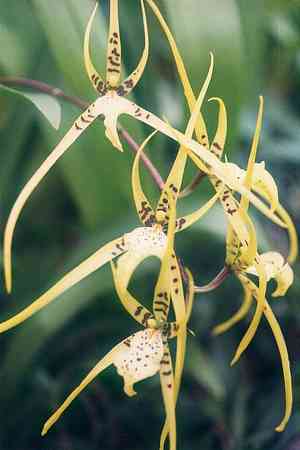
Spider orchid (Brassia) (Brassia)
Also known as: Spider Orchid, Spider Brassia
Spider orchids are distinguished by their elongated, narrow sepals and petals that give them a spidery appearance. They typically feature large, elliptic pseudobulbs with one or two apical leaves and produce numerous flowers along an unbranched inflorescence. The base of the inflorescence is often enveloped by two leafy sheaths. These orchids are primarily found in regions such as Mexico, Central America, the West Indies, and northern South America, with some species extending their range into Florida.
In This Article
Attributes of Spider orchid (Brassia)
Lifespan
Perennial
Plant Height
30-50 cm
Spread
Not applicable
Leaf Color
Green
Flower Size
7-10 cm
Flower Color
Yellow, Green, Brown
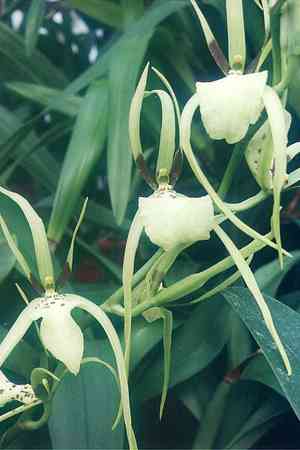
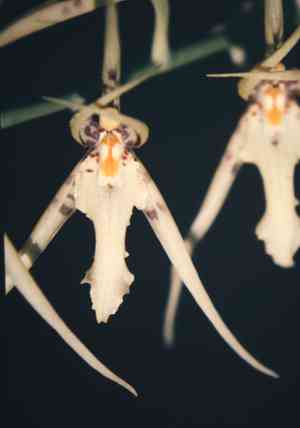
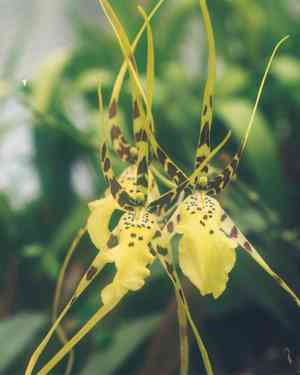
Images of Spider orchid (Brassia)
Quickly Identify Spider orchid (Brassia)
1
Brassia orchids can be identified by their unique spider-like flowers that have long, narrow petals and sepals. Their pseudobulbs and long leaves are also distinguishing features.
Scientific Classification of Spider orchid (Brassia)
Phylum
Angiosperms
Class
Liliopsida
Order
Asparagales
Family
Orchidaceae
Genus
Brassia
Planting and Growing of Spider orchid (Brassia)
Care Difficulty
Moderate
Watering Schedule
Every 4 days
Sunlight Requirements
Partial sun
Sunshine Duration
4-8 hours
Ideal Temperature
65-75℉
Soil Type
Potting Mix, Peat Mix
Soil pH
6.5-7.5
Fertilizer Type
Balanced
Pruning Season
Spring, Summer
Pruning Area
Branches, Leaves
Pruning Frequency
2 times a year
Repotting Season
Spring
Pot Type
Plastic, Ceramic
 How to Water Spider orchid (Brassia)?
Brassia, commonly known as 'spider orchid', requires about 250 ml of water per session. The key is to water until the moisture penetrates several centimeters deep into the potting medium. Avoid leaving the plant sitting in water by ensuring good drainage.
What are the symptoms of an underwatered Spider orchid (Brassia)?
›
What should I do if my Spider orchid (Brassia) is not getting enough water?
›
What are the symptoms of an overwatered Spider orchid (Brassia)?
›
How to save an overwatered Spider orchid (Brassia)?
›
 What Are the Sunlight Requirements for Spider orchid (Brassia)?
Partial sun is the ideal condition for Brassia. This light range ensures enhanced photosynthesis, leading to vigorous health, vibrant leaves, and regular blooming cycles.
Required light level
›
Solution for insufficient light
›
Benefits of ideal lighting
›
 What Is the Ideal Temperature Range for Spider orchid (Brassia)?
Brassia orchids thrive best within a temperature range of 65°F to 75°F. This range facilitates optimal photosynthesis and growth, ensuring the plant remains healthy and vibrant. Maintaining this temperature range enhances bloom production.
 What Soil is Best for Spider orchid (Brassia)?
Brassia plants thrive in well-draining soil which prevents waterlogging and root rot. This type of soil ensures that excess water can escape, allowing roots to breathe and absorb nutrients efficiently. The soil should retain some moisture without becoming soggy. This balance is crucial for Brassia, as it prevents dehydration while avoiding the risk of overwatering, a common cause of root issues. Brassia thrives in nutrient-rich soil that provides essential elements for growth. Adequate nutrients support strong foliage and vibrant blooms, contributing to the overall health and aesthetics of the plant.
 How to Fertilize Spider orchid (Brassia)?
Brassia orchids, like many other orchids, require careful consideration of the amount of fertilizer used. Typically, you should use a diluted orchid fertilizer. A quarter to half of the recommended strength on the fertilizer package will suffice; over-fertilizing can easily harm these delicate epiphytes.
 How to Prune Spider orchid (Brassia)?
Start by assessing your Brassia for any dead or yellow leaves and pseudobulbs. Using sterilized scissors, gently cut away the dead material at the base. Ensure not to damage healthy growth. For overgrown plants, divide them carefully, making sure each division has at least a couple of healthy pseudobulbs. After pruning, ensure the plant is placed in a well-ventilated area where it can recover. Avoid watering for a few days to let any cuts heal, which reduces the risk of infection. Monitor the plant for any signs of stress or disease.
 How to Propagate Spider orchid (Brassia) plant?
1
Start by carefully removing the Brassia plant from its current pot, ensuring that the roots are handled gently to avoid damage. Inspect the health of root system, cutting away any rotted parts.
2
Using a sterile knife, divide the plant into smaller sections, each containing at least one bulb and healthy roots. Be sure each division has enough root mass to support its growth after transplantation.
3
Place each division into a suitable pot with well-draining potting soil. Make sure the bulbs are not buried too deep and water the plants lightly, ensuring that the soil is moist but not waterlogged.
 How to Repot Spider orchid (Brassia) plant?
1
Brassia, commonly known as the 'Spider Orchid', signals its need for repotting when roots start circling the pot or if the potting medium breaks down significantly. Repot during spring or summer when new root growth is visible, ensuring healthier adaptation.
2
Select a pot that is only slightly larger than the current one, ideally 1-2 inches larger in diameter. This size ensures that excess moisture is avoided while providing enough space for new root growth, promoting healthier plant development.
3
Use an orchid potting mix that is light and airy, composed of bark, perlite, and charcoal. This mix replicates the Brassia's natural epiphytic environment, offering excellent drainage and aeration essential for its root health.

