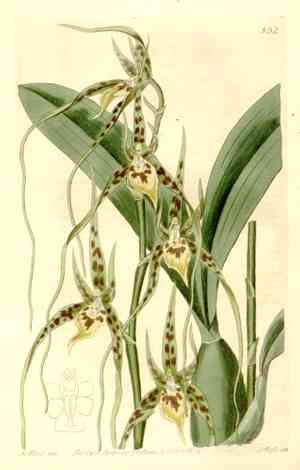
Cricket orchid (Brassia caudata)
Also known as: Spider Orchid, Spider Brassia
The tailed Brassia (Brassia caudata) is a type of orchid commonly referred to as the spider orchid or cricket orchid. This species is native to warmer regions of the Western Hemisphere, including southern Mexico, Central America, southern Florida, the Greater Antilles, Trinidad, and parts of northern South America.
In This Article
Attributes of Cricket orchid
Lifespan
Perennial
Plant Type
Herb
Plant Height
50-70 cm
Spread
N/A
Leaf Color
Green
Flower Size
10-15 cm
Flower Color
White Yellow Green
Images of Cricket orchid
Quickly Identify Cricket orchid
1
Easily identified by its long, spidery petals which can measure up to 30 cm in length. The flowers are typically greenish-yellow with brown spots.
Scientific Classification of Cricket orchid
Phylum
Vascular plants
Class
Monocotyledons
Order
Asparagales
Family
Orchid
Genus
Spider orchid
Species
Cricket orchid
Planting and Growing of Cricket orchid
Care Difficulty
Moderate
Watering Schedule
Every 2 days
Sunlight Requirements
Partial sun
Sunshine Duration
4-8 hours
Ideal Temperature
65-78℉
Soil Type
Potting Mix, Peat Mix
Soil pH
6.5-7.5
Fertilizer Type
Balanced
Pruning Season
Spring, Summer
Pruning Area
Branches, Leaves
Pruning Frequency
2 times a year
Repotting Season
Spring
Pot Type
Plastic, Terracotta
 How to Water Cricket orchid?
For Brassia caudata, also known as the Spider Orchid, the watering amount should be approximately 150 milliliters each time. This water should reach all parts of the root without causing waterlogging. Ensure the potting medium is consistently moist but not saturated, mimicking its native humid environment.
What are the symptoms of an underwatered Cricket orchid?
›
What should I do if my Cricket orchid is not getting enough water?
›
What are the symptoms of an overwatered Cricket orchid?
›
How to save an overwatered Cricket orchid?
›
 What Are the Sunlight Requirements for Cricket orchid?
Brassia caudata ideally requires partial sun to full shade conditions, benefiting from 3-6 hours of daily light. This optimal range ensures balanced energy for growth while preventing leaf damage from strong sunlight.
What is the best lighting condition for Brassia caudata?
›
How can you achieve ideal lighting for Brassia caudata?
›
What are the benefits of ideal lighting for Brassia caudata?
›
 What Is the Ideal Temperature Range for Cricket orchid?
For optimal growth, Brassia caudata thrives best in temperatures ranging from 65°F to 78°F during the day. These temperatures emulate the warm tropical environments, similar to its native habitat, encouraging healthy growth and flowering.
 What Soil is Best for Cricket orchid?
Brassia caudata thrives in well-drained soil that prevents waterlogging. This condition is crucial as it helps avoid root rot and ensures healthy growth by allowing roots to access nutrients and air efficiently. The presence of moderate organic matter in the soil offers essential nutrients and helps retain moisture, creating an ideal environment for the Brassia caudata's roots to develop robustly and support lush, vibrant foliage. Brassia caudata prefers soil that maintains consistent moisture without being soggy. This helps the plant avoid stress conditions that can occur with inconsistent watering and supports stable growth.
 How to Fertilize Cricket orchid?
Brassia caudata, commonly known as the Spider Orchid, thrives with moderate fertilization. Use a balanced, water-soluble fertilizer diluted to quarter-strength. For liquid fertilizers, mix about 1/4 teaspoon per gallon of water. You must avoid over-fertilizing as it can lead to nutrient burn.
 How to Prune Cricket orchid?
Begin by examining your Brassia caudata for any dead, damaged, or yellowing leaves. Removing these helps the plant focus energy on healthy growth. Carefully trim away any old or spent pseudobulbs to encourage new ones to develop, which will keep your orchid vigorous and full. Wait until after the flowering period to prune. This allows the plant to use all its resources for blooming, ensuring you get the most out of its beautiful flowers.
More About Pruning Techniques→
 How to Propagate Cricket orchid plant?
1
Before division, inspect the plant to ensure it is healthy and has multiple pseudobulbs. It's crucial to water the plant a day before to soften the roots, making separation easier.
2
Carefully cut the rhizomes into sections, ensuring each division has at least three pseudobulbs. Handle the roots gently to avoid damage and ensure each section is viable for new growth.
3
Place each division in a pot filled with orchid medium. Position the rhizomes just below the surface and secure them in place. Water lightly to settle the medium without soaking.
 How to Repot Cricket orchid plant?
1
Brassia caudata should be repotted when you notice its roots outgrowing the pot, usually peeking out from the bottom. Another signal is the degradation of the potting medium, which can become overly compacted or retain too much moisture, potentially leading to root rot. An ideal time is at the onset of new growth, indicating the plant's readiness for a fresh environment.
2
Choose a pot that allows for at least a 3-5 cm growth margin for the roots. The pot should have ample drainage holes to prevent waterlogging, ensuring the roots have access to air. A transparent plastic pot can help you monitor root health and moisture levels, promoting optimal growth conditions.
3
Opt for a specialized orchid mix that ensures excellent drainage and aeration. Ingredients like bark, perlite, and charcoal are ideal, as they resist compaction and provide the roots with both the air and moisture they need. Such a mix boosts root health and minimizes the risk of rot.
Learn More About Cricket orchid Diseases
Anthracnose
Bacterial Leaf Spot
Bacterial Soft Rot
Black Spot
Chemical Injury
Crown Gall
Cyst Nematode
Damping-off
Downy Mildew
Drought Stress
Fusarium Wilt
Gray Mold
Leaf Spot
Mosaic
Nutrient Deficiency
Nutrient Toxicity
Powdery Mildew
Root Rot
Root-knot Nematode
Rusts
Sooty Mold
Spider Mites
Temperature Stress
Thrips Damage
White Mold



