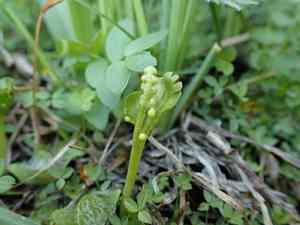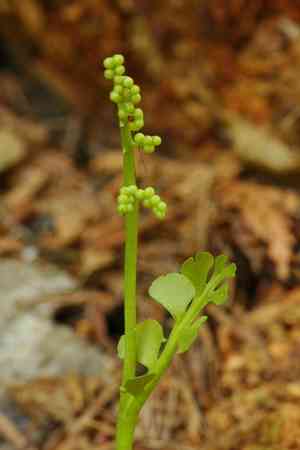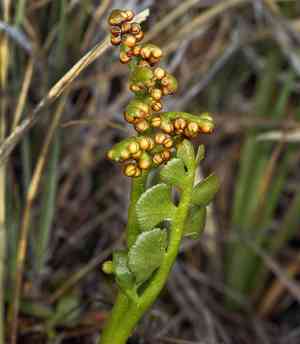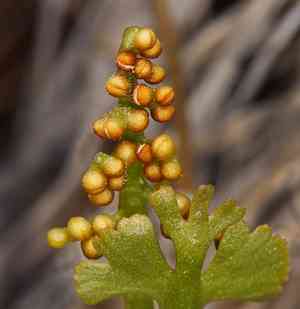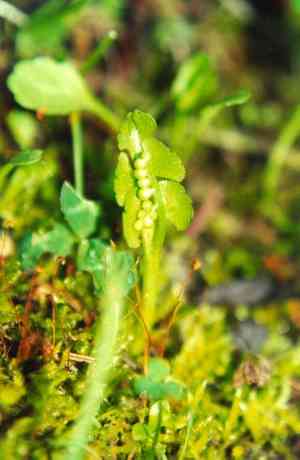
Scalloped moonwort(Botrychium crenulatum)

Scalloped moonwort (Botrychium crenulatum)

Also known as: Cleft Grape Fern

To identify scalloped moonwort (Botrychium crenulatum) in its natural environment, consider these distinctive characteristics:

1. **Compact Size**: This is a diminutive fern, generally reaching just a few inches in height.
2. **Fronds**: Features a single frond that is divided into two distinct segments: a sterile, leafy section and a fertile, spore-bearing section.
3. **Leaf Shape**: The leaflets have rounded edges with a scalloped appearance, which is a key identifying trait.
4. **Habitat**: Prefers moist, well-drained soils found in high-elevation woodlands, often under the canopy of taller vegetation.
5. **Color and Texture**: The foliage is typically green with a delicate, almost lacy texture.

These identifying features should help you recognize scalloped moonwort in its natural habitat.

Attributes of Scalloped moonwort

Lifespan
Perennial
Plant Type
Fern
Plant Height
Up to 30 cm (12 inches) tall
Spread
N/A
Leaf Color
Green
Flower Size
N/A
Flower Color
N/A

ForwardPlant - Identify plants with a snap

Identify and diagnose plants, get toxicity alerts, and explore safety guides for all types of fungi.

Try for Free

Images of Scalloped moonwort

Scalloped moonwort(Botrychium crenulatum)

Quickly Identify Scalloped moonwort

1
Identifiable by its small size, often less than 30 cm (12 inches), deeply lobed leaves, and typically a single fertile frond that looks like a cluster of small grapes.

Scientific Classification of Scalloped moonwort

Phylum
Vascular plants
Class
Psilotopsida
Order
Ophioglossales
Family
Adder's-tongue
Genus
Moonworts
Species
Scalloped moonwort

Planting and Growing of Scalloped moonwort

Care Difficulty
Hard
Watering Schedule
Every 2 days
Sunlight Requirements
Partial sun
Sunshine Duration
6-8 hours
Ideal Temperature
60-75℉
Soil Type
Potting Mix, Peat Mix
Soil pH
6.5-7.5
Fertilizer Type
Balanced
Pruning Season
Spring, Summer
Pruning Area
Branches, Leaves
Pruning Frequency
2 times a year
Repotting Season
Spring
Pot Type
Plastic, Ceramic

water icon How to Water Scalloped moonwort?

Water Botrychium crenulatum so that the soil is moistened without becoming waterlogged. Aim to saturate the soil to a depth of about 15 centimeters, ensuring even distribution without water pooling on the surface.
What are the symptoms of an underwatered Scalloped moonwort?
What should I do if my Scalloped moonwort is not getting enough water?
What are the symptoms of an overwatered Scalloped moonwort?
How to save an overwatered Scalloped moonwort?

sunlight icon What Are the Sunlight Requirements for Scalloped moonwort?

Sunlight Requirements: Partial sun
Duration of light: 3 to 6 hours
Botrychium crenulatum thrives best with partial sun, receiving dappled light for a few hours daily. This light range prevents dehydration while supporting healthy growth and vibrant foliage.
What is the best light condition for Botrychium crenulatum?
How can one achieve ideal lighting conditions for Botrychium crenulatum?
What benefits does proper lighting provide to Botrychium crenulatum?

temperature icon What Is the Ideal Temperature Range for Scalloped moonwort?

Ideal Temperature: 60 ~ 75℉
The ideal temperature range for Botrychium crenulatum lies between 60°F and 75°F, conducive for balanced physiological processes. This range ensures efficient photosynthesis, respiration, and other metabolic activities specific to this plant. Keeping temperatures stable within this bracket helps promote healthy growth and maintains the plant's natural vigor, contributing to overall vitality.

soil icon What Soil is Best for Scalloped moonwort?

Soil type: Loam, Sandy soil
Soil PH: 6.5 ~ 7.5
Botrychium crenulatum thrives in moisture-retentive soil types that prevent it from drying out too easily. Ensuring the soil retains moisture helps maintain the plant's hydration, crucial for its growth in areas that might face dry spells. Good drainage is essential to prevent waterlogging around Botrychium crenulatum. Adequate drainage reduces the risk of root rot and helps maintain a healthy root system, promoting robust growth. Soil rich in organic matter provides the necessary nutrients for Botrychium crenulatum. This nutrient-rich environment supports strong cellular growth and enhances the plant's resilience against diseases.

fertilize icon How to Fertilize Scalloped moonwort?

Fertilizer type: Balanced
Botrychium crenulatum does not require large amounts of fertilizer. An overly rich soil can actually be detrimental. Opt for a balanced formula such as a 10-10-10 NPK and dilute it to half the recommended strength for liquid applications. For solid fertilizers, use sparingly as this plant thrives better under moderate nutritional conditions.

prune icon How to Prune Scalloped moonwort?

Pruning Time: Spring, Summer
Begin by examining the plant for any fronds that appear brown, wilted, or dead. These should be the first to be pruned as they no longer contribute to the plant's health. Using a pair of sharp scissors or garden shears, make clean cuts close to the base of the dead fronds. This practice helps to prevent disease spread and encourages new growth. While pruning, be attentive to new growth. Avoid cutting these tender shoots as they represent the plant's future foliage and overall health improvements. More About Pruning Techniques

propagate icon How to Propagate Scalloped moonwort plant?

Propagate Time: Early spring
1
Collect mature spores from the plant during its active season. Clean the spores and let them dry for a few days before sowing. Proper preparation of seeds ensures better germination rates.
2
Spread the seeds evenly over the surface of a moistened potting mixture. Lightly cover with a thin layer of soil. Ensure the soil remains damp by misting it regularly to mimic natural moist conditions.
3
Place the containers in a cool, shaded area, ideally with a stable temperature around 60-70°F. Light exposure should be indirect to prevent scorching of the delicate seedlings.
More About Propagating Techniques

repot icon How to Repot Scalloped moonwort plant?

Repotting frequency: Every 2-3 years
1
Botrychium crenulatum signals its time for a new home when you notice stunted growth or roots poking out of the drainage holes. Spring and early summer are ideal times, as the plant is in active growth and can quickly adapt to the new conditions after repotting.
2
Select a pot that is slightly larger than the current one, with adequate drainage holes. The right pot ensures proper root expansion and prevents water logging, which is crucial for the health of Botrychium crenulatum. A pot that’s too large might hold excess moisture, potentially rotting the roots.
3
Opt for a well-draining soil mix, ideally one that mimics its natural environment of rich, loamy forest floors. Proper soil selection promotes healthy root development and ensures adequate hydration while preventing overwatering issues.

ForwardPlant - Identify plants with a snap

Find the best spots for them to optimize their health, simply using your phone.

Try for Free