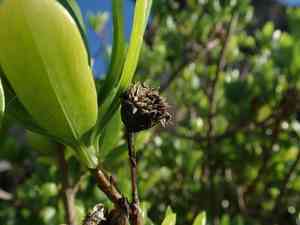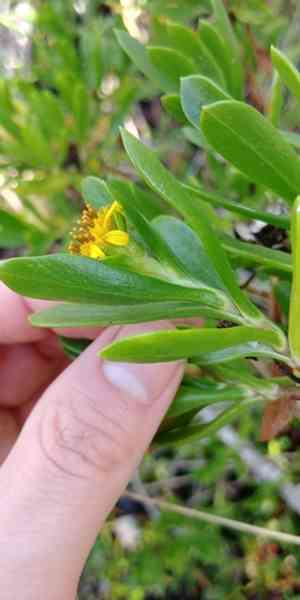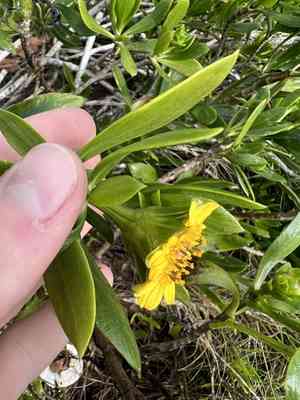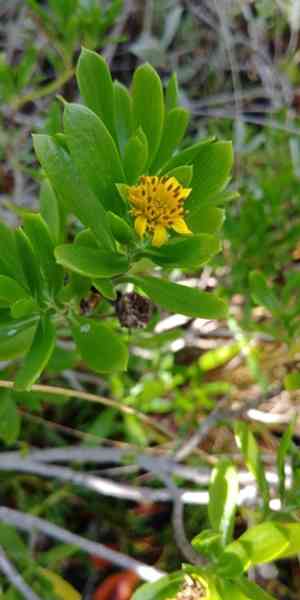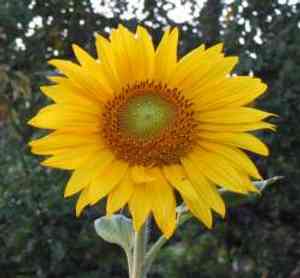
Tree seaside tansy(Borrichia arborescens)

Tree seaside tansy (Borrichia arborescens)

Also known as: Sea Ox-eye Daisy, Seaside Tansy

Tree seaside tansy, scientifically known as Borrichia frutescens, is a hardy coastal shrub well-suited to saline marshes and sandy soils. Its succulent, silver-green leaves and sturdy, woody stems are specialized to endure salty, coastal conditions. This plant is characterized by its bright yellow, daisy-like flowers and its capacity to create dense thickets, which play a crucial role in stabilizing coastal landscapes.

Ecological contributions of tree seaside tansy include:

1. **Erosion Prevention**: Its robust root network secures sand and soil, mitigating erosion.
2. **Wildlife Habitat**: It provides essential shelter and nesting sites for insects and small birds.
3. **Pollinator Attraction**: The vibrant flowers attract pollinators such as bees and butterflies, supporting the health of coastal ecosystems.
4. **Salt Adaptation**: Its ability to thrive in high-salinity environments helps maintain plant diversity in coastal areas.

Overall, tree seaside tansy is a vital component of coastal ecosystems, offering both stabilization and ecological benefits.

Attributes of Tree seaside tansy

Lifespan
Perennial
Plant Type
Shrub
Plant Height
61 cm to 1.2 m
Spread
60 cm to 90 cm
Leaf Color
Silvery-green
Flower Size
2 to 3 cm
Flower Color
Bright yellow

ForwardPlant - Identify plants with a snap

Identify and diagnose plants, get toxicity alerts, and explore safety guides for all types of fungi.

Try for Free

Images of Tree seaside tansy

Tree seaside tansy(Borrichia arborescens)

Quickly Identify Tree seaside tansy

1
Borrichia arborescens can be identified by its woody stems, succulent-like leaves, and bright yellow daisy-like flowers. The leaves are often silvery-green and thick, an adaptation to its salty environment.

Scientific Classification of Tree seaside tansy

Phylum
Vascular plants
Class
Dicotyledons
Order
Asterales
Family
Daisy
Genus
Seaside oxeye
Species
Tree seaside tansy

Planting and Growing of Tree seaside tansy

Care Difficulty
Easy
Watering Schedule
Every 2 days
Sunlight Requirements
Full sun
Sunshine Duration
6-10 hours
Ideal Temperature
70-85℉
Soil Type
Potting Mix, Peat Mix
Soil pH
6.5-7.5
Fertilizer Type
Balanced
Pruning Season
Spring, Summer
Pruning Area
Branches, Leaves
Pruning Frequency
2 times a year
Repotting Season
Spring
Pot Type
Plastic, Ceramic

water icon How to Water Tree seaside tansy?

For Borrichia arborescens, apply water until the soil is thoroughly moist but not waterlogged. Use about 500 ml per watering to ensure the moisture reaches the root zone without causing standing water. This amount sustains the plant's needs, particularly if the soil drains well or during dry periods.
What are the symptoms of an underwatered Tree seaside tansy?
What should I do if my Tree seaside tansy is not getting enough water?
What are the symptoms of an overwatered Tree seaside tansy?
How to save an overwatered Tree seaside tansy?

sunlight icon What Are the Sunlight Requirements for Tree seaside tansy?

Sunlight Requirements: Full sun
Duration of light: 6-8 hours daily
Borrichia arborescens' ideal light range is full sun. This exposure ensures optimal growth, abundant flowering, and strong foliage. It replicates the natural coastal habitat, promoting nutrient synthesis and energy capture for robust vitality.
What is the optimal light condition?
How can you achieve this ideal lighting?
What are the benefits of ideal lighting?

temperature icon What Is the Ideal Temperature Range for Tree seaside tansy?

Ideal Temperature: 70 ~ 85℉
The ideal temperature range for Borrichia arborescens is between 70°F and 85°F. This range supports optimal growth and development by providing the warmth necessary for photosynthesis and other metabolic processes. Within this window, the plant can efficiently use light and nutrients, maintaining healthy foliage and blooms.

soil icon What Soil is Best for Tree seaside tansy?

Soil type: Sandy soil, Sandy loam, Sand soil
Soil PH: 6.5 ~ 7.5
Borrichia arborescens thrives in well-draining soil as it helps prevent root rot, allowing air circulation to the roots. This soil type ensures the plant can access necessary nutrients while avoiding waterlogged conditions. This plant can tolerate nutrient-poor soils, which mirrors its natural habitat. By requiring less fertility, Borrichia arborescens can survive in a variety of conditions and competes well with other species. A soil with low organic matter supports Borrichia arborescens by reducing the risk of fungal diseases often associated with rich, moist soils. It helps the plant maintain a healthy growth rate without excessive vegetative expansion.

fertilize icon How to Fertilize Tree seaside tansy?

Fertilizer type: Balanced
Borrichia arborescens requires careful attention to its fertilization needs. For liquid fertilizers, use a balanced formula, such as a 10-10-10 NPK, at half the recommended strength on the label. This ensures that the plant receives adequate nutrients without overloading the soil and roots.

prune icon How to Prune Tree seaside tansy?

Pruning Time: Spring, Summer, Autumn
Always start with sterilized, sharp pruning shears to prevent disease transfer. Clean tools make cleaner cuts, reducing the stress on the plant and promoting quicker healing of the pruned sections. During pruning, prioritize the removal of dead or damaged branches. This not only improves the plant's appearance but also prevents the spread of disease and allows the plant to direct energy towards healthy growth. Trim back dense areas to allow for better air circulation within the plant. This helps reduce pest infestations and fungal diseases, making the plant healthier. Focus on thinning out crowded areas without compromising the natural shape of the plant. More About Pruning Techniques

propagate icon How to Propagate Tree seaside tansy plant?

Propagate Time: Spring, Early summer
1
Collect ripe seeds from a mature Borrichia arborescens plant. Clean and dry them before sowing to ensure maximum germination rates. Consider soaking seeds overnight to soften the seed coat.
2
Select healthy stems for cuttings, preferably from non-flowering parts of the plant. Use pruning shears to take a cutting at a 45-degree angle, ensuring it's at least 10 cm long.
3
Insert the cut end of the stem into a well-draining potting mix. Ensure only a few leaves are above the surface and water thoroughly to encourage root development.
More About Propagating Techniques

repot icon How to Repot Tree seaside tansy plant?

Repotting frequency: Every 2-3 years
1
Borrichia arborescens signals the need for repotting when you notice roots protruding from drainage holes or the plant seems to be outgrowing its container. The ideal time for repotting is during active growth periods, typically in spring or summer, ensuring the plant can quickly establish in its new pot.
2
Select a pot that is just one size larger than the current one. This ensures the plant has ample space to expand without waterlogging the roots. Opt for a pot with adequate drainage holes to prevent excessive moisture retention, as Borrichia arborescens thrives in well-drained conditions.
3
A well-draining sandy soil mix is optimal for Borrichia arborescens. This soil mimics its natural coastal habitat, providing excellent drainage while retaining enough moisture for the plant's needs. Such a mixture reduces the risk of root rot and supports healthy growth.

ForwardPlant - Identify plants with a snap

Find the best spots for them to optimize their health, simply using your phone.

Try for Free