
Toddy palm (Borassus flabellifer)
Also known as: Palmyra palm, Nungu palm, Black palm, Cambodian palm
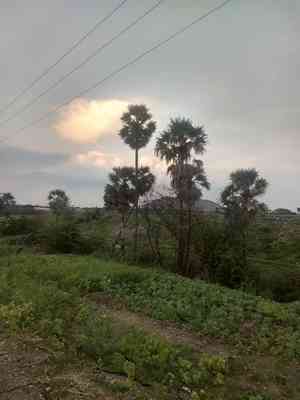
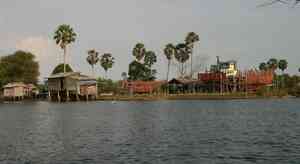
The Toddy Palm (Borassus flabellifer), indigenous to regions of India and Asia, is a striking ornamental palm tree. It can reach heights of up to 30 meters. This species is notable for its long-lasting dead leaves that remain attached to the trunk for years.
In This Article
Attributes of Toddy palm
Lifespan
Perennial
Plant Type
Tree
Plant Height
12 m to 18 m
Spread
45 cm to 90 cm
Leaf Color
Green
Flower Size
1 cm
Flower Color
White Cream
Images of Toddy palm

Quickly Identify Toddy palm
1
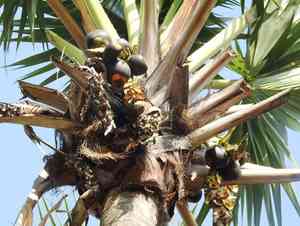
The Palmyra Palm can be identified by its tall, columnar trunk with distinctive leaf scars, fan-shaped leaves, and large, black fruits with a fibrous outer layer. Look for the typical shape of the fronds and the size of the fruit.
Scientific Classification of Toddy palm
Phylum
Vascular plants
Class
Monocotyledons
Order
Arecales
Family
Palm
Genus
Palmyra palms
Species
Toddy palm
Planting and Growing of Toddy palm
Care Difficulty
Hard
Watering Schedule
Every 2 days
Sunlight Requirements
Full sun
Sunshine Duration
6-10 hours
Ideal Temperature
77-95℉
Soil Type
Potting Mix, Peat Mix
Soil pH
6.5-7.5
Fertilizer Type
Balanced
Pruning Season
Spring, Summer
Pruning Area
Branches, Leaves
Pruning Frequency
2 times a year
Repotting Season
Spring
Pot Type
Plastic, Ceramic
 How to Water Toddy palm?
Borassus flabellifer, commonly known as the Palmyra palm, thrives in arid conditions. The watering should mimic natural rainfall patterns by thoroughly soaking the soil until the water drains from the bottom of the pot, typically requiring about 500ml each time. It is crucial to let the soil dry fully between waterings.
What are the symptoms of an underwatered Toddy palm?
›
What should I do if my Toddy palm is not getting enough water?
›
What are the symptoms of an overwatered Toddy palm?
›
How to save an overwatered Toddy palm?
›
 What Are the Sunlight Requirements for Toddy palm?
Borassus flabellifer thrives in full sun environments. Ideal light ensures robust growth, optimal photosynthesis, and enhances the plant's overall health and productivity.
More About Sunlight Requirements Techniques→
What is the optimal lighting setup for Borassus flabellifer?
›
How can you ensure Borassus flabellifer receives ideal lighting?
›
What benefits does Borassus flabellifer gain from ideal lighting?
›
 What Is the Ideal Temperature Range for Toddy palm?
The ideal temperature range for Borassus flabellifer is between 77°F and 95°F. This range ensures optimal growth and health of the plant, providing the necessary warmth for photosynthesis and metabolic processes.
 What Soil is Best for Toddy palm?
Borassus flabellifer thrives in well-drained soil conditions, preventing root rot and ensuring water does not stagnate around the roots, thus promoting healthy growth. Soils rich in essential nutrients support the robust growth of the Borassus flabellifer by providing necessary minerals, leading to lush foliage and a sturdy trunk. While craving well-drained conditions, a slight moisture retention capability is beneficial, maintaining adequate hydration during dry spells to support sustained growth.
 How to Fertilize Toddy palm?
The correct amount of fertilizer for Borassus flabellifer is crucial; generally, a mature tree may require about 500 grams of a balanced, slow-release granular fertilizer per application. This should provide sufficient nutrients without the risk of over-fertilization.
 How to Prune Toddy palm?
Start by identifying and targeting the older, browning fronds located at the base of the Borassus flabellifer. These not only look unattractive but also consume energy that the palm can use elsewhere. Position yourself safely and make a clean cut close to the trunk but avoid cutting into the trunk itself as this can lead to infection. Carefully remove the cut frond and discard it. After removing dead fronds, assess the symmetry of the palm. You can trim live fronds sparingly to maintain a balanced look, but retaining as many healthy fronds as possible is key to palm health.
More About Pruning Techniques→
 How to Propagate Toddy palm plant?
1
Collect seeds from mature Borassus flabellifer fruits. Ensure that the seeds are fully developed and in good condition. Remove all pulp from the seeds to avoid fungal growth during storage.
2
To facilitate germination, pre-soak the seeds in warm water for 24 hours. This softens the seed coat and accelerates water absorption, reducing germination time.
3
Plant the pre-soaked seeds in prepared potting soil, burying them about an inch deep. Water gently and place in a warm, humid environment, maintaining a consistent level of moisture.
 How to Repot Toddy palm plant?
1
Borassus flabellifer, commonly known as the Palmyra Palm, shows signals that it's time to repot when its roots begin to protrude from the drainage holes or become severely crowded. Additionally, if you notice a decline in growth or the soil not retaining enough moisture, these are indicators that repotting is necessary. Generally, the best period for repotting this palm is during its active growth phases in Spring or Summer to minimize stress.
2
Choosing the right pot for repotting Borassus flabellifer involves selecting one that is only slightly larger than the current one. The pot should offer good drainage to prevent waterlogging and consequent root rot. A clay pot can be ideal as it allows airflow to the roots, helping to regulate moisture levels effectively. This type of pot also adds a bit of stability due to its weight, which is beneficial for a palm that can grow tall.
3
For the new potting mix of Borassus flabellifer, a well-draining sandy loam soil is recommended. This type of soil ensures that excess water drains efficiently, preventing root rot and providing the palm with the dry conditions it prefers. The sand in the mix aids in aeration, which is crucial for healthy root development.
Toxicity
N/A
WARNING
The judgment on toxicity and danger is for reference only. We DO NOT GUARANTEE any accuracy of such judgment. Therefore, you SHALL NOT rely on such judgment. It is IMPORTANT TO SEEK PROFESSIONAL ADVICE in advance when necessary.



