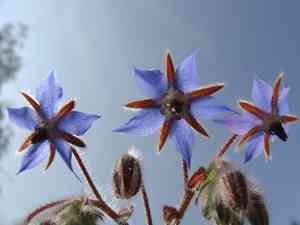
Common borage(Borago officinalis)

Common borage (Borago officinalis)

Also known as: Cover Crop, Borage, Beebread, Tailwort

Common borage (Borago officinalis) offers a variety of culinary applications:

1. **Leaves**: The young leaves, known for their cucumber-like taste, can be added to salads, soups, and stews.
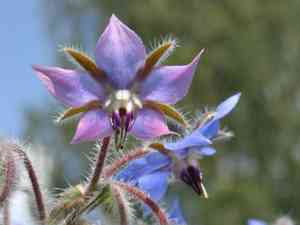
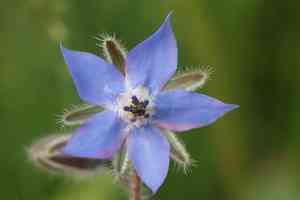
2. **Flowers**: The vibrant blue, star-shaped flowers serve as edible garnishes for both food and beverages, and are sometimes used in specialty gins.
3. **Herbal Tea**: Borage leaves can be brewed into a refreshing herbal tea.
4. **Commercial Use**: The plant is also grown for its seeds, which are pressed to produce borage seed oil.

Consume borage sparingly due to the presence of pyrrolizidine alkaloids.

Attributes of Common borage

Lifespan
Annual, Biennial, Perennial
Plant Type
Herb
Plant Height
60 cm to 1.2 m
Spread
22 cm to 60 cm
Leaf Color
Green
Flower Size
1.5 cm to 2.5 cm
Flower Color
Blue White

PlantJoy - Identify plants with a snap

Identify and diagnose plants, get toxicity alerts, and explore safety guides for all types of fungi.

Try for Free

Images of Common borage

Common borage(Borago officinalis)

Quickly Identify Common borage

1
Star-shaped blue flowers with white-haired sepals
2
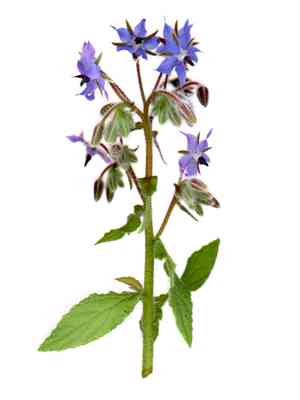
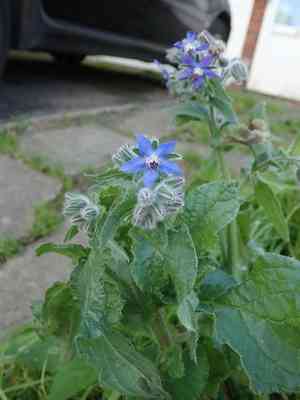
Coarse, wrinkled, gray-green leaves with bristly hairs
3
Highly branched stem covered in white bristly hairs
4
Distinctive cucumber-like fragrance in blooms
5
Blooms from late spring to early fall

Scientific Classification of Common borage

Phylum
Vascular plants
Class
Dicotyledons
Order
Boraginales
Family
Borage
Genus
Borages
Species
Common borage

Planting and Growing of Common borage

Care Difficulty
Easy
Watering Schedule
Every 3 days
Sunlight Requirements
Full sun
Sunshine Duration
6-10 hours
Ideal Temperature
68-77℉
Soil Type
Potting Mix, Peat Mix
Soil pH
6.5-7.5
Fertilizer Type
Balanced
Pruning Season
Spring, Summer
Pruning Area
Branches, Leaves
Pruning Frequency
2 times a year
Repotting Season
Spring
Pot Type
Plastic, Ceramic

water icon How to Water Common borage?

Borago officinalis, commonly known as borage, requires watering with approximately 250ml of water each time. The key is to keep the soil consistently moist but not waterlogged. When watering, ensure the water penetrates the soil deeply to reach the roots but avoid standing water.
What are the symptoms of an underwatered Common borage?
What should I do if my Common borage is not getting enough water?
What are the symptoms of an overwatered Common borage?
How to save an overwatered Common borage?
More About Watering Techniques

sunlight icon What Are the Sunlight Requirements for Common borage?

Sunlight Requirements: Full sun, Partial sun
Duration of light: 6 to 8 hours
Borago officinalis ideally requires full sun to partial sun, translating to 6 to 8 hours of direct or strong indirect sunlight, which ensures healthy leaf development and bountiful flowering.
What type of light is best for Borago officinalis?
How can you ensure Borago officinalis gets sufficient light?
Benefits of optimal light conditions for Borago officinalis?
More About Sunlight Requirements Techniques

temperature icon What Is the Ideal Temperature Range for Common borage?

Ideal Temperature: 68 ~ 77℉
Borago officinalis, commonly known as borage, thrives best in a temperature range of 68 to 77 degrees Fahrenheit. This range allows the plant to photosynthesize efficiently and supports optimal growth and flowering. Maintaining this temperature range ensures that the plant can uptake necessary nutrients and water effectively, promoting healthy development and vitality. When temperatures are within this ideal range, you can expect borage to exhibit vibrant foliage and continuous blooming.

soil icon What Soil is Best for Common borage?

Soil type: Sandy soil, Loam, Sandy loam
Soil PH: 6.5 ~ 7.5
Borago officinalis thrives in well-draining soil that prevents waterlogging, which can cause root rot. Proper drainage helps maintain healthy roots and ensures the plant gets enough oxygen. A nutrient-rich soil supports vigorous growth and leaf production in Borago officinalis. Essential nutrients like nitrogen contribute to strong, lush foliage, crucial for photosynthesis and overall vitality. While Borago officinalis appreciates fertile ground, too much fertility can lead to leggy plants. Balanced soil fertility provides sufficient nutrients without overwhelming the plant's natural growth habit. More About Soil

fertilize icon How to Fertilize Common borage?

Fertilizer type: Balanced
When fertilizing Borago officinalis, apply a balanced liquid fertilizer diluted to half strength. Use approximately 1/2 tablespoon of liquid fertilizer per gallon of water. For slow-release fertilizers, evenly distribute around the base of the plant, using about 1 ounce per square foot. More About Fertilizing Techniques

prune icon How to Prune Common borage?

Pruning Time: Spring, Summer, Autumn, Winter
To prune Borago officinalis, start by identifying any dead or damaged leaves and stems. Use a sharp, clean pair of scissors or pruning shears to cut these parts off at the base. This will help the plant focus its energy on producing new, healthy growth. Always cut at an angle to allow water to run off easily. If you want your Borago officinalis to become bushier, you can pinch back the growing tips of the plant. This encourages the plant to produce side shoots, giving it a fuller appearance. Make sure to regularly remove any flower stalks if you wish to prolong the vegetative state and delay seeding. More About Pruning Techniques

propagate icon How to Propagate Common borage plant?

Propagate Time: Spring,Early spring
1
Ensure the soil is well-drained with a mix of sandy and loamy texture. Borago officinalis thrives in soil rich in organic matter, so incorporate compost to the soil to boost fertility before planting seeds or cuttings.
2
Sow the seeds directly into the prepared soil, spaced at least 12 inches apart, to allow enough room for the plants to grow. Cover them lightly with soil, as borago seeds require some light for optimal germination.
3
Select a healthy stem about 4-6 inches long for cuttings. Ensure the cutting has at least two sets of leaves. Remove the lower leaves and dip the cut end in rooting hormone before planting it into the growing medium.
More About Propagating Techniques

repot icon How to Repot Common borage plant?

Repotting frequency: Every 2 to 4 years
1
Borago officinalis should be repotted when you notice that the plant's roots are growing out of the drainage holes, or if growth has become stagnant, indicating that it needs more space. Additionally, if the soil becomes compacted or waterlogged often, it's time to change it.
2
Select a pot that is one size larger than the current one; it should have good drainage holes to allow excess water to escape. A slightly larger pot will allow the roots to grow without overwhelming the plant, thereby promoting better growth and health.
3
Opt for a well-draining sandy loam to ensure proper aeration and moisture control. This type of soil prevents waterlogging, which can lead to root rot, while providing essential nutrients for Borago officinalis to thrive.

PlantJoy - Identify plants with a snap

Find the best spots for them to optimize their health, simply using your phone.

Try for Free

Toxicity of Common borage

Is Common borage toxic to cat?

Common borage (Borago officinalis) poses a significant threat to cats and must be strictly kept out of their reach! This plant contains a mixture of harmful toxins within its stems, leaves, seeds, and roots, which can result in both kidney and liver failure. Symptoms of poisoning may manifest as diarrhea, vomiting, fever, itchiness, and a noticeable decrease in appetite. If there is any suspicion that a cat has ingested any portion of the common borage plant, immediate emergency treatment is necessary.

Is Common borage toxic to dog?

These plants pose a moderate to severe toxicity risk to dogs, with the intensity of reactions varying based on the quantity ingested. Common borage contains a range of toxic tannins, present in every part of the plant. These tannins can lead to significant dermatological and gastrointestinal problems and, in extreme cases, may result in lasting harm to the intestines and/or kidneys. Frequently observed symptoms following ingestion include vomiting, bloody diarrhea, inflamed or burnt gums or tongue, difficulty breathing, and tremors. If a dog consumes an excessive amount without receiving treatment, common borage poisoning could potentially be fatal.

Identify toxic plants for your safety

Learn which plants are harmful to you and your pets, and make informed choices for a safer home!

Try for Free
WARNING
The judgment on toxicity and danger is for reference only. We DO NOT GUARANTEE any accuracy of such judgment. Therefore, you SHALL NOT rely on such judgment. It is IMPORTANT TO SEEK PROFESSIONAL ADVICE in advance when necessary.
More About Toxic Techniques