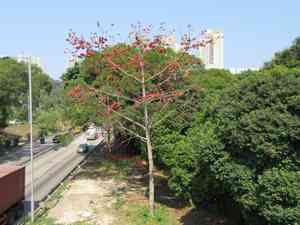
Red Silk Cotton Tree (Bombax ceiba)
Also known as: Red Cottontree, Simal, Indian Bombax, Silk Cotton, Red cotton tree, Red kapok tree, Bombax
The Red Silk Cotton Tree (*Bombax ceiba*) is named for its seed pods, which contain white, cotton-like fibers. Found across Asia, it is commonly planted along roads in India, where its vibrant red flowers bring joy to passersby.
In This Article
Attributes of Red Silk Cotton Tree
Lifespan
Perennial
Plant Type
Tree
Plant Height
18 m to 23 m
Spread
12 m to 18 m
Leaf Color
Green
Flower Size
10 cm to 13 cm
Flower Color
Red Orange Burgundy
Images of Red Silk Cotton Tree
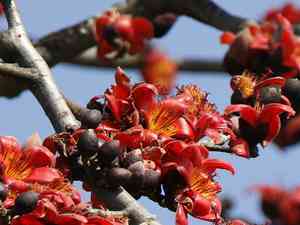
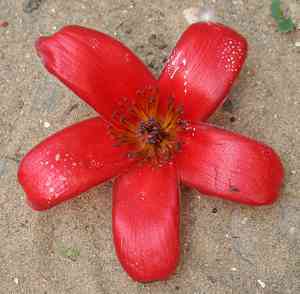
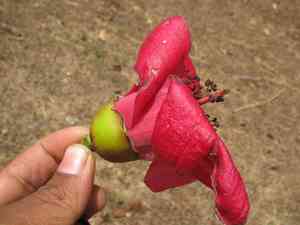
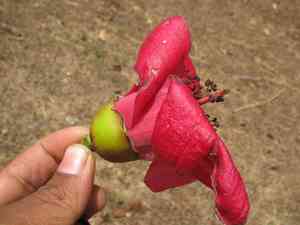
Quickly Identify Red Silk Cotton Tree
1
Large, vibrant red flowers measuring 6-7 inches (15-18 cm) in length.
2
Conical fruit with longitudinal ribs and seeds enveloped in silky hairs.
3
Palmate green leaves with 5-7 acuminate, lanceolate to elliptic leaflets.
4
Robust stem with conical spines, reaching up to 6 feet (1.8 meters) in diameter.
5
Impressive height of 70-150 feet (21-45 meters) with smooth white bark.
Scientific Classification of Red Silk Cotton Tree
Phylum
Vascular plants
Class
Dicotyledons
Order
Mallows, rock-roses, and allies
Family
Mallow
Genus
Silk cotton tree
Species
Red Silk Cotton Tree
Planting and Growing of Red Silk Cotton Tree
Care Difficulty
Easy
Watering Schedule
Every 2 days
Sunlight Requirements
Full sun
Sunshine Duration
4-8 hours
Ideal Temperature
68-86℉
Soil Type
Potting Mix, Peat Mix
Soil pH
6.5-7.5
Fertilizer Type
Balanced
Pruning Season
Spring, Summer
Pruning Area
Branches, Leaves
Pruning Frequency
2 times a year
Repotting Season
Spring
Pot Type
Plastic, Ceramic
 How to Water Red Silk Cotton Tree?
For Bombax ceiba, the watering amount should be approximately 500 milliliters per session. It's crucial to ensure that the water seeps into the soil deeply but does not leave the soil soggy, promoting proper root aeration and strength.
What are the symptoms of an underwatered Red Silk Cotton Tree?
›
What should I do if my Red Silk Cotton Tree is not getting enough water?
›
What are the symptoms of an overwatered Red Silk Cotton Tree?
›
How to save an overwatered Red Silk Cotton Tree?
›
 What Are the Sunlight Requirements for Red Silk Cotton Tree?
Bombax ceiba thrives best in full sun, with 6 to 8 hours of sunlight daily being optimal. This light exposure supports robust growth and vibrant flowering, contributing to the plant's overall health and aesthetic appeal.
More About Sunlight Requirements Techniques→
What is the ideal location for Bombax ceiba?
›
How to ensure Bombax ceiba gets optimal light?
›
Why is proper sunlight crucial for Bombax ceiba?
›
 What Is the Ideal Temperature Range for Red Silk Cotton Tree?
The ideal temperature range for Bombax ceiba growth is between 68°F and 86°F. Maintaining this range ensures optimal metabolic activities, promoting healthy growth and flowering. The temperate climate facilitates proper nutrient absorption and minimizes stress on the plant.
 What Soil is Best for Red Silk Cotton Tree?
Bombax ceiba thrives in well-draining soil that prevents waterlogging, ensuring that roots receive sufficient air. This helps prevent root rot and supports healthy growth. Ensuring the soil is rich in organic material boosts Bombax ceiba growth, as it provides essential nutrients that maintain vibrant foliage and strong structural development. While well-drained, the soil should retain enough moisture to support Bombax ceiba's water needs during dry spells, maintaining the plant's health and resilience.
 How to Fertilize Red Silk Cotton Tree?
For Bombax ceiba, use a balanced fertilizer with equal NPK values such as 10-10-10 or 20-20-20. When applying liquid fertilizer, dilute it to half strength to avoid burning the roots. Young trees require about 100 grams per application, while mature trees can handle up to 500 grams.
 How to Prune Red Silk Cotton Tree?
Begin by identifying any dead, diseased, or damaged branches. Removing these first helps prevent the spread of pests and diseases while promoting better airflow through the canopy. Focus on shaping the tree to maintain a balanced form by removing crossing branches and thinning out overcrowded areas. This improves sunlight penetration and enhances the tree's overall aesthetics.
More About Pruning Techniques→
 How to Propagate Red Silk Cotton Tree plant?
1
Choose healthy, mature seeds from a reliable source. Mature seeds are typically larger and fuller. It is imperative to select seeds that are free from any signs of pest or disease to ensure successful germination.
2
Select a healthy parent plant and cut a segment of a stem ensuring it is at least 6 inches long. Remove the leaves from the lower half to facilitate rooting and dip the cut end in rooting hormone before planting.
3
For grafting, select a compatible rootstock and create a clean cut to which the Bombax ceiba scion will be attached. Secure the graft with grafting tape and ensure it is kept under moderate humidity and temperature to promote successful fusion.
 How to Repot Red Silk Cotton Tree plant?
1
Recognize it's time to repot when Bombax ceiba exhibits signs such as roots emerging from drainage holes, stunted growth, reduced leaf size, or excessive drying between waterings. These are indicators that the plant has outgrown its current pot and requires more space to flourish.
2
Choose a pot that is slightly larger than the current one, ideally 2-3 inches wider in diameter. It should have sufficient drainage holes to prevent waterlogging, which can lead to root rot. A clay pot can be beneficial as it provides better airflow to the roots, promoting a healthier plant environment.
3
Opt for a well-draining sandy loam mix, rich in organic materials. This soil type ensures adequate moisture retention while preventing excess water from saturating the roots. Good aeration and drainage are crucial for the proper growth of Bombax ceiba, allowing the roots to expand freely.
Learn More About Red Silk Cotton Tree Diseases
Anthracnose
Bacterial Leaf Spot
Bacterial Soft Rot
Bacterial Wilt
Crown Gall
Damping-off
Downy Mildew
Drought Stress
Fusarium Wilt
Gray Mold
Leaf Curl
Leaf Spot
Mosaic
Nutrient Deficiency
Nutrient Toxicity
Powdery Mildew
Root Rot
Root-knot Nematode
Rusts
Sooty Mold
Spider Mites
Temperature Stress
Thrips Damage
White Mold



