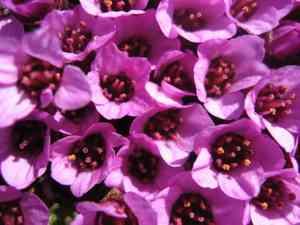
False coolwort (Bolandra) (Bolandra)
Also known as: false miterwort, bolandra
Bolandra is a small genus of flowering plants in the family Saxifragaceae, native to the western United States. These plants are often found in moist, shady environments and are known for their delicate, fern-like foliage and small, bell-shaped flowers.
In This Article
Attributes of False coolwort (Bolandra)
Lifespan
Perennial
Plant Height
Up to 30 cm (12 inches)
Spread
Approximately 20-30 cm (8-12 inches)
Leaf Color
Green
Flower Size
0.5-1 cm (0.2-0.4 inches)
Flower Color
Pink, white
Images of False coolwort (Bolandra)
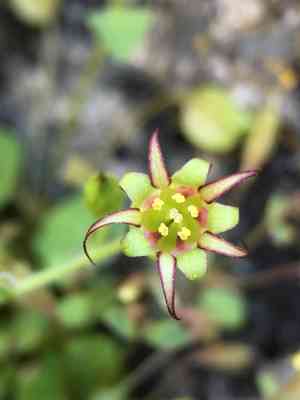
Quickly Identify False coolwort (Bolandra)
1
Bolandra can be identified by its fern-like leaves and small, bell-shaped flowers. The leaves are pinnately divided and the flowers typically come in shades of pink or white. The plant often grows in moist, shady locations.
Scientific Classification of False coolwort (Bolandra)
Phylum
Tracheophyta
Class
Magnoliopsida
Order
Saxifragales
Family
Saxifragaceae
Genus
Bolandra
Planting and Growing of False coolwort (Bolandra)
Care Difficulty
Moderate
Watering Schedule
Every 3 days
Sunlight Requirements
Partial sun
Sunshine Duration
6-12 hours
Ideal Temperature
60-70℉
Soil Type
Potting Mix, Peat Mix
Soil pH
6-7.5
Fertilizer Type
Balanced
Pruning Season
Spring, Summer
Pruning Area
Branches, Leaves
Pruning Frequency
2 times a year
Repotting Season
Spring
Pot Type
Plastic, Ceramic
 How to Water False coolwort (Bolandra)?
The Bolandra requires a consistent watering pattern, ideally moistening the soil evenly. Water with about 250 ml, ensuring moisture reaches but does not waterlog the roots, promoting healthy growth without drowning the plant.
What are the symptoms of an underwatered False coolwort (Bolandra)?
›
What should I do if my False coolwort (Bolandra) is not getting enough water?
›
What are the symptoms of an overwatered False coolwort (Bolandra)?
›
How to save an overwatered False coolwort (Bolandra)?
›
 What Are the Sunlight Requirements for False coolwort (Bolandra)?
Partial sun or full shade is ideal for Bolandra, providing it with gentle, non-intensive sunlight. These conditions enable it to grow without stress, maintaining its lushness and tendency to flourish healthily.
What is the best lighting condition for Bolandra?
›
How to achieve ideal lighting conditions for Bolandra?
›
What are the benefits of these ideal light conditions for Bolandra?
›
 What Is the Ideal Temperature Range for False coolwort (Bolandra)?
The ideal temperature range for Bolandra is between 60°F to 70°F. This range provides the necessary warmth for optimal growth and allows the plant to thrive without stress. Staying within this range ensures that the plant can maintain proper metabolic processes and photosynthesize efficiently, leading to vigorous growth and blooming.
 What Soil is Best for False coolwort (Bolandra)?
Bolandra thrives in soil with excellent drainage. Good drainage prevents waterlogged conditions that could lead to root rot. Ensuring soil allows proper water flow enhances plant health and reduces stress during wet conditions. This plant benefits from nutrient-rich soils, which provide essential nutrients required for robust growth and vibrant blooms. Incorporating organic matter or compost can enhance soil fertility, supporting healthy plant development. Bolandra prefers soils that retain moisture yet remain well-drained. A balanced soil helps maintain consistent moisture levels, vital for sustaining plant health during dry spells and promoting lush foliage and flower production.
 How to Fertilize False coolwort (Bolandra)?
For Bolandra, it's crucial to provide just the right amount of nutrients. Use a balanced liquid fertilizer at half strength to ensure growth without overwhelming the plant's roots. Adjust as needed based on plant response and growth rate.
 How to Prune False coolwort (Bolandra)?
Begin by identifying any stems that look overgrown or are disrupting the desired shape. Cut back these stems to a leaf node to maintain an attractive, bushy appearance. This not only tidies the plant but also encourages a fuller growth. Remove any spent flowers by cutting the stem just above the first set of healthy leaves or nodes. This encourages new blooms and prevents the plant from putting energy into seed production.
 How to Propagate False coolwort (Bolandra) plant?
1
Choose a well-draining potting mix that retains moisture but allows excess water to escape. For seeds, a mixture of vermiculite and peat is ideal, whereas cuttings benefit from a sand and perlite blend.
2
For seed propagation, distribute seeds evenly on the prepared medium and cover lightly. In cutting propagation, select a healthy stem and make a clean cut below a node before inserting it in the medium.
3
Ensure the propagation medium is kept consistently moist but not waterlogged. Using a spray bottle can help maintain humidity, especially for cuttings, aiding in root development.
 How to Repot False coolwort (Bolandra) plant?
1
Watch for roots sneaking out of drainage holes or visible on soil surface; these signals that Bolandra has outgrown its current home. If water takes longer to drain or foliage begins to yellow, these too suggest it's time for a roomier pot. Ideally, repot in spring or summer for minimal shock.
2
Choose a pot slightly larger than the current one, with ample drainage holes to prevent waterlogged soil. Clay pots offer breathability, essential for excess moisture evaporation. Ensuring the right pot size helps in containing excess soil moisture and supports root health and growth, facilitating a sturdy plant.
3
Opt for a loamy, well-draining mix with organic content like peat moss or compost. This composition retains just the right amount of moisture while the porous nature aids in excess water escape. A balanced nutrient profile supports prolific root establishment and overall plant vigor.
Learn More About False coolwort (Bolandra) Diseases
Anthracnose
Bacterial Leaf Spot
Bacterial Wilt
Crown Gall
Cyst Nematode
Damping-off
Downy Mildew
Drought Stress
Fusarium Wilt
Gray Mold
Leaf Spot
Mosaic
Nutrient Deficiency
Nutrient Toxicity
Powdery Mildew
Root Rot
Root-knot Nematode
Rusts
Sooty Mold
Spider Mites
Temperature Stress
Thrips Damage
White Mold

