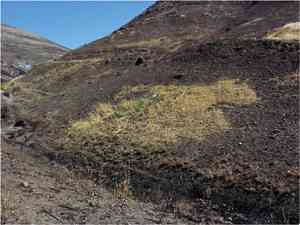
Big tarweed (Blepharizonia plumosa)
Also known as: Big Tarweed, Plumed Tarweed
Big tarweed (Madia elegans) is well-suited to its dry grassland environment through a number of key adaptations. The plant features deep root systems that help it tap into underground water reserves. Its sticky, aromatic leaves minimize water loss and deter herbivores. Additionally, big tarweed has a rapid growth and reproductive cycle, allowing it to complete its life cycle during short periods of rainfall. These characteristics collectively enable it to survive and flourish in arid landscapes.
In This Article
Attributes of Big tarweed
Lifespan
Annual
Plant Type
Herb
Plant Height
30-90 cm
Spread
Indirectly applicable as it is herbaceous
Leaf Color
Green to grayish-green
Flower Size
1-2.5 cm
Flower Color
Yellow
Images of Big tarweed
Quickly Identify Big tarweed
1
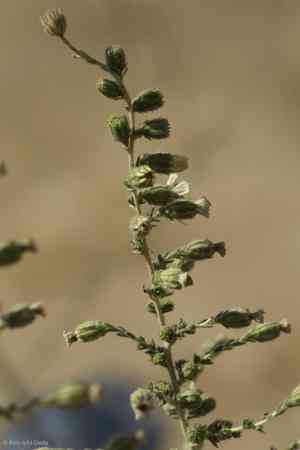
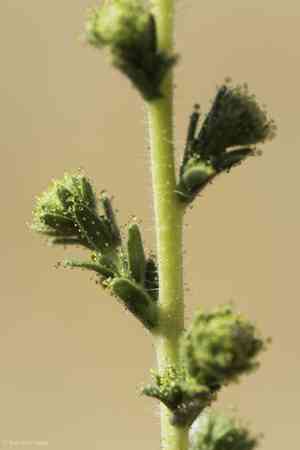
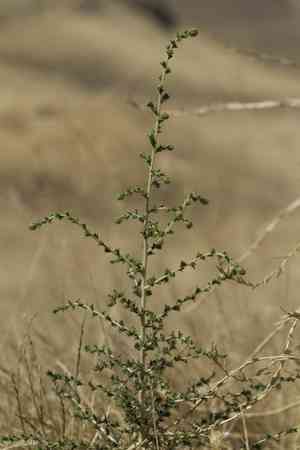
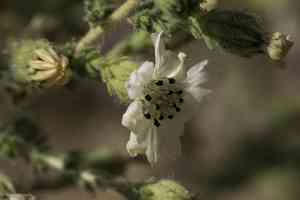
Blepharizonia plumosa can be identified by its fragrant, sticky leaves and feathery bracts surrounding its flower heads. The plant also features long, slender stems and yellow ray florets.
Scientific Classification of Big tarweed
Phylum
Vascular plants
Class
Dicotyledons
Order
Asterales
Family
Daisy
Genus
Blepharizonia
Species
Big tarweed
Planting and Growing of Big tarweed
Care Difficulty
Hard
Watering Schedule
Every 3 days
Sunlight Requirements
Full sun
Sunshine Duration
6-10 hours
Ideal Temperature
60-75℉
Soil Type
Potting Mix, Peat Mix
Soil pH
6.5-7.5
Fertilizer Type
Balanced
Pruning Season
Spring, Summer
Pruning Area
Branches, Leaves
Pruning Frequency
2 times a year
Repotting Season
Spring
Pot Type
Plastic, Ceramic
 How to Water Big tarweed?
For Blepharizonia plumosa, the watering amount needs to be carefully balanced. You should aim to provide approximately 200 ml of water each time, ensuring the soil is moist but not waterlogged. This helps maintain the plant's natural humidity needs without causing root rot.
What are the symptoms of an underwatered Big tarweed?
›
What should I do if my Big tarweed is not getting enough water?
›
What are the symptoms of an overwatered Big tarweed?
›
How to save an overwatered Big tarweed?
›
 What Are the Sunlight Requirements for Big tarweed?
This plant benefits most from partial to full sun, ensuring balanced growth; consistent exposure supports healthy development and bloom production.
Optimal Sunlight Exposure
›
Solution for Achieving Ideal Sunlight
›
Benefits of Ideal Lighting
›
 What Is the Ideal Temperature Range for Big tarweed?
Blepharizonia plumosa thrives best in a moderate temperature range between 60°F to 75°F. This range ensures optimal growth by providing the right balance of warmth and coolness that the plant needs for cellular functions such as photosynthesis and respiration.
 What Soil is Best for Big tarweed?
Blepharizonia plumosa thrives best in well-drained soil, which helps prevent root rot by allowing excess water to escape. This kind of soil ensures that the roots can breathe and remain healthy, providing the plant with the necessary stability and support for optimal growth. The plant benefits from a nutrient-rich substrate that offers essential minerals and nutrients. This ensures vigorous growth and enhances the plant's ability to produce vibrant and healthy foliage. Regularly replenishing the soil or using a balanced fertilizer can achieve this. Blepharizonia plumosa does well in soils that retain moderate moisture. This helps maintain consistent water availability without oversaturation, promoting consistent growth and reducing the stress associated with fluctuating moisture levels in the soil.
 How to Fertilize Big tarweed?
Blepharizonia plumosa thrives on a balanced nutrient supply. Ideally, apply around 1/4 teaspoon of liquid fertilizer per gallon of water bi-weekly. Ensure the fertilizer has equal proportions of N-P-K (nitrogen, phosphorus, potassium) to promote balanced growth.
 How to Prune Big tarweed?
Begin by inspecting the plant for any dead or damaged stems. Use sterilized pruning shears to cut these parts at a 45-degree angle right above a node. This encourages new growth. After removing the unhealthy parts, focus on thinning out crowded areas to improve air circulation. Be sure to also trim back leggy growth to maintain a tidy shape. As autumn approaches, a light pruning session can prepare Blepharizonia plumosa for the dormant winter months. Trim back about one-third of the plant's height, especially focusing on stems that might not survive the winter. This encourages the plant to conserve energy and strengthens it for the upcoming growth season.
More About Pruning Techniques→
 How to Propagate Big tarweed plant?
1
Begin by filling a seed tray with a quality potting mix. Lightly press the Blepharizonia plumosa seeds into the soil without covering them too deeply, as they require light for germination.
2
Maintain a consistent watering schedule, keeping the soil moist but not saturated. Use a spray bottle to gently mist the seeds, ensuring they aren't disturbed by strong water streams.
3
Place the seed trays in a bright location with indirect sunlight. A south-facing window is ideal. If natural light is insufficient, consider using a grow light to supplement lighting conditions.
 How to Repot Big tarweed plant?
1
Blepharizonia plumosa signals the need for repotting when its roots begin to circle the pot or emerge from the drainage holes. Spring and autumn are ideal seasons for repotting, as the milder temperatures encourage healthy root adaptation and growth.
2
Select a pot that is one size larger than the current one, ensuring it has good drainage holes. A slightly larger, breathable pot will prevent waterlogging, facilitating healthy root development and optimal aeration to support the plant's growth.
3
Use a sandy loam mix, optimized for drainage while retaining necessary moisture. This soil blend provides the perfect balance, allowing air to reach the roots while maintaining essential nutrients and water for healthy plant development.
Learn More About Big tarweed Diseases
Anthracnose
Bacterial Leaf Spot
Bacterial Soft Rot
Bacterial Wilt
Chemical Injury
Crown Gall
Cyst Nematode
Damping-off
Downy Mildew
Drought Stress
Fusarium Wilt
Gray Mold
Leaf Curl
Leaf Spot
Mosaic
Nutrient Deficiency
Nutrient Toxicity
Powdery Mildew
Root Rot
Root-knot Nematode
Rusts
Sooty Mold
Spider Mites
Temperature Stress
Thrips Damage
White Mold



