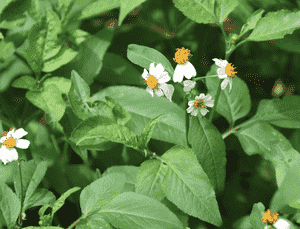
Hairy beggarticks (Bidens pilosa)
Also known as: Spanish Needle, Devil's Needles, Farmers Friend, Black-jack, Farmer's friends, Spanish needles
**Bidens pilosa**, commonly known as black-jack and devil's needles, is a slender, annual flowering plant originally from North and South America. It has spread globally and is recognized as an invasive species in many regions. This widespread dispersal is primarily due to its seeds, which easily attach to animals and humans, facilitating their movement across vast areas.
In This Article
Attributes of Hairy beggarticks
Lifespan
Annual, Perennial
Plant Type
Herb
Plant Height
10 cm to 1.8 m
Spread
20 cm to 90 cm
Leaf Color
Green
Flower Size
5 mm to 1.5 cm
Flower Color
White Yellow Orange Gold
Images of Hairy beggarticks
Quickly Identify Hairy beggarticks
1
Bidens pilosa can be identified by its lance-shaped leaves with toothed edges, its small white flowers with yellow centers arranged in clusters, and its barbed seeds that cling to fur and fabric.
Scientific Classification of Hairy beggarticks
Phylum
Vascular plants
Class
Dicotyledons
Order
Asters bellflowers fanflowers and allies
Family
Daisy
Genus
Beggarticks
Species
Hairy beggarticks
Planting and Growing of Hairy beggarticks
Care Difficulty
Easy
Watering Schedule
Every 4 days
Sunlight Requirements
Full sun
Sunshine Duration
6-10 hours
Ideal Temperature
68-86℉
Soil Type
Potting Mix, Peat Mix
Soil pH
5.5-8
Fertilizer Type
Balanced
Pruning Season
Spring, Summer
Pruning Area
Branches, Leaves
Pruning Frequency
2 times a year
Repotting Season
Spring
Pot Type
Plastic, Ceramic
 How to Water Hairy beggarticks?
When watering Bidens pilosa, it's essential to ensure that the soil is moist but not waterlogged. Around 200ml per session is sufficient, as it allows for adequate moisture retention without drowning the roots. A good rule of thumb is to let the top layer of soil dry out slightly between waterings.
What are the symptoms of an underwatered Hairy beggarticks?
›
What should I do if my Hairy beggarticks is not getting enough water?
›
What are the symptoms of an overwatered Hairy beggarticks?
›
How to save an overwatered Hairy beggarticks?
›
 What Are the Sunlight Requirements for Hairy beggarticks?
Bidens pilosa prefers full sun for at least 6 to 8 hours daily, but can tolerate partial sun. This light range supports vigorous growth, vibrant flowering, and healthy foliage, maximizing its decorative and ecological values.
How much sunlight does Bidens pilosa need?
›
What solutions can help achieve ideal lighting conditions for Bidens pilosa?
›
What benefits does Bidens pilosa experience under ideal lighting?
›
 What Is the Ideal Temperature Range for Hairy beggarticks?
The ideal temperature range for Bidens pilosa is between 68°F (20°C) and 86°F (30°C). This range supports optimal growth and development, allowing the plant to thrive and produce lush foliage and abundant flowers. Within this temperature bracket, metabolic activities and photosynthesis proceed at ideal rates.
 What Soil is Best for Hairy beggarticks?
Bidens pilosa thrives in soils that are rich in organic matter. Such soils provide essential nutrients that promote vigorous growth and vibrant blooms, crucial for this type of plant. This plant requires well-drained soils to prevent root rot. Adequate drainage ensures that water does not accumulate around the roots, allowing them to breathe and absorb nutrients effectively. While drainage is important, the soil should still hold a moderate amount of moisture, providing the plant with a consistent water supply that supports sustained growth and health.
 How to Fertilize Hairy beggarticks?
Bidens pilosa, commonly known as Spanish Needle, requires a balanced approach to fertilization. Use a liquid fertilizer at half the recommended concentration to avoid over-fertilization. Application should be measured to ensure 200 ml per square meter, as these plants are not heavy feeders.
 How to Prune Hairy beggarticks?
Start by identifying branches or stems that are old, dead, or diseased. These are the first ones you should remove to channel energy into new growth and improve plant health. After removing unhealthy parts, focus on shaping the plant. Cut back leggy stems to encourage a bushier appearance, maintaining an even, attractive shape. Prune back stems with spent flowers to stimulate new blooms. Regular deadheading not only keeps the plant looking tidy but also prolongs the blooming period, offering continuous bursts of color. After completing the pruning, clean your tools with a disinfectant to avoid cross-contaminating other plants, maintaining a clean, disease-free garden environment.
 How to Propagate Hairy beggarticks plant?
1
Collect mature seeds from a healthy Bidens pilosa plant at the end of its flowering cycle. Ensure seeds are dry and free from any disease or fungal infections.
2
Prepare a seed tray with a mixture of peat and perlite for optimal drainage. Lightly firm the soil to create a level surface, which supports even germination.
3
Scatter the seeds evenly across the prepared soil surface. Cover them with a thin layer of soil, as excessive coverage can impede germination.
 How to Repot Hairy beggarticks plant?
1
Bidens pilosa needs repotting when you see roots coming out of drainage holes, or if the plant shows stunted growth despite proper care. The best time to repot is during the growing seasons of spring and summer when the plant is most resilient to change.
2
For Bidens pilosa, select a pot that is one size larger than the current one and ensures it has multiple drainage holes. A pot too large may lead to overwatering, causing root rot. A slightly larger pot encourages healthy root expansion and better stability for the plant.
3
Use a well-draining potting mix to prevent waterlogging of Bidens pilosa roots. Such soil usually contains materials like perlite or sand which facilitates drainage while providing the roots space to breathe and absorb nutrients efficiently.



