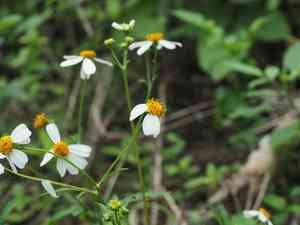
Beggarticks (Bidens alba)
Also known as: Smooth Beggar-Tick, Shepherd's needles, Butterfly needles, Romerillo
Beggarticks (*Bidens alba*) are perennial wildflowers that are an important source of food for butterflies, bees, and insects. It is an aggressive growing plant, but it is a native species in many parts of the Americas, Asia, and Africa. It blooms white ray flowers with yellow disc centers that look like daisy flowers. Blooming time is from spring to fall.
In This Article
Attributes of Beggarticks
Lifespan
Annual, Biennial
Plant Type
Herb
Plant Height
15 cm
Spread
30 cm
Leaf Color
Green
Flower Size
1 to 2.5 centimeters (0.4 to 1 inch)
Flower Color
White Yellow
Images of Beggarticks
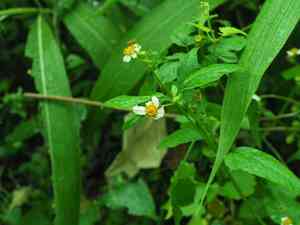
Quickly Identify Beggarticks
1
Bidens alba can be identified by its white ray florets surrounding a central cluster of yellow disc florets. Its leaves are pinnate and serrated, and it often has barbed fruits that easily cling to clothing and fur.
Scientific Classification of Beggarticks
Phylum
Vascular plants
Class
Dicotyledons
Order
Asterales
Family
Daisy
Genus
Beggarticks
Species
Beggarticks
Planting and Growing of Beggarticks
Care Difficulty
Easy
Watering Schedule
Every 8 days
Sunlight Requirements
Full sun
Sunshine Duration
6-10 hours
Ideal Temperature
65-80℉
Soil Type
Potting Mix, Peat Mix
Soil pH
6.5-7.5
Fertilizer Type
Balanced
Pruning Season
Spring, Summer
Pruning Area
Branches, Leaves
Pruning Frequency
2 times a year
Repotting Season
Spring
Pot Type
Plastic, Ceramic
 How to Water Beggarticks?
For Bidens alba, ensure the soil is consistently moist but not waterlogged. Water with approximately 250 ml each time to provide enough moisture for its roots. The goal is to maintain slight dampness in the soil without over-saturation.
What are the symptoms of an underwatered Beggarticks?
›
What should I do if my Beggarticks is not getting enough water?
›
What are the symptoms of an overwatered Beggarticks?
›
How to save an overwatered Beggarticks?
›
 What Are the Sunlight Requirements for Beggarticks?
Bidens alba flourishes in full sun. This light exposure encourages healthy foliage development and extensive flowering, ensuring strong plant vitality and aesthetic beauty in the garden.
What is the ideal light condition for Bidens alba?
›
How can I ensure Bidens alba gets ideal light?
›
What benefits does ideal lighting offer to Bidens alba?
›
 What Is the Ideal Temperature Range for Beggarticks?
The ideal temperature range for Bidens alba is between 65°F and 80°F. This range provides optimal conditions for the plant's growth and development, ensuring that it can photosynthesize efficiently and maintain its biological processes effectively. Maintaining these temperatures will support healthy foliage and prolific flowering.
 What Soil is Best for Beggarticks?
Bidens alba thrives in nutrient-rich loam, which provides excellent drainage and a balanced structure. This soil type supplies essential nutrients and promotes healthy root development, essential for the plant's growth and its vibrant flowering. The plant can tolerate sandy soil, as long as it drains well. Good drainage prevents root rot by ensuring water does not stagnate around the roots, thus promoting strong and healthy plants. Bidens alba prefers neutral to slightly alkaline pH levels. Maintaining the soil pH between 6.5 and 7.5 helps optimize nutrient availability and supports robust plant health.
 How to Fertilize Beggarticks?
Bidens alba requires relatively moderate amounts of fertilizer. When applying liquid fertilizer, use a balanced 10-10-10 NPK formula, mixing one tablespoon per gallon of water. For slow-release granules, scatter approximately one tablespoon per square foot.
 How to Prune Beggarticks?
Begin by identifying any dead or diseased stems. Remove them at the base to prevent any disease from spreading and to encourage healthier growth. To maintain a tidy appearance, trim the plant to your desired shape. This can control its growth and prevent it from becoming too leggy or unruly. Bidens alba can become quite bushy, so thinning out some of the excess growth can improve air circulation and light penetration, enhancing overall plant health. For a fuller appearance, regularly pinch back the tips of the stems. This will encourage the plant to branch out more and promote dense, bushy growth.
 How to Propagate Beggarticks plant?
1
Choose mature Bidens alba seeds from previously dried flower heads or cut healthy stems with a few leaves for cutting propagation. This ensures you are working with viable plant material.
2
Prepare a well-draining soil mix using equal parts of peat, sand, and perlite. Ensure the growing medium is moist but not waterlogged to prevent seed rot or cutting decay.
3
Sow seeds superficially in the seed tray or insert cuttings into the soil. Gently water the medium to keep it moist. Cover with a plastic dome or a plastic wrap to retain humidity.
 How to Repot Beggarticks plant?
1
Bidens alba should be repotted when roots start emerging out of the pot's drainage holes or when the plant becomes root-bound, indicating that the current space is insufficient for its growth. Also, if you notice the soil losing its fertility or water isn't draining properly, it's a sign to repot your plant. These signs generally show up after a year or two of growth, especially during active growing seasons.
2
Opt for a pot that is 1-2 inches larger in diameter than the current one to ensure Bidens alba has enough space to expand its root system. A pot with ample drainage holes is crucial to prevent water logging, which can harm the plant's root health. Ceramic or terracotta pots are effective as they offer breathability, aiding in moisture control, crucial for healthy plant roots.
3
Select a well-draining sandy loam mix for repotting Bidens alba, catering to its preference for moderate moisture retention while preventing waterlogged conditions. This type of soil ensures that nutrients are adequately supplied to the plant, supporting its vigorous growth and robust flowering. A nutrient-enriched, loose soil structure also promotes healthy root expansion and plant stability.
Learn More About Beggarticks Diseases
Anthracnose
Bacterial Leaf Spot
Bacterial Wilt
Chemical Injury
Damping-off
Downy Mildew
Drought Stress
Fusarium Wilt
Gray Mold
Leaf Curl
Leaf Spot
Mosaic
Nutrient Deficiency
Nutrient Toxicity
Powdery Mildew
Root Rot
Root-knot Nematode
Rusts
Sooty Mold
Spider Mites
Temperature Stress
Thrips Damage
White Mold



