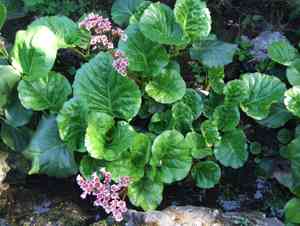
Heartleaf bergenia(Bergenia crassifolia)

Heartleaf bergenia (Bergenia crassifolia)

Also known as: Badan, Siberian tea, Winter-blooming bergenia, Mongolian tea

Heartleaf bergenia (Bergenia crassifolia) is a plant species that is tolerant to cold and warm climates. This species has leaves that change color and range from rust brown to brown-red. Heartleaf bergenia leaves are used to make tea in Siberia. Its latin name Bergenia crassifolia means "thick-leaved."

Attributes of Heartleaf bergenia

Lifespan
Perennial
Plant Type
Herb
Plant Height
15 cm to 31 cm
Spread
30 cm to 60 cm
Leaf Color
Green Red
Flower Size
4.5 mm to 5 mm
Flower Color
Pink Purple White Red Lavender

PlantJoy - Identify plants with a snap

Identify and diagnose plants, get toxicity alerts, and explore safety guides for all types of fungi.

Try for Free

Images of Heartleaf bergenia

Heartleaf bergenia(Bergenia crassifolia)

Quickly Identify Heartleaf bergenia

1
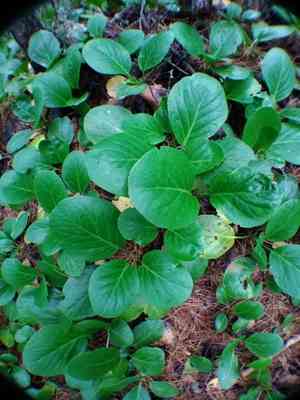
Large glossy leaves with red edges, 1-2 feet (30-60 cm) tall.
2
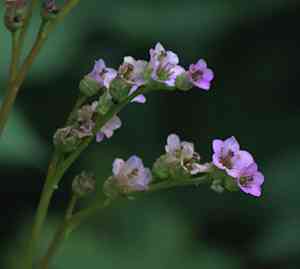
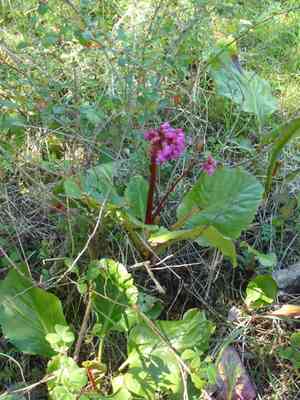
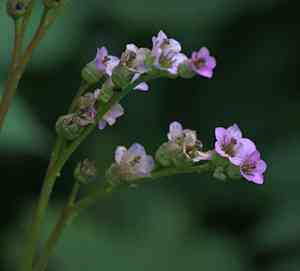
Rose-pink flowers on stout stalks above foliage in mid-winter to early spring.
3
Distinctive ellipsoidal fruit capsule splitting into two lobes upon maturation.
4
Obovate-rounded leaves, 8 by 7 inches (20 by 18 cm), with toothed edges.
5
Leafless, sturdy stem up to 18 inches (45 cm) supporting dense panicles of pink blooms.

Scientific Classification of Heartleaf bergenia

Phylum
Vascular plants
Class
Dicotyledons
Order
Saxifragales
Family
Saxifrage
Genus
Elephant's ears
Species
Heartleaf bergenia

Planting and Growing of Heartleaf bergenia

Care Difficulty
Easy
Watering Schedule
Every 4 days
Sunlight Requirements
Partial sun
Sunshine Duration
6-10 hours
Ideal Temperature
50-68℉
Soil Type
Potting Mix, Peat Mix
Soil pH
6.5-7.5
Fertilizer Type
Balanced
Pruning Season
Spring, Summer
Pruning Area
Branches, Leaves
Pruning Frequency
2 times a year
Repotting Season
Spring
Pot Type
Plastic, Ceramic

water icon How to Water Heartleaf bergenia?

For Bergenia crassifolia, water deeply until the soil is moist but not soggy. The key is to ensure that the moisture penetrates down to the root zone. A single watering session should provide approximately 500 ml of water to ensure adequate hydration.
What are the symptoms of an underwatered Heartleaf bergenia?
What should I do if my Heartleaf bergenia is not getting enough water?
What are the symptoms of an overwatered Heartleaf bergenia?
How to save an overwatered Heartleaf bergenia?

sunlight icon What Are the Sunlight Requirements for Heartleaf bergenia?

Sunlight Requirements: Partial sun, Full shade
Duration of light: 3-6 hours
Partial sun to full shade provides the best environment for Bergenia crassifolia, promoting lush foliage and vibrant blooms while minimizing stress from light extremes.
What is the best type of sunlight for Bergenia crassifolia?
How to achieve optimal sunlight for Bergenia crassifolia?
What benefits does ideal sunlight bring to Bergenia crassifolia?
More About Sunlight Requirements Techniques

temperature icon What Is the Ideal Temperature Range for Heartleaf bergenia?

Ideal Temperature: 50 ~ 68℉
Bergenia crassifolia thrives best within a temperature range from 50°F to 68°F. This range ensures optimal photosynthesis and growth. The plant's metabolism is most active, contributing to vivid foliage and robust flowering. Exposing it to temperatures beyond this range may inhibit processes essential for growth.

soil icon What Soil is Best for Heartleaf bergenia?

Soil type: Loam, Sandy loam, Clay soil
Soil PH: 6.5 ~ 7.5
Bergenia crassifolia thrives in nutrient-rich soil that provides essential minerals and nutrients. This ensures healthy growth, robust foliage, and vibrant blooming. The soil for Bergenia crassifolia should retain adequate moisture without becoming waterlogged. Proper moisture retention supports sustained hydration and prevents root rot. A well-draining soil is crucial for Bergenia crassifolia, helping to prevent root diseases by allowing excess water to escape swiftly, thus maintaining a balanced moisture level.

fertilize icon How to Fertilize Heartleaf bergenia?

Fertilizer type: Balanced
For Bergenia crassifolia, use a balanced fertilizer with an NPK ratio of about 10-10-10 or 5-5-5. Apply liquid fertilizers at half the recommended strength to prevent over-fertilization. A light application is generally sufficient for supporting its growth without overwhelming the plant.

prune icon How to Prune Heartleaf bergenia?

Pruning Time: Spring, Summer, Autumn, Winter
When pruning Bergenia crassifolia, start by sterilizing your tools to prevent disease. Remove any dead, brown, or damaged leaves at their base using sharp scissors or garden shears. This stimulates new growth and maintains the plant's tidy appearance. Ensure not to cut into the crown of the plant, as this is where the growth origin remains vital for healthy development. After flowering, cut back the spent flower stalks to encourage the plant to redirect energy to foliage growth and root development rather than seed production. Grasp the stalk near the base and make a clean cut. Avoid tearing the plant tissue, which can invite disease. More About Pruning Techniques

propagate icon How to Propagate Heartleaf bergenia plant?

Propagate Time: Spring, Early spring
1
Sow the seeds in a seed tray filled with a well-draining potting mix. Lightly press the seeds into the surface and keep the soil moist but not waterlogged. Place the tray in a location with bright, indirect light.
2
In early spring, carefully dig up a mature Bergenia crassifolia plant. Shake off excess soil from the roots and use a spade or fork to separate the plant into smaller sections, each with a healthy rhizome segment.
3
Replant the divided sections in suitable garden areas. Ensure that each section is planted at the same depth it was growing previously. Water generously to help establish the new plants.
More About Propagating Techniques

repot icon How to Repot Heartleaf bergenia plant?

Repotting frequency: Every 2-3 years
1
Bergenia crassifolia shows signs of needing repotting when its roots begin to emerge from the drainage holes, or if the growth seems stunted. Another indication is if the water is draining too quickly, suggesting compacted soil. Repotting should preferably be done in early spring or autumn when the plant begins its active growth phase to minimize stress.
2
Select a pot that is slightly larger than the current one, with at least one drainage hole. A pot that's too large can lead to overwatering issues. Opt for a material like terracotta that breathes well and prevents waterlogging, benefiting the root aeration and overall plant health.
3
Choose a light, well-draining soil mix, ideally a blend of potting soil with added perlite or sand. This blend aids in proper drainage and root aeration while providing enough nutrients for robust growth. Well-draining soil helps prevent root rot and ensures Bergenia remains healthy post-repotting.

PlantJoy - Identify plants with a snap

Find the best spots for them to optimize their health, simply using your phone.

Try for Free

Toxicity of Heartleaf bergenia

Is Heartleaf bergenia toxic to cat?

Heartleaf bergenia, which is also referred to as Heartleaf bergenia, demonstrates a moderate degree of toxicity in cats. When feline companions consume any part of the heartleaf bergenia, whether by accident or out of curiosity, they may suffer from the negative effects associated with poisoning. Every part of the heartleaf bergenia plant, such as leaves, stems, and flowers, is deemed toxic. Symptoms that a cat might show after ingesting heartleaf bergenia can include indications of physical discomfort or illness. Given the potential health hazards, it's vital to keep a close watch on your cat's behavior and surroundings. If there is any suspicion of poisoning, seeking immediate veterinary assistance is essential to safeguarding the animal's health and well-being.

Is Heartleaf bergenia toxic to dog?

Heartleaf bergenia presents a moderate toxicity risk to dogs. Canines might unintentionally consume portions of the plant, leading to potential poisoning. The entire plant possesses toxic properties, and ingestion can trigger a range of symptoms that pet owners need to recognize. If a dog consumes heartleaf bergenia, they may show signs such as vomiting, diarrhea, lethargy, or even more severe reactions depending on the quantity ingested. It is vital for dog owners to keep a close eye on their pets and prevent their access to heartleaf bergenia. Should poisoning be suspected, immediate veterinary attention is crucial to safeguard the health and well-being of the affected dog.

Identify toxic plants for your safety

Learn which plants are harmful to you and your pets, and make informed choices for a safer home!

Try for Free
WARNING
The judgment on toxicity and danger is for reference only. We DO NOT GUARANTEE any accuracy of such judgment. Therefore, you SHALL NOT rely on such judgment. It is IMPORTANT TO SEEK PROFESSIONAL ADVICE in advance when necessary.
More About Toxic Techniques