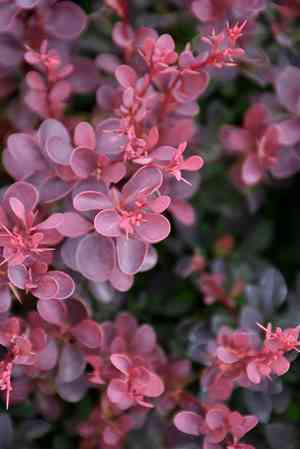
Japanese barberry(Berberis thunbergii)

Japanese barberry (Berberis thunbergii)

Also known as: Red barberry

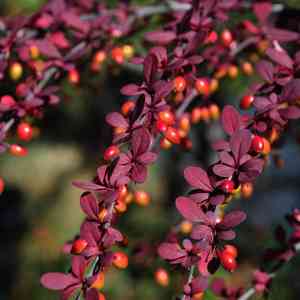
Berberis thunbergii, often referred to as Japanese barberry, is a deciduous shrub frequently grown for ornamental purposes. The most popular cultivar of this species, recognized for its distinctive dark red to violet leaves and vibrant red berries, is Berberis thunbergii f. atropurpurea.

Attributes of Japanese barberry

Lifespan
Perennial
Plant Type
Shrub
Plant Height
30 cm to 3 m
Spread
1.2 m to 2 m
Leaf Color
Green Red Variegated Orange Yellow White
Flower Size
3 mm to 4 mm
Flower Color
Yellow Red Green

ForwardPlant - Identify plants with a snap

Identify and diagnose plants, get toxicity alerts, and explore safety guides for all types of fungi.

Try for Free

Images of Japanese barberry

Japanese barberry(Berberis thunbergii)

Quickly Identify Japanese barberry

1
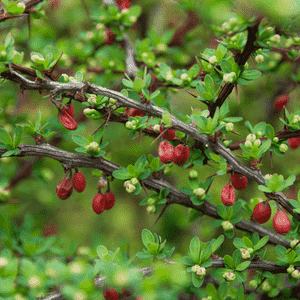
Solitary spine at stem nodes
2
Deciduous obovate leaves with smooth margin
3
Bright red berries in winter
4
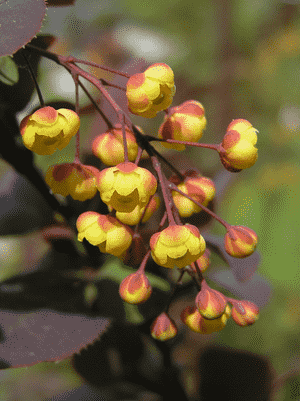
Clusters of tiny, pale yellow flowers
5
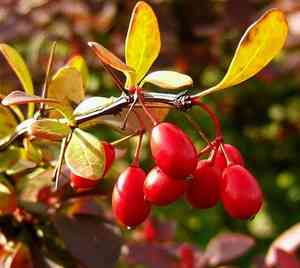
Ellipsoidal glossy red berries

Scientific Classification of Japanese barberry

Phylum
Vascular plants
Class
Dicotyledons
Order
Buttercups, poppies and allies
Family
Barberry
Genus
salmon barberry
Species
Japanese barberry

Planting and Growing of Japanese barberry

Care Difficulty
Easy
Watering Schedule
Every 3 days
Sunlight Requirements
Full sun
Sunshine Duration
4-6 hours
Ideal Temperature
60-75℉
Soil Type
Potting Mix, Peat Mix
Soil pH
6.5-7.5
Fertilizer Type
Balanced
Pruning Season
Spring, Summer
Pruning Area
Leaves, Branches
Pruning Frequency
2 times a year
Repotting Season
Spring
Pot Type
Plastic, Ceramic

water icon How to Water Japanese barberry?

When watering Berberis thunbergii, aim to use approximately 500 milliliters of water each time. Ensure the soil is thoroughly moist but not waterlogged, allowing the roots to absorb necessary moisture without sitting in excess water.
What are the symptoms of an underwatered Japanese barberry?
What should I do if my Japanese barberry is not getting enough water?
What are the symptoms of an overwatered Japanese barberry?
How to save an overwatered Japanese barberry?
More About Watering Techniques

sunlight icon What Are the Sunlight Requirements for Japanese barberry?

Sunlight Requirements: Full sun, Partial sun
Duration of light: 4-6 hours daylight
This plant thrives best in conditions ranging from full to partial sunshine, ideally benefiting from 4-6 hours of daily sunlight exposure to maintain its lively foliage and robust growth.
What is the best lighting condition for Berberis thunbergii?
How can you ensure Berberis thunbergii gets optimal sunlight?
What are the benefits of optimal lighting for Berberis thunbergii?
More About Sunlight Requirements Techniques

temperature icon What Is the Ideal Temperature Range for Japanese barberry?

Ideal Temperature: 60 ~ 75℉
The ideal temperature range for Berberis thunbergii is between 60°F and 75°F. This range provides the optimal conditions for growth, ensuring that the plant thrives without stress or lower vitality.

soil icon What Soil is Best for Japanese barberry?

Soil type: Sandy loam, Loam
Soil PH: 6.5 ~ 7.5
Berberis thunbergii thrives in well-drained soil, which prevents root rot and encourages healthy root development. This type of soil ensures proper aeration and optimal water retention, supporting vigorous growth and vibrant foliage. This plant prefers soil with moderate moisture levels. Ensuring consistent moisture without waterlogging enables the roots to absorb nutrients efficiently, promoting lush, robust growth and enhancing the plant's ornamental appeal. A nutrient-rich soil enhances Berberis thunbergii's health and flowering capabilities. Adequate organic matter and minerals encourage lush foliage and vibrant berries, contributing to the plant's overall aesthetic and ecological value. More About Soil

fertilize icon How to Fertilize Japanese barberry?

Fertilizer type: Balanced
The amount of fertilizer used for Berberis thunbergii should be moderate. For liquid fertilizers, it is recommended to dilute according to the label instructions, typically around 1 tablespoon per gallon of water. For solid, slow-release fertilizers, apply about 1 pound per 100 square feet. Always avoid over-fertilizing to prevent root burn. More About Fertilizing Techniques

prune icon How to Prune Japanese barberry?

Pruning Time: Spring, Summer, Autumn
Begin by inspecting your Berberis thunbergii for branches that are either dead or diseased. Cut these back to healthy wood to prevent the spread of disease. During late spring or early summer, gently shape the shrub to maintain its natural form. This often involves clipping back long shoots to encourage a more rounded shape. When you notice areas that are densely packed with branches, thin them out to improve air circulation and light penetration. This reduces the risk of fungal infections and promotes better overall health. More About Pruning Techniques

propagate icon How to Propagate Japanese barberry plant?

Propagate Time: Spring, Early summer, Autumn
1
Choose a healthy, well-established Berberis thunbergii plant as the source of your cuttings or seeds. This ensures that the propagated plants inherit vigor and disease resistance.
2
Use sharp pruning shears to take 10-15 cm cuttings from the plant. Remove the lower leaves, leaving only a few at the top, and optionally dip the cut end in rooting hormone.
3
Plant seeds in small pots filled with a seed-starting mix. Cover them lightly with soil and water gently. Maintain a consistently moist environment to encourage germination.
More About Propagating Techniques

repot icon How to Repot Japanese barberry plant?

Repotting frequency: Every 1-2 years
1
The best time to repot Berberis thunbergii is during the early part of spring or autumn. The plant shows signs of needing repotting when roots start to circle the pot or grow through the drainage holes, indicating it's becoming root-bound. Look out for a lack of growth, and water that doesn't seep through well as signs.
2
Select a pot that is 1-2 inches larger in diameter than the current pot. A pot with good drainage is crucial to prevent waterlogging, which can lead to root rot. The material of the pot, whether terracotta or plastic, should suit your ability to maintain consistent soil moisture.
3
Use a high-quality, well-drained potting mix, ideally mixed with some perlite or sand to improve drainage. This ensures that excess water does not accumulate at the roots, which is beneficial in avoiding root rot and promoting healthy root growth.

ForwardPlant - Identify plants with a snap

Find the best spots for them to optimize their health, simply using your phone.

Try for Free

Toxicity of Japanese barberry

Is Japanese barberry toxic to cat?

Japanese barberry is harmful to felines. When cats consume any part of the japanese barberry plant, they may suffer from various physical ailments or distress due to its toxic properties. Every component of the plant—including leaves, stems, and berries—can pose a danger if ingested inadvertently. Should a cat ingest any portion of this plant, owners must closely monitor for symptoms like vomiting, diarrhea, or behavioral changes, and should obtain urgent veterinary care. Prompt intervention at a veterinary facility is crucial to address the health threats that arise from poisoning by japanese barberry.

Is Japanese barberry toxic to dog?

Japanese barberry is a plant known for its toxicity to dogs, presenting a serious health hazard if consumed. When dogs inadvertently ingest any portion of the japanese barberry plant, they can suffer from poison as all sections are deemed toxic. Following consumption, dogs might show a range of signs that indicate poisoning. These symptoms can manifest as vomiting, diarrhea, lethargy, and a decrease in appetite. It is vital for dog owners to keep a vigilant eye on their pets and restrict access to japanese barberry. Should there be any suspicion that a dog has been poisoned by japanese barberry, it is essential to obtain prompt veterinary assistance to secure the best possible outcome for the well-being of the dog.

Identify toxic plants for your safety

Learn which plants are harmful to you and your pets, and make informed choices for a safer home!

Try for Free
WARNING
The judgment on toxicity and danger is for reference only. We DO NOT GUARANTEE any accuracy of such judgment. Therefore, you SHALL NOT rely on such judgment. It is IMPORTANT TO SEEK PROFESSIONAL ADVICE in advance when necessary.
More About Toxic Techniques