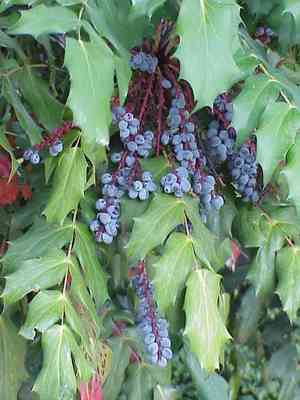
Leatherleaf mahonia (Berberis bealei)
Also known as: Beale's Barberry, Coralberry
The Holly (Ilex) is commonly used for hedging due to its spiny, evergreen leaves that act as a natural barrier against intruders. Besides its distinctive foliage, Holly is also noted for its clusters of dark purple berries that appear in the summer. These berries attract birds, which consume them and help in spreading the seeds, contributing to the plant's wide distribution.
Attributes of Leatherleaf mahonia
Images of Leatherleaf mahonia
Quickly Identify Leatherleaf mahonia
Scientific Classification of Leatherleaf mahonia
Planting and Growing of Leatherleaf mahonia
 How to Water Leatherleaf mahonia?
 What Are the Sunlight Requirements for Leatherleaf mahonia?
 What Is the Ideal Temperature Range for Leatherleaf mahonia?
 What Soil is Best for Leatherleaf mahonia?
 How to Fertilize Leatherleaf mahonia?
 How to Prune Leatherleaf mahonia?
 How to Propagate Leatherleaf mahonia plant?
 How to Repot Leatherleaf mahonia plant?
Toxicity of Leatherleaf mahonia
Is Leatherleaf mahonia toxic to cat?
Leatherleaf mahonia is classified as toxic to cats. If a cat inadvertently consumes any part of the leatherleaf mahonia, including its leaves or berries, it can result in poisoning and subsequent health issues. The entirety of the plant, along with all its components, presents a danger. While the precise toxic agents have yet to be identified, evident symptoms of discomfort or pain serve as strong warning signs of possible poisoning and warrant urgent attention. Cat owners must remain watchful and restrict their pets from reaching leatherleaf mahonia. In case of suspected ingestion, it is crucial to seek immediate care and treatment at a veterinary clinic to safeguard the cat's health.
Is Leatherleaf mahonia toxic to dog?
Leatherleaf mahonia is a highly toxic plant for dogs, posing significant health hazards if consumed. Dogs may inadvertently ingest various parts of leatherleaf mahonia, resulting in poisoning. The complete plant—comprising leaves, stems, and berries—is toxic and must be kept away from pets. Following ingestion, dogs might show symptoms like vomiting, diarrhea, lethargy, or more severe manifestations depending on the quantity ingested. It is essential for dog owners to vigilantly supervise their pets and ensure they cannot access leatherleaf mahonia. If there is any suspicion that a dog has consumed any part of leatherleaf mahonia, seeking immediate veterinary care is vital to effectively address the poisoning.



