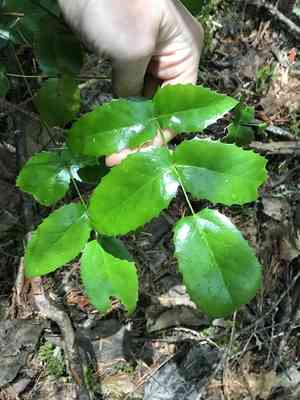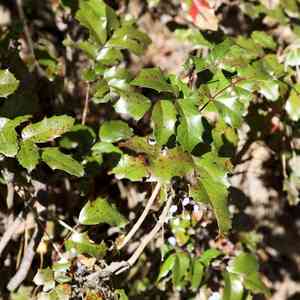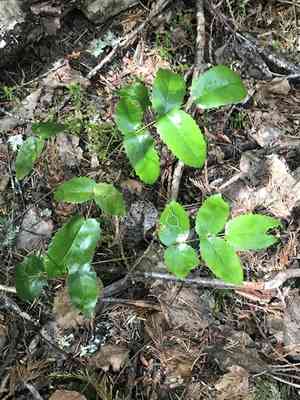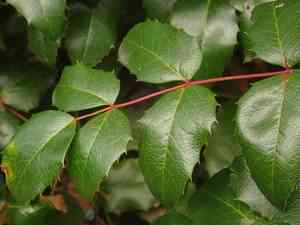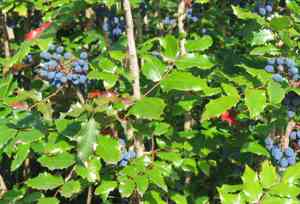
Oregon grape(Berberis aquifolium)

Oregon grape (Berberis aquifolium)

Also known as: Mountain grape

The Oregon grape is native to western North America and blooms in early spring. Additionally, the bark can be used to produce a yellow dye, and its berries yield a purple dye.

Attributes of Oregon grape

Lifespan
Perennial
Plant Type
Shrub
Plant Height
1 m
Spread
1.5 m
Leaf Color
Green
Flower Size
5 mm to 1 cm
Flower Color
Yellow Green Purple

ForwardPlant - Identify plants with a snap

Identify and diagnose plants, get toxicity alerts, and explore safety guides for all types of fungi.

Try for Free

Images of Oregon grape

Oregon grape(Berberis aquifolium)

Quickly Identify Oregon grape

1
Odd-pinnately compound leaves with spiky teeth resembling holly, tiered appearance.
2
Bright yellow flowers in short terminal racemes, conspicuous spring blooms.
3
Deep dusty blue to black globose berries, less than 1 inch in diameter.
4
Stout stem with yellow inner bark and corky texture, minimal branching.
5
Gray-brown trunk with smooth bark, moderate thickness, lacks distinctive patterns.

Scientific Classification of Oregon grape

Phylum
Vascular plants
Class
Dicotyledons
Order
Ranunculales
Family
Barberry
Genus
salmon barberry
Species
Oregon grape

Planting and Growing of Oregon grape

Care Difficulty
Easy
Watering Schedule
Every 2 days
Sunlight Requirements
Partial sun
Sunshine Duration
6-12 hours
Ideal Temperature
60-75℉
Soil Type
Potting Mix, Peat Mix
Soil pH
6.5-7.5
Fertilizer Type
Balanced
Pruning Season
Spring, Summer
Pruning Area
Branches, Leaves
Pruning Frequency
2 times a year
Repotting Season
Spring
Pot Type
Plastic, Ceramic

water icon How to Water Oregon grape?

Berberis aquifolium prefers consistent moisture but does not tolerate waterlogged conditions. Aim to water it with about 500ml per session, ensuring the soil is moist but well-drained. Let the top inch of soil dry out between waterings.
What are the symptoms of an underwatered Oregon grape?
What should I do if my Oregon grape is not getting enough water?
What are the symptoms of an overwatered Oregon grape?
How to save an overwatered Oregon grape?
More About Watering Techniques

sunlight icon What Are the Sunlight Requirements for Oregon grape?

Sunlight Requirements: Partial sun, Full sun
Duration of light: 4 to 6 hours
Partial to full sun is optimal for Berberis aquifolium, providing enough energy for photosynthesis. This light range supports healthy foliage growth and prolific flowering, maintaining the plant's aesthetic and ecological value.
How much sun does Berberis aquifolium need?
How to achieve the ideal light conditions for Berberis aquifolium?
What benefits does Berberis aquifolium gain from optimal light conditions?
More About Sunlight Requirements Techniques

temperature icon What Is the Ideal Temperature Range for Oregon grape?

Ideal Temperature: 60 ~ 75℉
For Berberis aquifolium, maintaining a consistent temperature range between 60°F to 75°F is crucial for its optimal growth. Within this range, the plant can efficiently photosynthesize, encouraging healthy foliage and robust root development. Inconsistent temperatures could stress the plant, while a steady warmth allows it to thrive.

soil icon What Soil is Best for Oregon grape?

Soil type: Loam, Sandy loam
Soil PH: 6.5 ~ 7.5
Berberis aquifolium thrives in well-drained soil which prevents root rot and other moisture-related issues. Well-drained soil ensures the roots have adequate oxygen and reduces the risk of fungal infections, promoting healthy plant growth. The plant benefits from nutrient-rich soil that provides the essential minerals and nutrients necessary for vigorous growth, enhanced foliage color, and robust flowering. Regularly amending the soil with organic matter can help maintain its fertility. The soil should retain moderate moisture without becoming waterlogged. Consistent moisture supports steady nutrient uptake, ensuring the plant remains healthy and develops consistently, especially during dry spells. More About Soil

fertilize icon How to Fertilize Oregon grape?

Fertilizer type: Balanced
For Berberis aquifolium, applying a balanced 10-10-10 liquid fertilizer at a rate of half-strength is optimal. Use approximately one tablespoon per gallon of water, ensuring the soil is evenly moist but not flooded. This provides essential nutrients without overwhelming the plant. More About Fertilizing Techniques

prune icon How to Prune Oregon grape?

Pruning Time: Spring, Summer
Start by removing any dead, damaged, or diseased branches close to the base to prevent the spread of disease. Next, trim back long, leggy growth to maintain the desired shape and encourage bushier growth. Always use clean, sharp tools to make clean cuts, preferably at an angle to promote quick healing. Regularly check your tools to ensure they are sharp enough to avoid damaging the plant tissue. Berberis aquifolium can be pruned to a specific shape or size depending on your landscape needs. For a more formal appearance, you can trim it into neat hedges or topiaries, while a natural look may require less systematic cutting. Consider the plant's natural growth pattern and your garden design before making any significant changes.

propagate icon How to Propagate Oregon grape plant?

Propagate Time: Spring, Early spring
1
Gather seeds from mature berries in late autumn. Clean off any flesh and dry the seeds for a few days before storing them in a cool, dry place until spring.
2
Select healthy stems and cut them at a 45-degree angle. Remove leaves from the lower half of the stem and dip the cut end in rooting hormone before planting.
3
Divide the root ball of mature plants in early spring. Carefully separate sections with roots and shoots and replant them in new locations or pots.
More About Propagating Techniques

repot icon How to Repot Oregon grape plant?

Repotting frequency: Every 1-2 years
1
The ideal time to repot Berberis aquifolium is during its dormancy in spring or autumn. Watch out for signals like excessive root growth, roots emerging from drainage holes, or slowed growth. These indicate it's time to offer your plant a more spacious home.
2
Select a pot that's slightly larger than the current one, roughly 1-2 inches bigger in diameter. Ensure it has adequate drainage holes to prevent waterlogging. A larger pot with good drainage not only supports healthy root growth but also prevents the soil from staying too damp, protecting the roots from rot.
3
Choose a well-drained acidic soil mix to mimic the plant's natural habitat. A mixture of peat moss, pine bark, and perlite works well. This blend provides the right acidity level, ensures efficient drainage, and retains sufficient moisture for healthy growth.

ForwardPlant - Identify plants with a snap

Find the best spots for them to optimize their health, simply using your phone.

Try for Free

Toxicity of Oregon grape

Is Oregon grape toxic to cat?

Oregon grape is recognized to be harmful to cats. Felines might unintentionally consume the poisonous berries while investigating their surroundings. Following ingestion, cats may show symptoms of physical unease or distress. While the exact toxic compounds remain unidentified, it is crucial for cat owners to understand that contact with the berries of oregon grape can represent a health hazard to their pets. If there is any suspicion that a cat has eaten any portion of oregon grape, it is vital to obtain prompt veterinary assistance to avert additional complications.

Is Oregon grape toxic to dog?

Oregon grape is regarded as toxic to dogs. Canines might inadvertently consume parts of oregon grape, particularly its fruits, which are recognized as poisonous. Should a dog eat any portion of oregon grape, especially the fruits, it may display symptoms like vomiting, diarrhea, weakness, or other distress signals. It is essential for dog owners to diligently supervise their pets and restrict access to oregon grape to prevent accidental consumption. If a dog does ingest this plant, it is vital to seek prompt veterinary assistance to ensure the animal's health and safety.

Identify toxic plants for your safety

Learn which plants are harmful to you and your pets, and make informed choices for a safer home!

Try for Free
WARNING
The judgment on toxicity and danger is for reference only. We DO NOT GUARANTEE any accuracy of such judgment. Therefore, you SHALL NOT rely on such judgment. It is IMPORTANT TO SEEK PROFESSIONAL ADVICE in advance when necessary.
More About Toxic Techniques