Amur barberry(Berberis amurensis)

Amur barberry (Berberis amurensis)

Also known as: Amur barberry

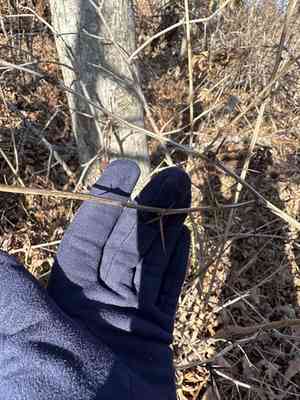
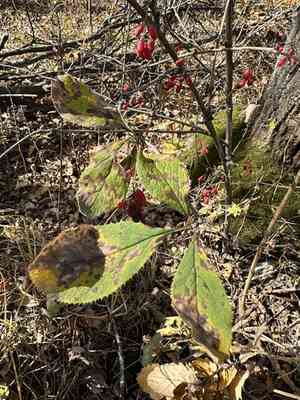
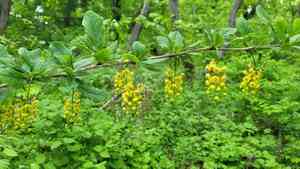
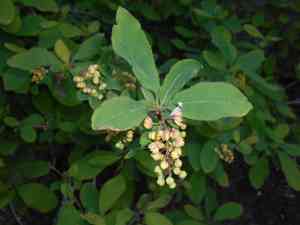
Berberis amurensis, also known as Amur barberry, is a shrub native to northeastern Asia, including areas in China (such as Gansu, Hebei, Heilongjiang, Henan, Jilin, Liaoning, Inner Mongolia, Shaanxi, Shandong, and Shanxi), Korea, the Russian Far East, and Japan. It is named after the Amur River, which serves as part of the border between Russia and China. The plant thrives at elevations ranging from 1100 to 2900 meters. This shrub can grow up to 350 cm in height and features spines up to 20 mm long on its smaller branches. Its elliptical, paper-thin leaves can reach up to 10 cm in length. The flowers appear in clusters of up to 25, and the berries are red, oblong, and about 10 mm long.

Attributes of Amur barberry

Lifespan
Perennial
Plant Type
Shrub
Plant Height
3.5 m
Spread
2.5 m to 3.5 m
Leaf Color
Green
Flower Size
4 cm to 10 cm
Flower Color
Yellow

ForwardPlant - Identify plants with a snap

Identify and diagnose plants, get toxicity alerts, and explore safety guides for all types of fungi.

Try for Free

Images of Amur barberry

Amur barberry(Berberis amurensis)

Quickly Identify Amur barberry

1
Recognizable by its thorny stems, bright yellow flowers in clusters, and red berries. Leaves are oval, with a soft green color turning to a deep red in the fall.

Scientific Classification of Amur barberry

Phylum
Vascular plants
Class
Dicotyledons
Order
Buttercups, poppies and allies
Family
Barberry
Genus
salmon barberry
Species
Amur barberry

Planting and Growing of Amur barberry

Care Difficulty
Easy
Watering Schedule
Every 2 days
Sunlight Requirements
Partial sun
Sunshine Duration
4-8 hours
Ideal Temperature
60-75℉
Soil Type
Potting Mix, Peat Mix
Soil pH
6.5-7.5
Fertilizer Type
Balanced
Pruning Season
Spring, Summer
Pruning Area
Branches, Leaves
Pruning Frequency
2 times a year
Repotting Season
Spring
Pot Type
Plastic, Ceramic

water icon How to Water Amur barberry?

Berberis amurensis, also known as Amur barberry, requires moderate watering; about 500 ml is ideal. Water enough to moisten the soil evenly but avoid waterlogging the roots. This balance is crucial, as overwatering can lead to root rot.
What are the symptoms of an underwatered Amur barberry?
What should I do if my Amur barberry is not getting enough water?
What are the symptoms of an overwatered Amur barberry?
How to save an overwatered Amur barberry?

sunlight icon What Are the Sunlight Requirements for Amur barberry?

Sunlight Requirements: Partial sun, Full shade
Duration of light: 4 to 6 hours
Berberis amurensis thrives best in partial sun to full shade, benefiting from dappled light conditions. This ensures it maintains its vibrant foliage and robust growth habit.
What is the ideal positioning for Berberis amurensis?
How can I adjust light conditions in an outdoor setting?
Why is balanced sunlight crucial for Berberis amurensis?

temperature icon What Is the Ideal Temperature Range for Amur barberry?

Ideal Temperature: 60 ~ 75℉
The ideal temperature range for Berberis amurensis is between 60°F and 75°F. This range supports optimal growth and photosynthesis, providing conditions similar to its native habitat. It ensures proper physiological functioning and minimizes stress for the plant.

soil icon What Soil is Best for Amur barberry?

Soil type: Loam, Sandy loam
Soil PH: 6.5 ~ 7.5
Berberis amurensis thrives in soil that retains moisture well but also drains adequately. A well-draining loam or sandy loam soil ensures proper root hydration without waterlogging, essential for its health. This plant prefers nutrient-rich soils that support healthy growth. Soil enriched with organic matter like compost provides essential nutrients, promoting vigorous leaf and berry production. Aerated soil prevents root suffocation and promotes healthy root development. Loamy soils typically offer enough aeration, allowing roots to access oxygen efficiently, which is critical for plant vitality.

fertilize icon How to Fertilize Amur barberry?

Fertilizer type: Balanced
For Berberis amurensis, ensuring the right amount of fertilizer is crucial for healthy growth. A general recommendation is to use half the recommended dosage of a balanced liquid fertilizer, approximately 10-20 ml per plant during active growth stages. This dosage supports strong root development while avoiding potential nutrient burn.

prune icon How to Prune Amur barberry?

Pruning Time: Spring, Summer, Autumn
Begin by sterilizing your pruning tools to prevent the spread of disease. Locate dead or diseased branches and remove them close to the base. Trim back overgrown areas to maintain the shrub's shape and encourage healthier growth. Always make cuts at a slight angle just above a bud to promote healing and new growth. Regular pruning helps keep Berberis amurensis bushy and vibrant, enhancing its ornamental appeal. More About Pruning Techniques

propagate icon How to Propagate Amur barberry plant?

Propagate Time: Spring,Late spring,Early spring
1
Choose healthy and disease-free parts of the plant for propagation. This ensures the new plant will have a strong start and increases chances of successful propagation.
2
Use well-draining soil or a mix specifically formulated for seed starting or cuttings. Proper soil ensures water and air reach the roots, preventing rot and fostering growth.
3
Place the cutting or seed in a warm, bright location out of direct sunlight. Monitor regularly for moisture, temperature, and any signs of growth or disease.
More About Propagating Techniques

repot icon How to Repot Amur barberry plant?

Repotting frequency: Every 2-3 years
1
Berberis amurensis should be considered for repotting when you notice roots emerging from the drainage holes, indicating that the plant has outgrown its current pot. Additionally, if the soil seems compacted or waterlogged, it's time to refresh the soil to support healthy root growth. Ideally, aim to repot during early Spring or Autumn for optimal root establishment.
2
Select a pot that is about one size larger than the current one, ensuring it provides sufficient drainage holes. A pot made of clay or ceramic works best as it allows for airflow, which in turn helps prevent root rot. This choice not only accommodates the plant’s growth but also ensures a stable environment by regulating moisture levels effectively.
3
Opt for a well-draining loamy soil mix that balances moisture retention and root aeration. The inclusion of organic matter like compost will enrich the soil, providing necessary nutrients while ensuring water does not stagnate. The right soil mix promotes healthy root development and minimizes the risk of fungal diseases that might occur from excess moisture.

ForwardPlant - Identify plants with a snap

Find the best spots for them to optimize their health, simply using your phone.

Try for Free