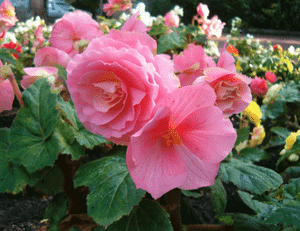
Tuberous begonia (Begonia tuberhybrida)
Also known as: Tuberosa group
The **Tuberous Begonia (Begonia tuberhybrida)** is a plant species originating from the Andes Mountains in South America. Renowned for its impressive, large flowers, it is often considered one of the most striking members of its genus. This species is frequently cultivated in gardens and conservatories for its stunning floral displays.
Attributes of Tuberous begonia
Images of Tuberous begonia
Quickly Identify Tuberous begonia
Scientific Classification of Tuberous begonia
Planting and Growing of Tuberous begonia
 How to Water Tuberous begonia?
 What Are the Sunlight Requirements for Tuberous begonia?
 What Is the Ideal Temperature Range for Tuberous begonia?
 What Soil is Best for Tuberous begonia?
 How to Fertilize Tuberous begonia?
 How to Prune Tuberous begonia?
 How to Propagate Tuberous begonia plant?
 How to Repot Tuberous begonia plant?
Toxicity of Tuberous begonia
Is Tuberous begonia toxic to humans?
Tuberous begonia presents a moderate toxicity risk to humans when ingested. This entire plant contains soluble calcium oxalates, which can be detrimental if consumed. Upon ingestion, these compounds may cause various symptoms, such as oral irritation, a burning sensation in the mouth and throat, difficulties with swallowing, and nausea. In certain instances, consuming this plant may also lead to diarrhea and abdominal discomfort. Given that these toxic substances are distributed throughout the plant, all parts of the tuberous begonia are acknowledged as potentially harmful in the event of accidental consumption. It is crucial for individuals to recognize these risks and to avoid unintentional ingestion, particularly in homes with children or pets.
Is Tuberous begonia toxic to cat?
Tuberous begonia presents a mild toxicity risk to cats. If a cat consumes any part of this plant, it can result in poisoning because of the soluble calcium oxalates found throughout its structure. Following the ingestion of tuberous begonia, a cat may display signs of physical distress, such as gastrointestinal discomfort. It is essential for cat owners to remain alert and prevent their pets from inadvertently ingesting tuberous begonia. Should ingestion occur, owners must promptly seek veterinary assistance to address the symptoms and safeguard the cat's health.
Is Tuberous begonia toxic to dog?
Tuberous begonia presents a mild toxicity hazard to dogs. Canines might inadvertently consume parts of the plant, resulting in poisoning. The complete plant harbors toxic compounds that can trigger negative reactions in dogs. Signs of toxicity may encompass vomiting, diarrhea, and lethargy. It is vital for dog owners to remain alert and safeguard their pets from accessing tuberous begonia. Should there be any suspicion that a dog has ingested any portion of tuberous begonia, prompt veterinary care is crucial to ensure appropriate treatment and recovery.



