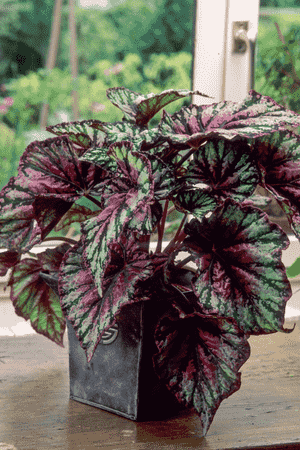
Painted-leaf begonia(Begonia rex)

Painted-leaf begonia (Begonia rex)

Also known as: Rex begonia

The painted-leaf begonia (Begonia rex), originally from tropical regions in Central and South America, is typically grown indoors as a houseplant in temperate areas. In cooler climates, it is often kept inside to protect it from unsuitable outdoor conditions.

Attributes of Painted-leaf begonia

Lifespan
Perennial
Plant Type
Herb
Plant Height
17 cm to 40 cm
Spread
50 cm
Leaf Color
Green Red Variegated Silver
Flower Size
0.5-1 inch
Flower Color
Pink White

ForwardPlant - Identify plants with a snap

Identify and diagnose plants, get toxicity alerts, and explore safety guides for all types of fungi.

Try for Free

Images of Painted-leaf begonia

Painted-leaf begonia(Begonia rex)

Quickly Identify Painted-leaf begonia

1
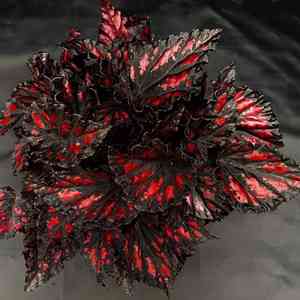
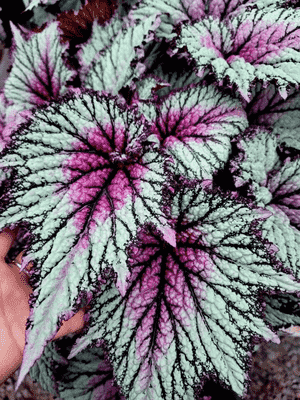
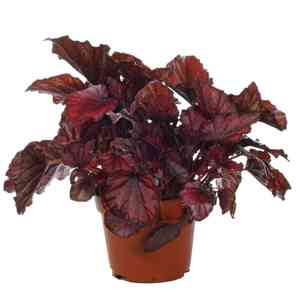
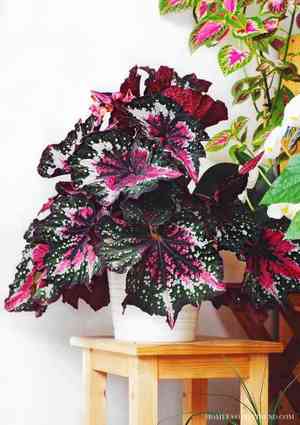
Look for asymmetrical, heart-shaped leaves with bold patterns and colors ranging from silver, pink, purple to deep greens. The leaves are often textured with ruffles, spikes, or hairs.

Scientific Classification of Painted-leaf begonia

Phylum
Vascular plants
Class
Dicotyledons
Order
Cucurbitales
Family
Begonia
Genus
Begonias
Species
Painted-leaf begonia

Planting and Growing of Painted-leaf begonia

Care Difficulty
Hard
Watering Schedule
Every 4 days
Sunlight Requirements
Partial sun
Sunshine Duration
4-8 hours
Ideal Temperature
65-75℉
Soil Type
Potting Mix, Peat Mix
Soil pH
6.5-7.5
Fertilizer Type
Balanced
Pruning Season
Spring, Summer
Pruning Area
Branches, Leaves
Pruning Frequency
Once a year
Repotting Season
Spring
Pot Type
Plastic, Ceramic

water icon How to Water Painted-leaf begonia?

When watering Begonia rex, aim to provide about 200 ml of water each session. The key is to ensure the soil is moist but not waterlogged. Water until you see some come through the bottom of the pot, then stop. This ensures the roots absorb enough moisture without risking root rot.
What are the symptoms of an underwatered Painted-leaf begonia?
What should I do if my Painted-leaf begonia is not getting enough water?
What are the symptoms of an overwatered Painted-leaf begonia?
How to save an overwatered Painted-leaf begonia?
More About Watering Techniques

sunlight icon What Are the Sunlight Requirements for Painted-leaf begonia?

Sunlight Requirements: Partial sun, Full shade
Duration of light: 3 to 4 hours
Partial sunlight to full shade is ideal, providing balanced conditions that ensure vibrant leaf colors and healthy growth by avoiding both intense light and deep shade.
How much sunlight does Begonia rex need?
What is the ideal light condition for growth?
How to ensure ideal light conditions indoors?
More About Sunlight Requirements Techniques

temperature icon What Is the Ideal Temperature Range for Painted-leaf begonia?

Ideal Temperature: 65 ~ 75℉
Begonia rex flourishes best within an ideal temperature range of 65°F to 75°F. This range replicates the moderate climate of its native habitat and supports optimal metabolic activities and vibrant foliage display.

soil icon What Soil is Best for Painted-leaf begonia?

Soil type: Loam, Acidic soil, Peat soil
Soil PH: 6.5 ~ 7.5
Rex Begonias thrive in well-drained soil which allows for moisture retention without waterlogging. This condition prevents root rot and helps maintain healthy roots, ensuring lush foliage growth. A rich, organic soil mix is ideal for Begonia rex, providing essential nutrients for vibrant leaf coloration. Organic materials like compost or peat moss enrich the soil, supporting sustained plant health. Rex Begonias favor slightly acidic conditions, which help facilitate nutrient uptake. This preference ensures optimal availability of elements like iron and magnesium, enhancing foliage vibrancy. More About Soil

fertilize icon How to Fertilize Painted-leaf begonia?

Fertilizer type: Balanced
When it comes to fertilizing Begonia rex, it's crucial to find the right balance. A suitable amount is to use half-strength liquid fertilizer twice a month during the growing season. Ensure your chosen liquid fertilizer contains a balanced NPK ratio, favoring a formula around 10-10-10. For slow-release fertilizer, apply a small quantity every four months to provide consistent nutrition. More About Fertilizing Techniques

prune icon How to Prune Painted-leaf begonia?

Pruning Time: Spring, Summer
Start by observing your Begonia rex for areas that look overcrowded or unhealthy. Use your clean pruning tools to gently remove any dead or yellowing leaves at the base. Always cut at an angle to promote better healing and new growth. To encourage a fuller plant, pinch back the topmost stems. This helps the plant produce side shoots, resulting in a bushier appearance. Be careful not to over-prune, as it can stress the plant and inhibit growth. More About Pruning Techniques

propagate icon How to Propagate Painted-leaf begonia plant?

Propagate Time: Spring, Late spring, Early spring
1
Choose a healthy Begonia rex with vibrant leaves and no signs of disease. This ensures that the cuttings taken will be vigorous and have a higher chance of successful rooting. Avoid plants that show signs of wilting or pest infestation.
2
Using the sterilized knife or scissors, cut a leaf with a stem section, ideally with two to three nodes. Leaf cuttings should be about four to six inches long. Dip the cut end into rooting hormone for better results.
3
Insert the cut end into moist, well-draining soil or a soilless mix. Ensure that the nodes are buried sufficiently within the medium to encourage root formation. Covering the pot with a plastic bag can create a humid environment that aids in rooting.
More About Propagating Techniques

repot icon How to Repot Painted-leaf begonia plant?

Repotting frequency: Every 1-2 years
1
Knowing the right time to repot your Begonia rex is crucial. Watch for roots growing out of the drainage holes or if the soil seems to dry out too quickly after watering. These are strong indicators that your plant requires more space to grow and thrive. Spring or early summer, when the plant is beginning its active growth phase, is the ideal time for repotting.
2
Selecting an appropriate pot is essential for the health of your Begonia rex. Opt for a container that is slightly larger than the current one, with ample drainage holes to prevent waterlogging. A pot that's too large can lead to excess soil that retains moisture, increasing the risk of root rot. The right-sized pot promotes healthy root growth and helps maintain the right moisture balance.
3
The soil you choose should be light and aerated, an essential feature for Begonia rex. A mix that includes peat, perlite, and potting soil will provide great drainage and the right texture. Well-draining soil prevents root rot, ensuring your begonia has the best possible environment for healthy growth by allowing roots to receive enough oxygen.
More About Repotting Techniques

ForwardPlant - Identify plants with a snap

Find the best spots for them to optimize their health, simply using your phone.

Try for Free

Toxicity of Painted-leaf begonia

Is Painted-leaf begonia toxic to cat?

All varieties of begonia possess moderate toxicity levels for cats, and the painted-leaf begonia (Begonia rex) is certainly included. Consuming any part of this plant, whether roots, stems, flowers, or leaves, may lead to adverse effects such as excessive salivation, oral lesions, difficulty swallowing, vomiting, and a lack of appetite for food and water. While these symptoms typically resolve within forty-eight hours, seeking veterinary guidance is strongly advised.

Is Painted-leaf begonia toxic to dog?

When a dog chews on any section of a painted-leaf begonia, it will experience an overwhelming burning sensation in the mouth and might start to vomit. The sap and juices of the plant contain small, sharp crystals that lead to irritation and swelling. Although the plant is regarded as mildly to moderately toxic, its roots are particularly hazardous. If your dog's condition worsens significantly, seeking veterinary care may be essential.

Identify toxic plants for your safety

Learn which plants are harmful to you and your pets, and make informed choices for a safer home!

Try for Free
WARNING
The judgment on toxicity and danger is for reference only. We DO NOT GUARANTEE any accuracy of such judgment. Therefore, you SHALL NOT rely on such judgment. It is IMPORTANT TO SEEK PROFESSIONAL ADVICE in advance when necessary.
More About Toxic Techniques