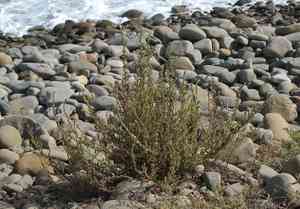
Fivehorn smotherweed (Bassia hyssopifolia)
Also known as: Five-hook bassia
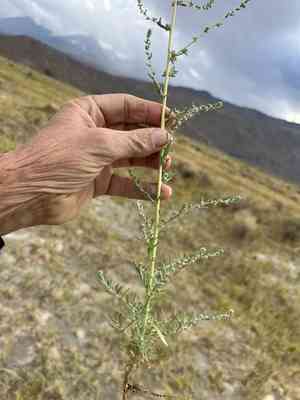
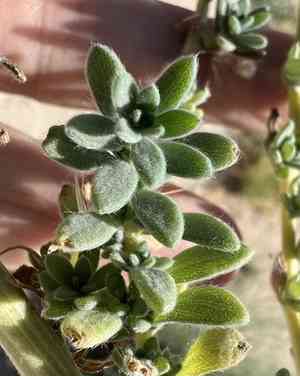
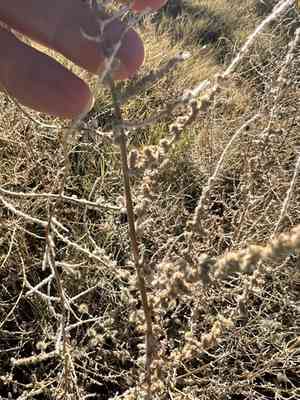
This annual herb typically features inflorescences that are short, narrow spikes located along the upper portion of the stem. The stems can be either simple or branched, commonly reaching heights of up to a meter or more. Its leaves are flat and vary from linear to lance-shaped, with the lower leaves reaching lengths of up to 6 centimeters. The flowers, which are woolly-haired, may appear singly, in pairs, or clustered in groups of three along the spike.
In This Article
Attributes of Fivehorn smotherweed
Lifespan
Annual
Plant Type
Herb
Plant Height
30-100 cm
Spread
Not typically measured, plant tends to spread around 60-80 cm
Leaf Color
Green
Flower Size
1-2 mm
Flower Color
Greenish-white
Images of Fivehorn smotherweed
Quickly Identify Fivehorn smotherweed
1
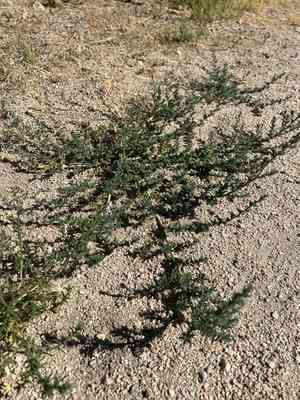
Bassia hyssopifolia can be identified by its linear, needle-like leaves that are densely arranged and its small, inconspicuous flowers. The plant often takes on a bushy, rounded form.
Scientific Classification of Fivehorn smotherweed
Phylum
Vascular plants
Class
Dicotyledons
Order
Caryophyllales
Family
Amaranth
Genus
Smotherweeds
Species
Fivehorn smotherweed
Planting and Growing of Fivehorn smotherweed
Care Difficulty
Easy
Watering Schedule
Every 2 days
Sunlight Requirements
Full sun
Sunshine Duration
6-10 hours
Ideal Temperature
65-75℉
Soil Type
Potting Mix, Peat Mix
Soil pH
6.5-7.5
Fertilizer Type
Balanced
Pruning Season
Spring, Summer
Pruning Area
Branches, Leaves
Pruning Frequency
2 times a year
Repotting Season
Spring
Pot Type
Ceramic, Plastic
 How to Water Fivehorn smotherweed?
For Bassia hyssopifolia, watering should be moderate and consistent. Ensure the soil is damp but not waterlogged, allowing the top inch to dry out between waterings. This plant appreciates a steady supply of moisture during the growing season, achieving a balance that prevents both dryness and oversaturation.
What are the symptoms of an underwatered Fivehorn smotherweed?
›
What should I do if my Fivehorn smotherweed is not getting enough water?
›
What are the symptoms of an overwatered Fivehorn smotherweed?
›
How to save an overwatered Fivehorn smotherweed?
›
 What Are the Sunlight Requirements for Fivehorn smotherweed?
Bassia hyssopifolia thrives best in environments offering full to partial sun. Optimal light conditions enhance photosynthetic efficiency and promote a strong, healthy structure.
Ideal Lighting for Growth
›
Solutions for Obtaining Ideal Lighting
›
Benefits of Ideal Lighting
›
 What Is the Ideal Temperature Range for Fivehorn smotherweed?
The ideal temperature range for growing Bassia hyssopifolia is between 65°F and 75°F. This range ensures that the plant can maintain optimal physiological processes such as photosynthesis and respiration. Deviations from this temperature may slow down growth or stress the plant.
 What Soil is Best for Fivehorn smotherweed?
Bassia hyssopifolia thrives in well-drained soil to prevent waterlogging, which could harm root systems. Proper drainage ensures that roots get adequate oxygen, enhancing their growth and overall plant health. The plant does well in soil with moderate fertility. Excessively rich soil can lead to weak growth, while poor nutrients may stunt development, making moderate fertility ideal for balanced growth. While the plant prefers well-drained soil, it also benefits from slight moisture retention. This balance prevents the plant from drying out too quickly during hotter months, promoting consistent growth.
 How to Fertilize Fivehorn smotherweed?
For Bassia hyssopifolia, it's crucial to apply a balanced fertilizer at the rate of about 1/4 to 1/2 teaspoon per gallon of water when using liquid fertilizer. This ensures the plant receives adequate nutrients without the risk of burning its roots.
 How to Prune Fivehorn smotherweed?
Begin by examining the plant to identify any dead or diseased branches. Use sterilized and sharp pruning shears to make precise cuts. Remove these affected parts first to prevent the spread of disease. Next, target any stems that are crossing or rubbing against each other; this will help improve air circulation. Trim back overgrown areas to maintain the desired size and shape of your Bassia hyssopifolia. Always make cuts just above a leaf node to encourage healthy regrowth. Finish by cleaning up the area around the plant to ensure a tidy appearance.
More About Pruning Techniques→
 How to Propagate Fivehorn smotherweed plant?
1
Start by filling seed trays with a high-quality potting mix. Ensure the soil is moistened but not waterlogged to support optimal seed germination and root development.
2
Evenly distribute Bassia hyssopifolia seeds over the soil surface in the trays. Press them lightly into the soil and cover with a thin layer of potting mix, facilitating good contact with the soil.
3
Place the seed trays in a warm, well-lit area. Maintain a consistent temperature and moisture level to encourage seed germination. Use a plastic cover if necessary to retain humidity.
 How to Repot Fivehorn smotherweed plant?
1
Bassia hyssopifolia should be repotted when you notice the plant has outgrown its current pot, manifested by roots protruding from the drainage holes or circling at the top of the soil. Another signal can be stunted growth, indicating the roots lack room to expand. It's best to repot during its active growing seasons of spring or summer to ensure it adjusts quickly to the new environment.
2
Select a pot that is about 1 to 2 inches larger in diameter than the current pot to provide adequate room for root expansion. Using a pot with drainage holes is essential to prevent waterlogging, which can lead to root rot. The material of the pot should be breathable, such as terracotta, which also helps in preventing water retention and encouraging healthy growth.
3
Opt for a well-draining sandy soil mix to provide excellent drainage and prevent water retention. This type of soil mimics the plant's natural habitat, ensuring that the roots don't sit in water and promoting optimal growth conditions. A slightly acidic to neutral pH is ideal to suit the plant's preferences.
Toxicity
Ingestion
WARNING
The judgment on toxicity and danger is for reference only. We DO NOT GUARANTEE any accuracy of such judgment. Therefore, you SHALL NOT rely on such judgment. It is IMPORTANT TO SEEK PROFESSIONAL ADVICE in advance when necessary.
Learn More About Fivehorn smotherweed Diseases
Bacterial Leaf Spot
Bacterial Soft Rot
Bacterial Wilt
Chemical Injury
Crown Gall
Cyst Nematode
Damping-off
Downy Mildew
Drought Stress
Fusarium Wilt
Gray Mold
Leaf Spot
Mosaic
Nutrient Deficiency
Nutrient Toxicity
Powdery Mildew
Root Rot
Root-knot Nematode
Rusts
Sooty Mold
Spider Mites
Temperature Stress
Thrips Damage
White Mold



