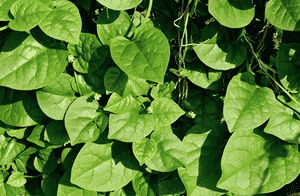
Malabar spinach (Basella alba)
Also known as: Indian spinach, Creeping spinach, Buffalo spinach
The plant you're thinking of is likely **nasturtium** (Tropaeolum majus). This species flourishes in summer heat and produces leaves with a distinct peppery, citrusy taste. Both the leaves and flowers are edible, often used in salads or as garnishes. However, in warmer regions, nasturtiums can spread rapidly and potentially become invasive.
In This Article
Attributes of Malabar spinach
Lifespan
Perennial, Annual
Plant Type
Vine, Herb
Plant Height
10 m
Spread
60 cm to 90 cm
Leaf Color
Green Red
Flower Size
2.5 cm
Flower Color
White Purple Pink
Images of Malabar spinach
Quickly Identify Malabar spinach
1
Vine habit, reaching 6 feet (1.8 meters) with potential to extend 30 feet (9.1 meters).
2
Distinctive reddish stem complementing glossy, succulent green leaves with fleshy texture.
3
Small flowers in white, pink, or red; bisexual with 3 styles and 5 stamens.
4
Purplish-black pseudo-berry fruits, 0.16-0.28 inches long (4-7 mm) and 0.2-0.39 inches wide (5-10 mm).
5
Thick, semi-succulent ovate to cordate leaves, 2-6 inches (5-15 cm) long and 1.6-4 inches (4-10 cm) wide.
Scientific Classification of Malabar spinach
Phylum
Vascular plants
Class
Dicotyledons
Order
Pinks, cacti, and allies
Family
Basella
Genus
Basella
Species
Malabar spinach
Planting and Growing of Malabar spinach
Care Difficulty
Easy
Watering Schedule
Every 8 days
Sunlight Requirements
Full sun
Sunshine Duration
6-12 hours
Ideal Temperature
77-86℉
Soil Type
Potting Mix, Peat Mix
Soil pH
6.5-7.5
Fertilizer Type
Balanced
Pruning Season
Spring, Summer
Pruning Area
Branches, Leaves
Pruning Frequency
2 times a year
Repotting Season
Spring
Pot Type
Plastic, Ceramic
 How to Water Malabar spinach?
For Basella alba, it's crucial to keep the soil consistently moist but not waterlogged. Aim to water the plant until the topsoil feels adequately wet, typically requiring around 500 milliliters per session. This ensures the roots have enough moisture without drowning them, promoting healthy growth.
What are the symptoms of an underwatered Malabar spinach?
›
What should I do if my Malabar spinach is not getting enough water?
›
What are the symptoms of an overwatered Malabar spinach?
›
How to save an overwatered Malabar spinach?
›
 What Are the Sunlight Requirements for Malabar spinach?
Basella alba thrives under full sun to partial sun, requiring 6 to 8 hours of light daily. Ideal lighting enhances its growth, yield, and foliage strength, promoting healthy and resilient development through robust photosynthesis and nutrient synthesis. This range ensures long-term health and productivity.
More About Sunlight Requirements Techniques→
Ideal Light Intensity
›
Protective Measures
›
Effects of Ideal Lighting
›
 What Is the Ideal Temperature Range for Malabar spinach?
Basella alba thrives when temperatures are maintained consistently between 77°F and 86°F. This range supports optimal growth and leaf production, facilitating healthy plant development. Regular monitoring and adjustments ensure these temperatures are sustained.
 What Soil is Best for Malabar spinach?
Basella alba requires well-draining soil to prevent waterlogging, which can lead to root rot. Ensuring proper drainage allows the roots to receive adequate oxygen and supports healthy plant growth. The plant thrives in soil rich in organic matter. A nutritious soil composition provides essential nutrients, promoting vigorous growth and enhancing the plant's natural resistance to pests and diseases. While proper drainage is crucial, the soil should also retain enough moisture to keep the plant hydrated. Balanced moisture retention supports continuous supply of water to the plant, crucial in warmer climates.
 How to Fertilize Malabar spinach?
Basella alba prefers a balanced fertilizer with an N-P-K ratio of 10-10-10. Use approximately 50-100 grams per square meter for solid fertilizers, ensuring that you do not over-fertilize which can harm the plant’s growth and soil health.
 How to Prune Malabar spinach?
Begin by inspecting your Basella alba plant for any dead or yellowing leaves, which should be the first to go. Using sharp, clean scissors or pruning shears, gently cut away these unwanted parts at their bases. Next, focus on any stems that are overly long or appear to be growing in a direction inconsistent with the plant's shape. Trim these stems back to maintain a compact and bushy form. This not only keeps the plant looking neat but also encourages new, healthy growth from where the cuts were made. If your plant is flowering, you may remove some flower buds to redirect energy back into foliage production, unless you wish to encourage seed growth.
More About Pruning Techniques→
 How to Propagate Malabar spinach plant?
1
Sow seeds in a tray filled with nutrient-rich soil. Ensure the seeds are only lightly covered, as they need light to germinate. Water lightly to maintain soil moisture.
2
Cut a healthy stem segment with at least two nodes. Remove any leaves near the bottom, and treat the cut end with rooting hormone to encourage root growth.
3
Place cuttings in a well-draining potting mix, and cover them with a plastic bag to simulate a humid greenhouse condition. Ensure they receive indirect sunlight and remain moist.
 How to Repot Malabar spinach plant?
1
Basella alba should be repotted when you notice roots emerging from drainage holes or if the plant's growth seems stunted. The best time to repot is during its active growing seasons, such as spring or early summer, to reduce transplant shock.
2
Select a pot that is one size larger than the current one, ensuring adequate drainage with several holes at the bottom. A larger pot provides room for root development, which supports healthier foliage growth over time.
3
Opt for a nutrient-rich, well-draining potting mix, ideally one formulated for vegetables or herbs. This type of soil ensures that the roots have access to necessary nutrients while preventing water-logging, which could lead to root rot.
Learn More About Malabar spinach Diseases
Anthracnose
Bacterial Leaf Spot
Bacterial Soft Rot
Bacterial Wilt
Damping-off
Downy Mildew
Drought Stress
Fusarium Wilt
Gray Mold
Leaf Curl
Leaf Spot
Mosaic
Nutrient Deficiency
Nutrient Toxicity
Powdery Mildew
Root Rot
Root-knot Nematode
Sooty Mold
Spider Mites
Temperature Stress
Thrips Damage
White Mold



