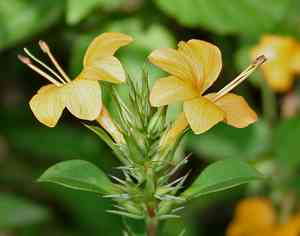
Porcupine flower (Barleria prionitis)
Also known as: Dog bush
The plant you're referring to is the gorse (Ulex europaeus). Known for its spiky leaves, this shrub is often grown as an ornamental plant. It features vibrant yellow flowers that can bloom multiple times annually in sunny, favorable climates.
In This Article
Attributes of Porcupine flower
Lifespan
Perennial
Plant Type
Shrub
Plant Height
1.5 m
Spread
50 cm
Leaf Color
Green
Flower Size
2.5 cm to 5 cm
Flower Color
Yellow
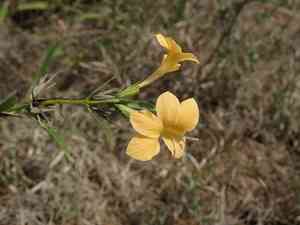
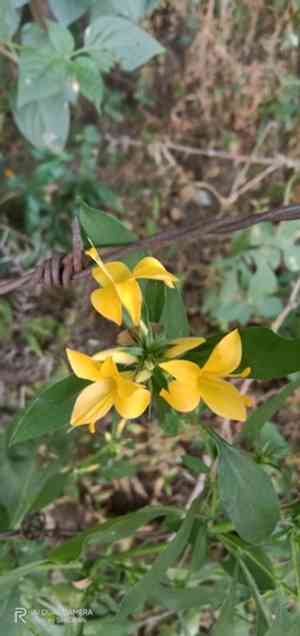
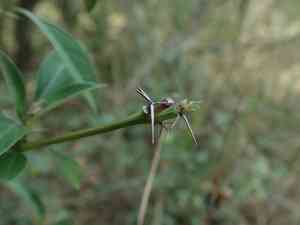
Images of Porcupine flower
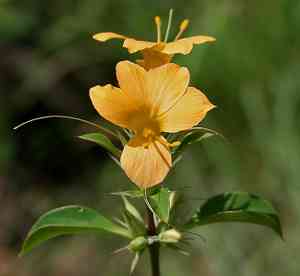
Quickly Identify Porcupine flower
1
Barleria prionitis can be identified by its erect habit and thorny stems. The leaves are ovate to lanceolate with a shiny surface. The flowers are yellow, borne on spikes, and typically have a five-lobed calyx. The presence of spines on the stems and branches is a distinguishing feature.
Scientific Classification of Porcupine flower
Phylum
Vascular plants
Class
Dicotyledons
Order
Lamiales
Family
Acanthus
Genus
Philippine violets
Species
Porcupine flower
Planting and Growing of Porcupine flower
Care Difficulty
Easy
Watering Schedule
Every 4 days
Sunlight Requirements
Full sun
Sunshine Duration
4-8 hours
Ideal Temperature
68-86℉
Soil Type
Potting Mix, Peat Mix
Soil pH
6.5-7.5
Fertilizer Type
Balanced
Pruning Season
Spring, Summer
Pruning Area
Branches, Leaves
Pruning Frequency
2 times a year
Repotting Season
Spring
Pot Type
Plastic, Ceramic
 How to Water Porcupine flower?
When watering Barleria prionitis, ensure that the soil is evenly moist but not waterlogged. The plant prefers a moderate amount of water, so approximately 500 ml per watering session is ideal. Make sure to check the moisture level by inserting your finger into the soil up to 2 inches. Water until you see it starting to seep from the drainage holes.
What are the symptoms of an underwatered Porcupine flower?
›
What should I do if my Porcupine flower is not getting enough water?
›
What are the symptoms of an overwatered Porcupine flower?
›
How to save an overwatered Porcupine flower?
›
 What Are the Sunlight Requirements for Porcupine flower?
Barleria prionitis enjoys full sun to partial sun exposure. Ideal light encourages the plant's blooming capacity and maintains healthy foliage, facilitating an optimal growth environment.
What is the best light condition for Barleria prionitis?
›
How can I provide ideal light for Barleria prionitis?
›
What benefits does Barleria prionitis get from ideal lighting?
›
 What Is the Ideal Temperature Range for Porcupine flower?
Barleria prionitis thrives best in temperatures ranging from 68°F to 86°F. This range ensures that the plant can photosynthesize efficiently and maintain its metabolic processes. Staying within this temperature range helps the plant to maintain optimal growth rates and prevents stress-related issues that could arise from suboptimal temperatures.
 What Soil is Best for Porcupine flower?
Barleria prionitis thrives in nutrient-rich soil that promotes healthy growth. This type of soil ensures the plant gets all essential nutrients, contributing to its vibrant foliage and robust health. This plant prefers well-draining soil to prevent waterlogging, which can lead to root rot. Proper drainage systems support root health and prevent diseases caused by excess moisture. The soil should retain some moisture but not too much, as this plant needs a balanced water supply for optimal growth. A moderate moisture retention ability helps maintain hydration without causing water stagnation.
 How to Fertilize Porcupine flower?
For Barleria prionitis, the amount of fertilizer should be moderate. Use approximately 1 tablespoon of liquid fertilizer mixed with 1 gallon of water for young plants. For mature plants, you can increase it to 2 tablespoons. Solid fertilizers should be used sparingly, at about 1/2 cup per plant per application.
 How to Prune Porcupine flower?
Use clean and sharp pruning shears to ensure a precise cut without damaging the plant. This reduces the risk of infection and helps the plant heal quickly. Look for dead, damaged, or diseased branches to cut away. Also, trim any branches growing inwards or crossing over others to maintain an open structure for better air circulation. Cut above a leaf node or outward-facing bud at a slight angle to promote new growth and maintain the natural shape of the plant. This encourages the plant to focus its energy on producing healthy, new shoots. Regularly trim back excess growth to maintain your desired shape and to prevent the plant from overtaking its allotted space. This control helps in creating a well-balanced and aesthetically pleasing appearance.
More About Pruning Techniques→
 How to Propagate Porcupine flower plant?
1
Before sowing seeds, prepare a well-draining potting mix. Fill seed trays with this mixture, making sure it's evenly moist. This potting mix should be light and airy to facilitate root penetration and reduce the risk of waterlogged conditions deferring seed germination.
2
Identify a healthy portion of the plant and use pruning shears to cut a section around 4-6 inches long. Strip the lower leaves, keeping at least one or two on top. This reduces water loss and ensures energy is focused on root development rather than leaf maintenance.
3
Once the cuttings are prepared, dip the cut end into a rooting hormone. This encourages faster and more robust root growth. Insert the cutting into moist, well-draining potting soil, ensuring at least one node is beneath the soil surface but not too deep to hinder root emergence.
 How to Repot Porcupine flower plant?
1
Barleria prionitis benefits from repotting when the roots become overcrowded. Signs include roots emerging through drainage holes and reduced growth vigor. Best performed in spring or autumn when plant stress is minimal.
2
Select a pot slightly larger than the current one, with adequate drainage holes. Clay pots promote air circulation to the roots, while providing weight to prevent tipping over, essential for healthy growth.
3
Opt for well-draining loamy soil mixed with sand and organic matter. This blend ensures sufficient drainage and retains necessary nutrients, vital for preventing waterlogging and sustaining plant health.
Learn More About Porcupine flower Diseases
Anthracnose
Bacterial Leaf Spot
Bacterial Wilt
Black Spot
Chemical Injury
Crown Gall
Damping-off
Downy Mildew
Drought Stress
Fusarium Wilt
Gray Mold
Leaf Curl
Leaf Spot
Mosaic
Nutrient Deficiency
Nutrient Toxicity
Powdery Mildew
Root Rot
Root-knot Nematode
Rusts
Sooty Mold
Spider Mites
Temperature Stress
Thrips Damage
White Mold



