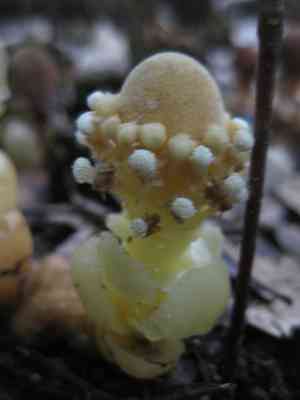
Fungus root(Balanophora fungosa)

Fungus root (Balanophora fungosa)

Also known as: Scaly Balanophora, Fungus Balanophora

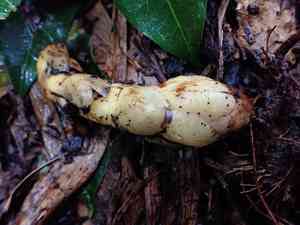
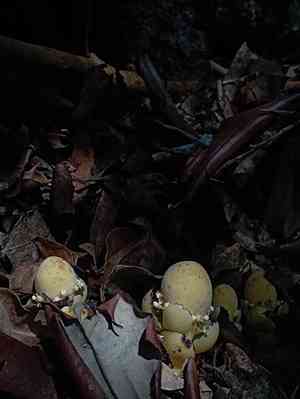
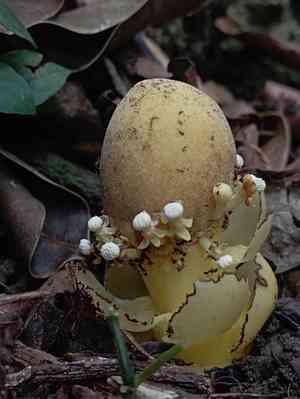
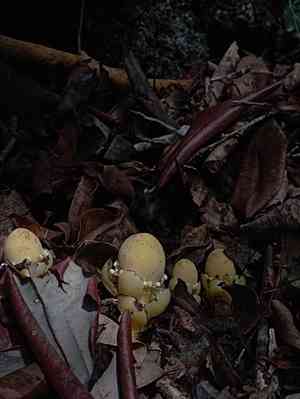
B. fungosa, unlike typical plants, is holoparasitic and lacks chlorophyll. This species features a hard, irregular tuber from which its flowering structures emerge. The leaves are minimal, appearing as scale-like formations that are pale cream in color and measure 8–30 millimeters in length and 7–20 millimeters in width, closely hugging the stem.

The plant is monoecious, with both male and female flowers. Female flowers are minute and densely packed, forming a globe-shaped structure about 15–20 millimeters in diameter, with styles less than 1 millimeter long. Male flowers, approximately 3–5 millimeters in diameter, encircle the base of the globe and are borne on pedicels about 5–6 millimeters long. They are notable for their powdery white pollen.

Attributes of Fungus root

Lifespan
Perennial
Plant Type
Herb
Plant Height
15 cm
Spread
Not applicable
Leaf Color
No true leaves, but scales mixed with inflorescence
Flower Size
3 mm to 5 mm
Flower Color
Red

ForwardPlant - Identify plants with a snap

Identify and diagnose plants, get toxicity alerts, and explore safety guides for all types of fungi.

Try for Free

Images of Fungus root

Fungus root(Balanophora fungosa)

Quickly Identify Fungus root

1
Identify Balanophora fungosa by its unique structure consisting of a thick, irregular-sized tuberous base and unbranched, yellow to reddish inflorescence spikes. The plant also produces small club-shaped flowers.

Scientific Classification of Fungus root

Phylum
Vascular plants
Class
Dicotyledons
Order
Santalales
Family
Balanophora
Genus
Balanophora
Species
Fungus root

Planting and Growing of Fungus root

Care Difficulty
Hard
Watering Schedule
Every 2 days
Sunlight Requirements
Full shade
Sunshine Duration
4-8 hours
Ideal Temperature
70-85℉
Soil Type
Potting Mix, Peat Mix
Soil pH
4.5-6.5
Fertilizer Type
Balanced
Pruning Season
Spring, Summer
Pruning Area
Branches, Leaves
Pruning Frequency
2 times a year
Repotting Season
Spring
Pot Type
Plastic, Ceramic

water icon How to Water Fungus root?

Balanophora fungosa requires moderate watering. It is vital to ensure the soil is moist but not waterlogged. Typically, 200 ml of water per session should suffice. It’s important to observe the soil’s moisture content; it needs to be damp to the touch without pooling water.
What are the symptoms of an underwatered Fungus root?
What should I do if my Fungus root is not getting enough water?
What are the symptoms of an overwatered Fungus root?
How to save an overwatered Fungus root?

sunlight icon What Are the Sunlight Requirements for Fungus root?

Sunlight Requirements: Full shade
Duration of light: 0-2 hours daily
Balanophora fungosa thrives best in full shade, reflecting its natural environment. Ideal light conditions support its unique foliage and enhance its natural habitat-like benefits.
What is the perfect spot for Balanophora fungosa?
How can I achieve optimal light conditions?
What benefits does perfect lighting provide?

temperature icon What Is the Ideal Temperature Range for Fungus root?

Ideal Temperature: 70 ~ 85℉
The ideal temperature range for Balanophora fungosa is between 70°F and 85°F. In this temperature range, the plant experiences optimal growth as the environmental conditions closely mimic its natural habitat.

soil icon What Soil is Best for Fungus root?

Soil type: Peat soil, Loam, Acidic soil
Soil PH: 4.5 ~ 6.5
Balanophora fungosa benefits immensely from soil rich in organic matter. The high organic content ensures a steady supply of nutrients, fostering lush growth and health. This plant requires soil that retains moisture well, resembling its natural environment. Such soil helps in consistent hydration, which is vital for its parasitic growth habits. While moisture is key, the soil must also drain well to prevent root rot. Achieving this balance is crucial for maintaining the plant's vigor and avoiding fungal issues.

fertilize icon How to Fertilize Fungus root?

Fertilizer type: Balanced
When applying fertilizer to Balanophora fungosa, it is crucial to use a balanced and diluted formulation, ensuring not to exceed a quarter strength. This plant thrives in nutrient-poor conditions, so over-fertilizing can be detrimental.

prune icon How to Prune Fungus root?

Pruning Time: Spring, Summer, Autumn, Winter
Balanophora fungosa is unique in its growth and structure, which means over-pruning can cause stress or damage. Prune conservatively to ensure the plant retains enough tissue for nutrient absorption. Due to its parasitic nature and lack of chlorophyll, it's crucial to comprehend its dependency on host plants. Ensure pruning doesn't interfere with this relationship, as it could compromise the plant's survival. More About Pruning Techniques

propagate icon How to Propagate Fungus root plant?

Propagate Time: Spring,Summer
1
Collect seeds from mature Balanophora fungosa specimens. Ensure the seeds are fully ripe by allowing them to dry slightly on the plant before harvesting.
2
Sow the seeds evenly in a seed tray filled with a well-draining potting mix. Lightly cover them with soil and gently press down to ensure good contact with the soil.
3
Regularly mist the soil to maintain consistent moisture levels without flooding the seeds. This step is crucial for promoting germination.

repot icon How to Repot Fungus root plant?

Repotting frequency: Every 2-3 years
1
Balanophora fungosa typically shows signs of needing repotting when you observe its roots starting to protrude from drainage holes or the soil compacted excessively. The ideal time to repot is during its early growing season in spring or summer. Noting these indicators helps ensure it remains healthy.
2
For Balanophora fungosa, choose a pot that is shallow and wide with adequate drainage. This unique pot shape accommodates its unusual growth pattern and facilitates better water management, which is essential to prevent waterlogging.
3
The soil should be lightweight, well-draining, yet nutrient-rich, mimicking its natural habitat. Use a mix that includes organic compost which retains moisture but won't become compacted, ensuring the roots have sufficient aeration and access to nutrients.

ForwardPlant - Identify plants with a snap

Find the best spots for them to optimize their health, simply using your phone.

Try for Free