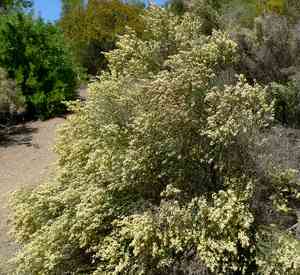
Baccharises (Baccharis) (Baccharis)
Also known as: Broom Baccharis, Chaparral Broom
Baccharises derive their name from certain species in the genus that have broom-like branches, and the Latin name honors Bacchus, the Roman god of wine. They are grown in gardens mainly for their decorative foliage and flowers, which provide aesthetic appeal. Additionally, they are often used for screening due to their dense growth.
In This Article
Attributes of Baccharises (Baccharis)
Lifespan
Perennial
Plant Height
1 to 5 meters (3 to 16 feet)
Spread
1 to 3 meters (3 to 10 feet)
Leaf Color
Green, often grayish-green
Flower Size
0.5 to 1 centimeter (0.2 to 0.4 inches)
Flower Color
White, yellowish
Images of Baccharises (Baccharis)
Quickly Identify Baccharises (Baccharis)
1
Baccharis species can be identified by their erect, woody stems, often with gray bark, and narrow, often serrated leaves. They produce small, composite flowers usually grouped in clusters, which can be white or yellowish. These plants often survive in poor soils and are known for their vigorous growth.
Scientific Classification of Baccharises (Baccharis)
Phylum
Magnoliophyta
Class
Magnoliopsida
Order
Asterales
Family
Asteraceae
Genus
Baccharis
Planting and Growing of Baccharises (Baccharis)
Care Difficulty
Easy
Watering Schedule
Every 2 days
Sunlight Requirements
Full sun
Sunshine Duration
4-8 hours
Ideal Temperature
60-75℉
Soil Type
Potting Mix, Peat Mix
Soil pH
6.5-7.5
Fertilizer Type
Balanced
Pruning Season
Spring, Summer
Pruning Area
Branches, Leaves
Pruning Frequency
2 times a year
Repotting Season
Spring
Pot Type
Plastic, Ceramic
 How to Water Baccharises (Baccharis)?
Baccharis generally prefers a moderate watering approach. It should be given approximately 500 milliliters of water per session, ensuring that the soil is moist but never waterlogged. This means you should allow the top layer of soil to dry completely before re-watering. Overwatering can lead to root rot, while too little water might cause wilting. The goal is to maintain a balance where the plant is neither too dry nor too wet.
What are the symptoms of an underwatered Baccharises (Baccharis)?
›
What should I do if my Baccharises (Baccharis) is not getting enough water?
›
What are the symptoms of an overwatered Baccharises (Baccharis)?
›
How to save an overwatered Baccharises (Baccharis)?
›
 What Are the Sunlight Requirements for Baccharises (Baccharis)?
Baccharis thrives best in partial to full sun, 6 to 8 hours daily. Optimal sun exposure ensures robust growth and enhances the plant's resistance to stress factors.
What is the best lighting condition for Baccharis?
›
How can I achieve optimal lighting for Baccharis?
›
What benefits does Baccharis receive from ideal lighting?
›
 What Is the Ideal Temperature Range for Baccharises (Baccharis)?
Baccharis thrives best within an ideal temperature range of 60 to 75 degrees Fahrenheit. This range allows the plant to grow and photosynthesize optimally, ensuring healthy foliage and robust development.
 What Soil is Best for Baccharises (Baccharis)?
Baccharis thrives in well-drained soil which prevents waterlogging and root rot. This type of soil ensures that the roots have access to necessary oxygen, promoting healthier growth and reducing the risk of fungal diseases. A nutrient-rich composition is vital for the Baccharis plant, providing essential minerals and organic matter that support robust foliage growth and blooming. Enhancing soil fertility can be achieved by incorporating compost or well-rotted manure. While Baccharis prefers well-drained soil, moderate moisture retention is also beneficial. This balance helps maintain adequate hydration levels without over-saturating the roots, promoting steady growth and drought resistance.
 How to Fertilize Baccharises (Baccharis)?
For Baccharis, the recommended fertilizer amount should be modest due to its natural resilience. Opt for a balanced 10-10-10 NPK liquid fertilizer, using approximately 1 tablespoon per gallon of water. It's essential to adjust the quantity based on the specific needs of the plant, ensuring that the soil is not overly saturated with nutrients.
 How to Prune Baccharises (Baccharis)?
Start by observing the plant’s overall shape. Identify any dead or diseased branches, which should be your primary targets, as well as any shoots that are growing inwards. Prune back to just above a node or bud to encourage new growth in the direction you want. Ensure your cuts are clean and at a slight angle to facilitate water runoff and minimize disease risk. Trim to maintain the desired shape and size. Baccharis can grow quite bushy, so don't hesitate to prune to improve air circulation within the plant, which reduces disease incidence.
 How to Propagate Baccharises (Baccharis) plant?
1
Gather seeds from mature Baccharis plants during late spring. Ensure the seeds are dry and mature, as this is crucial for successful germination. Store them properly if not sowing immediately.
2
Select healthy, non-flowering stems for cuttings in the spring. Cut about 4 to 6 inches long sections and ensure at least two to three leaf nodes are included, which are essential for root development.
3
For seeds, sow them in a seed tray with a well-draining growing medium. For cuttings, insert them into a pot with a mixture of sand and peat moss to ensure they remain upright and hydrated.
 How to Repot Baccharises (Baccharis) plant?
1
Baccharis requires repotting when you notice a significant slowdown in growth, extremely compacted soil, or visible roots growing through the drainage holes. These signs indicate the plant is root-bound, and providing more space will encourage healthier growth.
2
Select a pot that is one size larger than the current one, ensuring it has ample drainage holes. A slightly bigger pot helps prevent excess water retention, which is crucial for Baccharis as it prefers soil that dries out between waterings. This will lead to healthier root development.
3
Opt for a well-draining potting mix that combines peat moss, perlite, and coarse sand. This blend ensures adequate aeration and allows water to drain quickly, preventing root rot. It's vital for supporting Baccharis' preference for dry conditions.
Toxicity
Ingestion
WARNING
The judgment on toxicity and danger is for reference only. We DO NOT GUARANTEE any accuracy of such judgment. Therefore, you SHALL NOT rely on such judgment. It is IMPORTANT TO SEEK PROFESSIONAL ADVICE in advance when necessary.
Learn More About Baccharises (Baccharis) Diseases
Anthracnose
Bacterial Leaf Spot
Crown Gall
Cyst Nematode
Damping-off
Downy Mildew
Drought Stress
Fusarium Wilt
Gray Mold
Leaf Spot
Mosaic
Nutrient Deficiency
Nutrient Toxicity
Powdery Mildew
Root Rot
Root-knot Nematode
Rusts
Sooty Mold
Spider Mites
Temperature Stress
Thrips Damage
White Mold
Chemical Injury

