
Wright's baccharis (Baccharis wrightii)
Also known as: Desert Broom, Wright's Baccharis
Wright's baccharis is a robust shrub native to dry areas, commonly thriving in rocky or sandy terrains. It features small, often resinous leaves that reduce water loss and withstand intense sunlight. The plant produces small, white flowers that appear in dense clusters, aiding in reproduction. Its deep root system effectively taps into groundwater, enabling the shrub to survive with minimal water. These adaptations allow Wright's baccharis to flourish in arid, challenging conditions.
In This Article
Attributes of Wright's baccharis
Lifespan
Perennial
Plant Type
Shrub
Plant Height
3 to 10 feet (0.9 to 3 meters)
Spread
4 to 5 feet (1.2 to 1.5 meters)
Leaf Color
Green to grayish-green
Flower Size
0.12 to 0.2 inches (0.3 to 0.5 cm)
Flower Color
White to yellowish
Images of Wright's baccharis
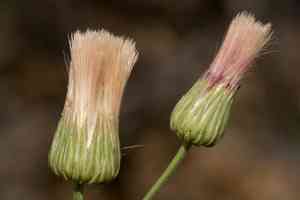
Quickly Identify Wright's baccharis
1
Look for a shrub with green to grayish-green foliage, slender stems, and small white or yellowish flowers. It thrives in desert and semi-desert environments.
Scientific Classification of Wright's baccharis
Phylum
Vascular plants
Class
Dicotyledons
Order
Asterales
Family
Daisy
Genus
Baccharises
Species
Wright's baccharis
Planting and Growing of Wright's baccharis
Care Difficulty
Easy
Watering Schedule
Every 2 days
Sunlight Requirements
Full sun
Sunshine Duration
4-8 hours
Ideal Temperature
70-85℉
Soil Type
Potting Mix, Peat Mix
Soil pH
6.5-7.5
Fertilizer Type
Balanced
Pruning Season
Spring, Summer
Pruning Area
Branches, Leaves
Pruning Frequency
2 times a year
Repotting Season
Spring
Pot Type
Plastic, Ceramic
 How to Water Wright's baccharis?
Baccharis wrightii prefers moderate watering, enjoying conditions where the top inch of soil dries out between waterings. This plant is resilient to some extent of drought but should be given around 500 ml of water each time. Be sure not to create a swamp-like environment as it could lead to root problems.
What are the symptoms of an underwatered Wright's baccharis?
›
What should I do if my Wright's baccharis is not getting enough water?
›
What are the symptoms of an overwatered Wright's baccharis?
›
How to save an overwatered Wright's baccharis?
›
 What Are the Sunlight Requirements for Wright's baccharis?
Baccharis wrightii prefers a full sun to partial sun lighting range, benefitting from the bright conditions to fuel its photosynthesis and support vigorous growth, leading to improved health and resistance against pests and diseases.
What is the ideal light exposure for Baccharis wrightii?
›
How can I ensure Baccharis wrightii receives optimal lighting?
›
What are the benefits of providing ideal lighting to Baccharis wrightii?
›
 What Is the Ideal Temperature Range for Wright's baccharis?
Baccharis wrightii thrives in an ideal temperature range between 70°F and 85°F. This range supports optimal growth and development, providing a stable environment that mimics its natural habitat. Maintaining this range helps ensure healthy photosynthesis, efficient nutrient uptake, and robust flowering in the plant.
 What Soil is Best for Wright's baccharis?
Baccharis wrightii thrives in soil that has excellent drainage to prevent root rot. Ensuring effective drainage keeps the roots healthy, allowing the plant to grow vigorously and maintain its overall vibrancy. This plant prefers soils with moderate fertility levels. Excessive nutrients can lead to overgrowth and weak structural integrity, while adequate fertility supports balanced growth and resilience. A light and airy soil structure allows roots to expand freely and access vital water and nutrients with ease. This feature supports healthier plant development and a robust root system.
 How to Fertilize Wright's baccharis?
Baccharis wrightii requires a balanced fertilization approach. For liquid fertilizers, dilute them to half the recommended strength to prevent root burn. For slow-release fertilizers, apply about one tablespoon per plant, ensuring that it's evenly distributed around the root zone.
 How to Prune Wright's baccharis?
Begin by removing any dead or diseased branches at their base. Then, focus on enhancing the plant's shape by cutting back overgrown sections to maintain an open, vase-like structure. This encourages air circulation and light penetration, critical for plant health and vigorous growth. Always cut at an angle, about ¼ inch above a bud, to promote proper healing. To encourage your Baccharis wrightii to grow denser, focus on tip pruning. Trim back the top inches of the plant, which will stimulate branching. Remember to step back periodically and assess the overall balance and symmetry of the plant as you prune, ensuring a natural and appealing silhouette.
More About Pruning Techniques→
 How to Propagate Wright's baccharis plant?
1
Harvest seeds from mature Baccharis wrightii plants in late autumn. Ensure they are dry and store them in a cool, dry place until planting in spring to ensure optimum germination rates.
2
Select healthy stems from the parent plant for cuttings. Each cutting should be about 4-6 inches long. Remove lower leaves to reduce transpiration and dip the cut end in rooting hormone.
3
Insert prepared cuttings into a well-draining soil mix. Place the cuttings in a warm and humid environment, ideally under a cloche or in a propagator, to maintain moisture and heat.
 How to Repot Wright's baccharis plant?
1
Baccharis wrightii should be repotted when you observe signs such as roots emerging from the drainage holes or when the plant seems to stop growing despite proper care. These signals indicate that it's time for a new pot to accommodate the expanding root system.
2
Select a pot that is one size larger than the current one. It should have drainage holes to prevent waterlogging. A slightly larger pot encourages growth while preventing the root from circling, thus promoting healthier and more robust development.
3
Choose a well-draining, sandy soil mix to ensure proper aeration and prevent root rot. This type of soil mimics the plant's natural environment and helps in draining excess water, thus keeping the roots healthy.
Learn More About Wright's baccharis Diseases
Anthracnose
Bacterial Leaf Spot
Bacterial Wilt
Crown Gall
Cyst Nematode
Damping-off
Downy Mildew
Drought Stress
Fusarium Wilt
Gray Mold
Leaf Spot
Mosaic
Nutrient Deficiency
Nutrient Toxicity
Powdery Mildew
Root Rot
Root-knot Nematode
Rusts
Sooty Mold
Spider Mites
Temperature Stress
Thrips Damage
White Mold



