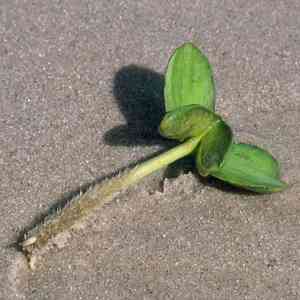
Mangrove (Avicennia) (Avicennia)
Also known as: Black Mangrove, Grey Mangrove
Mangrove trees thrive in the estuaries and coastal areas of tropical and warm temperate regions, displaying remarkable salt tolerance. Their distinctive roots, often referred to as "pencil roots" or aerial roots, play a crucial role in stabilizing the trees in soft, waterlogged soils and aiding in oxygen uptake. Mangroves also produce small yellow flowers that attract bees for pollination.
In This Article
Attributes of Mangrove (Avicennia)
Lifespan
Perennial
Plant Height
2-10 meters
Spread
4-6 meters
Leaf Color
Green (upper surface), greyish-white (lower surface)
Flower Size
0.5-1 cm
Flower Color
White, yellowish
Images of Mangrove (Avicennia)
Quickly Identify Mangrove (Avicennia)
1
Identify Avicennia by its pencil-shaped pneumatophores (root structures) that stick out of the ground and thick, leathery leaves that are green on top and covered with tightly-knitted grey hairs on the underside.
Scientific Classification of Mangrove (Avicennia)
Phylum
Magnoliophyta
Class
Magnoliopsida
Order
Lamiales
Family
Acanthaceae
Genus
Avicennia
Planting and Growing of Mangrove (Avicennia)
Care Difficulty
Moderate
Watering Schedule
Every 2 days
Sunlight Requirements
Full sun
Sunshine Duration
4-6 hours
Ideal Temperature
68-86℉
Soil Type
Potting Mix, Peat Mix
Soil pH
6.5-8.5
Fertilizer Type
Balanced
Pruning Season
Spring, Summer
Pruning Area
Branches, Leaves
Pruning Frequency
2 times a year
Repotting Season
Spring
Pot Type
Plastic, Ceramic
 How to Water Mangrove (Avicennia)?
Avicennia, or black mangrove, requires a moderate watering approach. The goal is to keep the soil consistently moist but not waterlogged, as these plants are naturally found in coastal, salt-tolerant environments. During watering, aim for the soil to be thoroughly dampened to a depth of around 15-20 cm, ensuring that excess water drains away to prevent root rot.
What are the symptoms of an underwatered Mangrove (Avicennia)?
›
What should I do if my Mangrove (Avicennia) is not getting enough water?
›
What are the symptoms of an overwatered Mangrove (Avicennia)?
›
How to save an overwatered Mangrove (Avicennia)?
›
 What Are the Sunlight Requirements for Mangrove (Avicennia)?
Avicennia flourishes best with partial to full sun exposure, ideally receiving 5 to 8 hours of light. Adequate sunlight supports robust growth, enhances photosynthesis, and maintains vibrant foliage.
What is the best location for Avicennia?
›
How to provide ideal lighting for Avicennia indoors?
›
What benefits does ideal lighting bring to Avicennia?
›
 What Is the Ideal Temperature Range for Mangrove (Avicennia)?
Avicennia species thrive in warm tropical climates. The ideal temperature range for optimal growth is between 68°F to 86°F. This temperature ensures healthy photosynthesis rates and nutrient absorption, promoting robust growth and vitality.
 What Soil is Best for Mangrove (Avicennia)?
Avicennia requires well-drained soils that prevent waterlogging which can lead to root rot. This type of soil allows the roots to access essential oxygen and supports healthy growth. A nutrient-rich soil provides the necessary elements like nitrogen, phosphorus, and potassium that Avicennia needs for vibrant foliage and overall vitality. Slightly alkaline soil conditions are preferred as Avicennia naturally thrives in coastal and mangrove environments where such pH is typical.
 How to Fertilize Mangrove (Avicennia)?
Avicennia trees are typically not heavy feeders, but they do benefit from regular feeding. Use a balanced, water-soluble fertilizer at a rate of 1 tablespoon per gallon of water. This should be applied during the active growing season to ensure optimal growth and vitality.
 How to Prune Mangrove (Avicennia)?
Begin by inspecting the Avicennia for any dead or damaged branches. Use clean, sharp pruning shears to cut these branches back to the base. Next, identify any branches that cross over each other and prune them to prevent rubbing and potential disease. Trim back the tips of the main branches to encourage bushy growth, ensuring you cut just above a leaf node. Always cut at a slight angle to direct water away and prevent rot.
 How to Propagate Mangrove (Avicennia) plant?
1
Collect seeds from mature Avicennia plants during the fruiting period. Ensure that the seeds are ripe and healthy for better germination success.
2
Select healthy, non-flowering stems for cuttings. Cut about 15 cm long sections and remove the leaves from the lower part to allow rooting.
3
Plant seeds or cuttings in a well-draining soil mix. For seeds, cover them lightly with soil, and for cuttings, insert them into the soil so that half of their length is submerged.
 How to Repot Mangrove (Avicennia) plant?
1
Avicennia should be repotted when its growth slows or the roots begin to circulate around the pot. Signs include roots emerging from drainage holes or a noticeable decrease in growth vitality.
2
Select a pot that is one size larger than the current one, with adequate drainage holes. A slightly larger pot ensures the plant has enough space to grow while preventing waterlogging.
3
Opt for a well-draining sandy soil mix. This type of soil provides excellent drainage, minimizing root rot risks and closely mimicking Avicennia's natural habitat.

