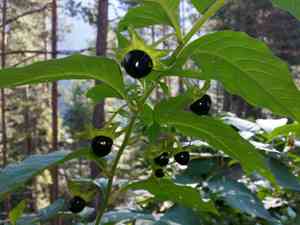
Atropa (Atropa) (Atropa)
Also known as: Deadly Nightshade, Belladonna
The genus **Atropa** belongs to the nightshade family, Solanaceae. These plants are characterized by their tall stature, preference for alkaline soils, and herbaceous perennial nature. They produce large leaves and shiny berries and thrive in temperate climates.
In This Article
Attributes of Atropa (Atropa)
Lifespan
Perennial
Plant Height
1-2 meters
Spread
Approximately 1 meter
Leaf Color
Dark green
Flower Size
2-3 centimeters
Flower Color
Purple
Images of Atropa (Atropa)
Quickly Identify Atropa (Atropa)
1
Atropa can be identified by its bell-shaped, purple flowers, large, lobed leaves, and shiny black berries. The plant typically has a bushy appearance and grows to about 1-2 meters tall.
Scientific Classification of Atropa (Atropa)
Phylum
Tracheophyta
Class
Magnoliopsida
Order
Solanales
Family
Solanaceae
Genus
Atropa
Planting and Growing of Atropa (Atropa)
Care Difficulty
Hard
Watering Schedule
Every 2 days
Sunlight Requirements
Partial sun
Sunshine Duration
6-10 hours
Ideal Temperature
60-75℉
Soil Type
Potting Mix, Peat Mix
Soil pH
6.5-7.5
Fertilizer Type
Balanced
Pruning Season
Spring, Summer
Pruning Area
Branches, Leaves
Pruning Frequency
2 times a year
Repotting Season
Spring
Pot Type
Plastic, Ceramic
 How to Water Atropa (Atropa)?
Atropa plants require careful watering to ensure healthy growth. The soil should be kept slightly moist but not waterlogged. Watering should be thorough, allowing water to reach the roots without pooling on the soil surface.
What are the symptoms of an underwatered Atropa (Atropa)?
›
What should I do if my Atropa (Atropa) is not getting enough water?
›
What are the symptoms of an overwatered Atropa (Atropa)?
›
How to save an overwatered Atropa (Atropa)?
›
 What Are the Sunlight Requirements for Atropa (Atropa)?
Atropa ideally requires partial to full sun exposure, with 6-8 hours of light daily. This amount of sunlight optimizes its growth, ensuring it retains its vibrant colors and produces abundant flowers, enhancing its ornamental value.
What is the ideal lighting condition for Atropa?
›
How can Atropa achieve its ideal lighting conditions?
›
What benefits does Atropa gain from ideal lighting?
›
 What Is the Ideal Temperature Range for Atropa (Atropa)?
The ideal temperature range for cultivating Atropa is between 60°F and 75°F. This range ensures optimal growth and development, providing the plant with conditions that mimic its natural environment. Maintaining temperatures within this range helps avoid stress and encourages healthy foliage and flowering.
 What Soil is Best for Atropa (Atropa)?
Atropa thrives in well-drained soil as it prevents waterlogging, ensuring that the roots remain aerated and healthy. This helps in avoiding root rot and promoting robust growth. This plant requires soil rich in organic matter. Nutrient-rich soil provides essential minerals and nutrients that support the plant's vigorous growth and lush foliage. The soil should retain enough moisture to keep the plant hydrated, but not so much that it becomes soggy. Proper moisture balance ensures that the plant receives adequate water without the risk of fungal diseases.
 How to Fertilize Atropa (Atropa)?
Atropa species benefit from balanced fertilization but require careful attention to amounts to avoid overfertilization. Use a diluted liquid fertilizer at half the recommended strength, ensuring it provides an even nutrient supply without overwhelming the plant's delicate root system.
 How to Prune Atropa (Atropa)?
Start by sterilizing your pruning shears to prevent disease transmission. Focus on removing any dead or diseased branches, cutting them back to the main stem if necessary. Trim any crossing branches to enhance airflow. For maintaining shape, prune after the plant has finished flowering in autumn or winter, shaping the plant to your desired form.
 How to Propagate Atropa (Atropa) plant?
1
Select healthy, viable Atropa seeds and soak them in warm water for 24 hours to enhance germination. This step is crucial to break dormancy in the seed coat and boost seedling vigor.
2
Fill seed trays with sterile potting mix and sow the seeds on the surface, covering them lightly with soil. Ensure that seeds are not buried too deep as this can hinder germination.
3
Water the seeds gently to avoid disturbing them, and cover the trays with plastic wrap to maintain humidity. Place the trays in a warm, well-lit area but out of direct sunlight to avoid overheating.
 How to Repot Atropa (Atropa) plant?
1
Look for Atropa’s roots poking out from the bottom of its pot or its growth becoming stunted; these are clear signals that it requires repotting. The best time to undertake this task is during spring or summer when the plant is in its active growth phase and can better recover from the change.
2
Select a pot that is only one size larger than the current one to avoid waterlogging, which can lead to root rot. Ensure that the pot has adequate drainage holes; this allows excess water to escape and air to circulate, helping maintain a healthy root system for your Atropa.
3
Opt for a well-draining potting mix rich in organic matter. Such soil helps prevent water accumulation that can suffocate roots while providing the necessary nutrients for growth. A mix with added perlite or sand can enhance drainage, benefiting Atropa.
Toxicity
ingestion
WARNING
The judgment on toxicity and danger is for reference only. We DO NOT GUARANTEE any accuracy of such judgment. Therefore, you SHALL NOT rely on such judgment. It is IMPORTANT TO SEEK PROFESSIONAL ADVICE in advance when necessary.

